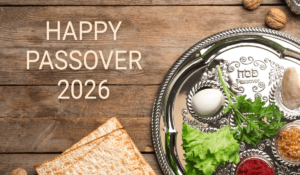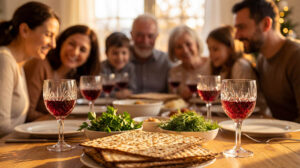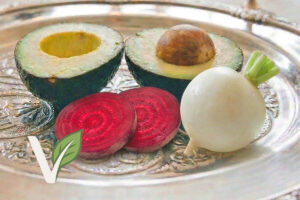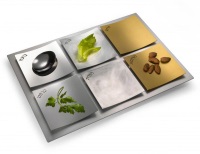
The Seder plate is the focal point of the whole Seder night. It holds the six different ritual foods which are eaten and used symbolically throughout the night. This is our essential guide to the items on the Seder plate so you can start you night right!
Beitzah
Eggs are used symbolically in Judaism several times a year: they appear on the Seder plate, and are the last thing eaten before the 9th of Av fast. On both occasions, they represent sorrow at the destruction of the Temples. On the Seder plate, the hardboiled egg remains in its shell, which is charred so help visualize the burned Temples.
Zeroah
The Zeroah is a shank bone, which is roasted to represent the burned flesh of the original Pascal lamb sacrifice. As lamb bones are pretty big, most people use a chicken leg or something similarly sized.
Bonus fact: interestingly, as there is no longer a Temple in which to offer a Pascal lamb, it’s traditional to not eat any kind of roasted meat at the Seder.
Maror
Maror is one of two bitter herbs or vegetables used on Seder night – the other is Hazeret (see below). They are used to remind us of the bitterness of the slavery endured by the Israelites in Egypt. For the actual maror, it’s traditional to use grated horseradish.
Hazeret
Hazaret is the second type of bitter vegetable used, for the same reasons as the first. It’s traditional to use a bitter leafy vegetable, like endive or bok choy, for this second type, which is used with matzah and haroset for the Korach sandwich.
Karpas
Eaten as a miniature appetizer at the beginning of the Seder, Karpas represents the spring and can be any vegetable. In the Ashkenazi tradition, sprigs of bright green parsley are used. Raw herbs aren’t necessarily the tastiest option, so some people use carrots, radishes, pieces of cooked potatoes, or even strawberries! Beware sweet strawberries, though – the karpas is dipped in salt water as a reminder of the tears cried by our enslaved ancestors.
Haroset
Haroset is a thick, sweet paste that resembles the cement that the Jews had to mix and pour to use when building throughout their slavery. Thankfully, it doesn’t taste like cement! Made from sweet wine, apples, nuts, and honey or dates, it’s used to temper the maror’s sting in the Korach matzah sandwich.