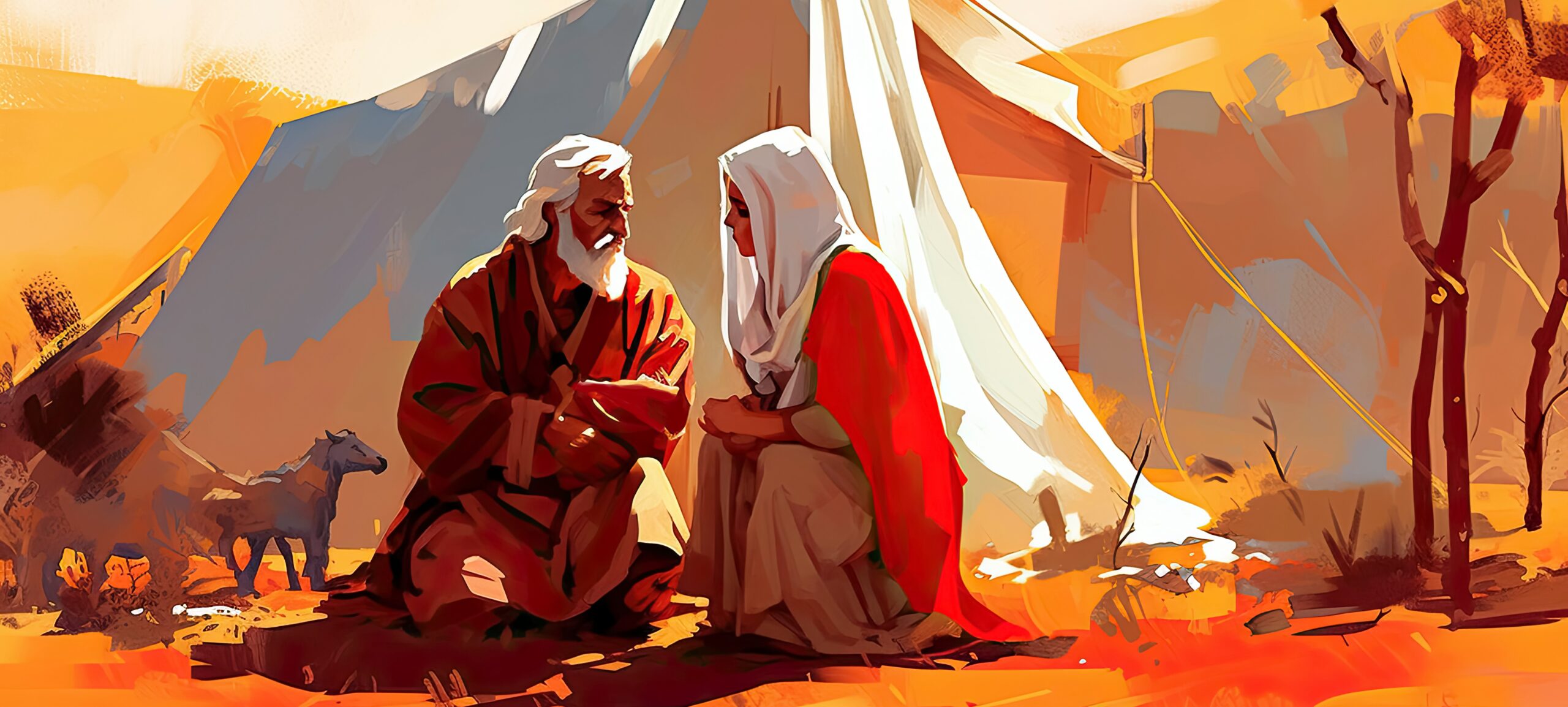
Torah Portion Lech Lecha in a Nutshell
- Name: Lech Lecha
- Reading: Genesis 12:1 – 17:27
- Haftara: Isaiah 40:27- 41:16
Parashat Lech Lecha Summary
God tells Abraham to leave Haran
God appears to a 75-year-old Abram and tells him to leave his home for a land that He will show him, and promises to make him a big, protected nation. Abram leaves Haran with his wife, Sarai, his nephew, Lot, and their household and possessions. They pass through Shechem, Elon Moreh, and Beth-El on their journey south, and when famine strikes, they head to Egypt.
Sarai and the Pharoah
Abram asks Sarai to tell the Egyptians that she’s his sister and not his wife, as he’s afraid that the Egyptians will kill him and take the beautiful woman for themselves. Pharoah takes Sarai as a wife and rewards her “brother” generously with cattle, sheep, donkeys, camels, and servants. God strikes Pharoah with a plague, and he sends Abram, Sarai, and all their accrued wealth away.
Abram and Lot Split
Abram and Lot both have lots of sheep and cattle, and the land on which they’re traveling can’t support them both, which causes their shepherds to fight. To avoid conflict, Abram decides to part ways and tells Lot to choose a direction in which to travel. Lot chooses the fertile Jordan valley and settles in Sodom. God promises the land to Abram, who then moves to Elon Mamre in Hebron.
The Battle of Siddim
Also known as the War of the Nine Kings (or the Four Kings and Five Kings). Five oppressed kings (including the King of Sodom where Lot resides) rebel against four Jordan plains kings, who retaliate, kill the insurgent armies and capture their citizens – including Lot. Abram’s acquaintances inform him of the situation. He takes 318 trained men from his household and successfully ambushes the kings, freeing the captives. He refuses all thanks but asks for his men to be rewarded.
Brit Bein Habetraim – The Covenant of the Pieces
God promises Abram greatness; Abram asks why when he has no heir. God commands Abram to sacrifice a cow, a goat, a ram, a dove and a pigeon; darkness falls and Abram slips into a deep sleep. God promises him that his descendants will be as innumerable as the stars in the sky, that they will be servants in a foreign land, but will leave with great wealth and inherit Israel.
Hagar and Sarai
Sarai is barren, so tells Abram to have a child with her maidservant Hagar, who conceives. She is then overcome with jealousy and hatred and sends the pregnant Hagar away. An angel finds her in the desert and tells her to go back to Sarai. He says to name her son Ishmael (literally, God has heard) and reassures her than multitudes of people will come from him.
Brit Milah – The Covenant of Circumcision
God changes Abram’s name to Abraham and pledges an eternal covenant between Himself and Abraham’s descendants, and reiterates that Israel will be their eternal possession. God commands Abraham that every eight-day-old male must be circumcised as a sign of their covenant. He then changes Sarai’s name to Sarah and blesses them that the 90-year-old woman will conceive and be the mother of a great nation. Abraham circumcises himself and thirteen-year-old Ishmael.
Torah Takeaway
This week’s Torah portion starts with one of the most well-known Biblical quotes. Genesis 12:1 reads:
Go for yourself from your land, and from your birthplace, and from your father’s house to the land that I will show you.
Journeying to Canaan and establishing a dynasty was Abraham’s God-given task in life, and this is the beginning of his mission. He wasn’t simply told to go; there were three different levels of leaving he had to undertake.
Leaving your land means walking away from the language, customs, and culture you’re used to. Leaving your birthplace means giving up everything familiar and comfortable. Leaving your father’s house means disentangling yourself from your family (Abraham’s father built idols, making him a less-than-ideal influence on the world’s first monotheist).
When our divine task lies in contrast with our homes, we have to be prepared to leave everything in its pursuit. Our language and culture and home and family are part of us, but when they conflict with what we believe, it’s time to move away from the old in search of something new. It’s hard, but only by totally extracting yourself from a malign environment can you move forward and achieve your truest goals.