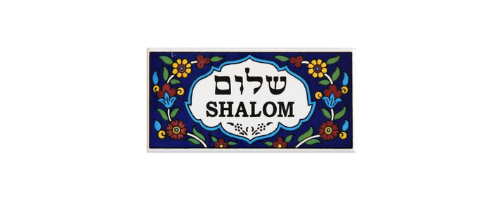
Some of the most beloved gifts from Israel are hand-painted ceramic pieces, usually decorated with colorful flowers in simple and quite ordinary colors. This specific art is part of Armenian Ceramics and has been made in Jerusalem for the past 100 years by generations of Armenian artists in Israel’s capital city. Their iconic bowls, plates, clocks, Judaica, and home decor have found their way into the hearts of visitors and Israelis alike, but how did this Armenian art influence reach Israel?
In 638, the Armenian Patriarchate of Jerusalem was established in the Old City of Jerusalem, in what is now known as the Armenian Quarter being the first noted presence of the country within Israel. While this was to bring the religious Armenian community closer to the holy city, it is not where the Armenian Ceramics story begins. Over one thousand years later in 1919, master craftsmen from Armenia were brought to Jerusalem to repair tiles in the Dome of the Rock and chose to stay once their work was done because of the Armenian Genocide going on at the time. This helped establish the Armenian Ceramics business in Israel as the new generation of Armenian artists came to Israel looking for refuge after being expelled from their homeland.
One artist that was commissioned to come to Jerusalem was David Ohannessian, a master in ceramics. He opened a shop on the Via Dolorosa selling tiles to the wealthy British residents of Jerusalem. His work became known around the world and many of his tiles were used to decorate the Dome of the Rock, the Rockefeller Museum, St. Andrew’s Church, and Jerusalem House of Quality, an art and culture center outside of the Old City. Armenian Ceramic soon became part of Jerusalem’s cultural identity.
Armenian Ceramics, once mostly pertaining to tiles and plates have over the years included beautiful pieces of Judaica, home decor, mugs and tea/coffee sets that will bring color and complexity into the home. Their pieces have branched out from the traditional colorful flowers to include Jerusalem, geometric shapes, doves, and other designs that will remind you of Israel. Armenian Ceramics has become an important part of Jerusalem’s diverse culture and will continue to share its beauty throughout the city.