The story of the Exodus from Egypt is one of the most well-known stories in the Bible. Primarily, for the great and amazing miracles that God performed for the Israelites in the days preceding it. The miracles continued when the travelers were on their way to the land that God had promised to their forefathers.
Yet, within the great story of salvation are woven many details that seem innocent and not very important – but the opposite is true. These details are very, very important. They tell a fascinating story that only slaves who lived in Egypt and who reached the Land of Israel through the Sinai Desert could have known about.
The Story Everyone Knows: The Divine Salvation
The Book of Genesis ends with a severe famine that struck the land of Israel. Jacob and his sons, desperate for survival, went down to Egypt to join Joseph. There, thanks to Joseph’s high standing, Pharaoh welcomed the family and they settled in Egypt.
Four hundred years passed (Gen. 15:13; Ex. 12:40), during which many kings ruled in Egypt. Over the course of those years, a succession of kings, all bearing the title “Pharaoh,” enslaved the descendants of Jacob, and they became slaves in Egypt. Around the time recounted in the Book of Exodus, Pharaoh decided to crush them entirely. He subjected them to brutally forced labor and even commanded that their newborn sons be cast into the Nile.
When God saw the affliction of His people, He decided to fulfil the covenant He had made with Abraham many years before. God chose Moses to stand before Pharaoh. Moses, accompanied by his brother Aaron, delivered God’s command: free the Israelites from their bondage!
Pharaoh reacted with utter contempt. As punishment for this audacity, God struck Egypt with ten devastating plagues (Ex. 7-12). With great reluctance, Pharaoh finally surrendered to God’s will and the Israelites departed for the Promised Land. But soon Pharaoh changed his mind and sent an army to drag them back to Egypt. As punishment, God drowned that army in the Sea (Ex. 14) – and we may rightly see this as the eleventh plague!
As everyone knows, Moses led the people into the Sinai Desert. What is less well known is that Sinai is desolate and arid. Anyone unfamiliar with its ways can easily become lost. So that the Israelites would not lose their way in the desert, God placed a pillar of cloud above them during the day to guide them. At night, a pillar of fire went before them (Ex. 13:21–22; Num. 9:15–23). Since there is no food to be found in the desert, God fed them with manna, a sweet substance that appeared every morning. When they thirsted, He brought forth water from the rock (Ex. 16:10-19; 17:1-7).
In the third month after leaving Egypt, the travelers arrived at the foot of the Mountain of God (no one knows where this mountain stands). There, God’s tremendous presence was revealed to all. He descended upon the mountain in fire and smoke, accompanied by trumpet blasts. There He gave them the Ten Commandments (Ex. 19–20). Through this act, God revealed that the social and legal life of His people is an integral part of the salvation He performed.
The historical context
Around 1300 BCE, Egypt appeared as a wealthy and invincible superpower. Yet beneath the surface, two underlying processes were creating cracks that threatened the regime’s stability. Gradually, Egypt entered a period of internal and external instability.
1. The internal threat: Uncontrolled immigration waves
The first factor threatening Egyptian stability was waves of immigrants who had arrived over the centuries.
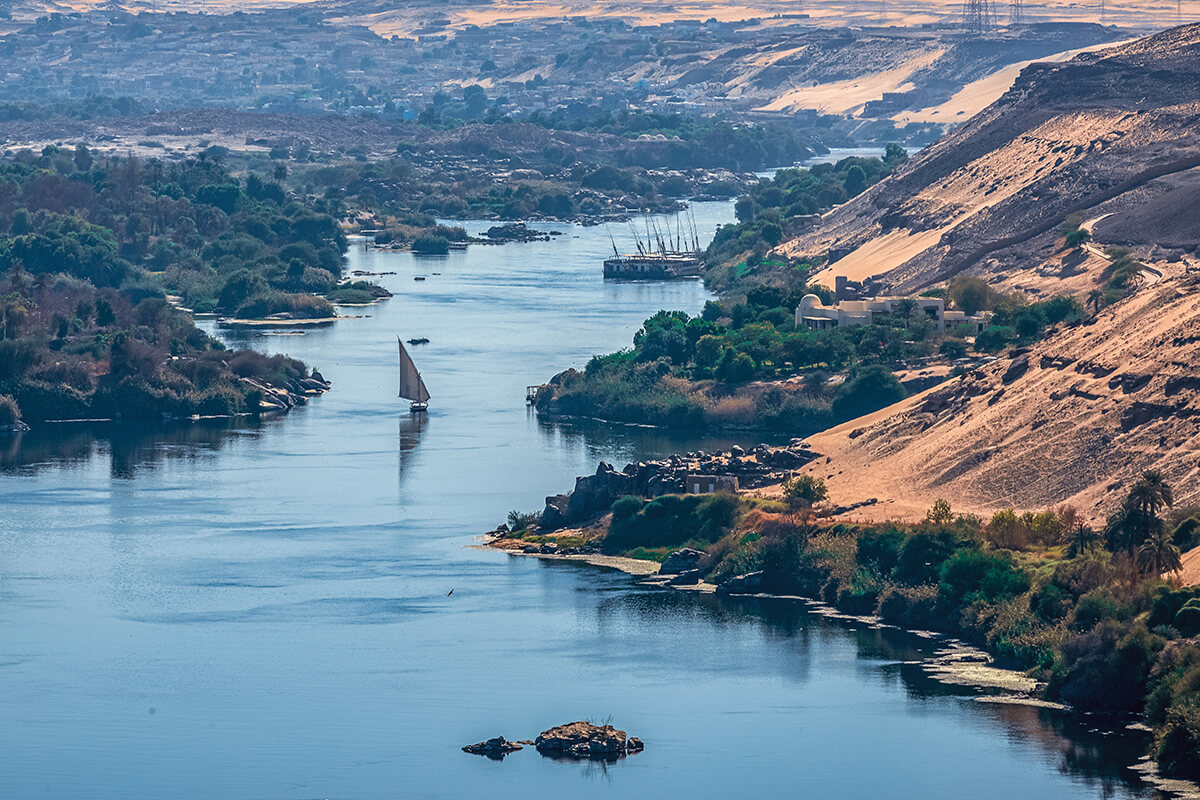
Egypt has a unique climatic phenomenon. It is a desert land where no rain falls. The Nile, which the Bible calls the Yeor, stretches for about 4,130 miles. It is the only source of water for this vast land. The Nile receives all its water from rains that fall in Africa, so the amount of water flowing in it was not affected by drought years that struck neighboring countries.
In reality, Egypt was spared the famines that afflicted its neighbors due to drought, including Israel.
But this very advantage turned Egypt into a magnet for masses of hungry people. During drought years, they flooded into Egypt seeking survival. Indeed, documents discovered in Egypt state unequivocally that these immigrants constituted a burden that strained the economy and created social unrest.
Notably, the famine that struck Egypt in Joseph’s time (Gen. 41) was not caused by a lack of rain in Egypt itself, but by climatic changes in Africa that affected the flow of the Nile.
2. The external threat: The Philistines
The second threat to Egyptian stability was the Philistines. “The Philistines” is a collective name for several peoples who originated in Greece, Turkey, and Cyprus. At the beginning of the 13th century BCE, for reasons scholars still debate, the Philistines left their homelands en masse. During their wanderings, they attacked country after country, changing the entire face of the ancient Near East.
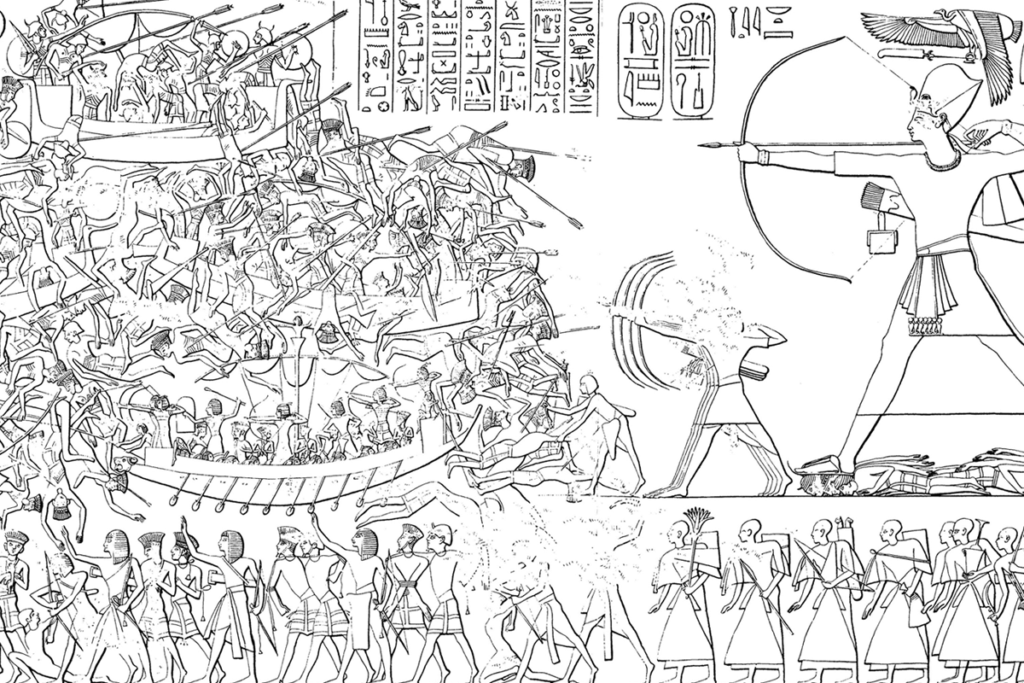
The Egyptian kings had good reason to fear them. The Philistines intended to cross the Mediterranean Sea in their ships and penetrate Egypt along the coast, and that is exactly what happened. Around the beginning of the 12th century BCE, about a hundred years after they began flooding the East, the Philistines reached Egypt.
Naturally, the Egyptian kings went out to push them back into the sea. The war ended in Egypt’s victory. Yet it lasted for decades and forced the Egyptian kings to station most of their army along the seacoast to repel the invaders. This security burden created additional instability for the regime, but it also created an opportunity for the Israelites to escape from Egypt through the Sinai Desert.
Egypt at a Unique Moment: 1250–1200 BCE
Most scholars believe the Exodus from Egypt occurred around 1250 BCE, just as the stability of the Pharaonic regime began to crack. However, many scholars – including me – believe the Exodus happened about fifty years later, when the war with the Philistines was already at its height. But I will follow the prevailing view here.
The Pharaoh who ruled Egypt in those days was Ramesses II. He reigned for an extraordinary 66 years, from 1279 to 1213 BCE – almost as long as Queen Elizabeth II, who ruled England for 70 years (1952-2022). Ramesses was a powerful king ruling a magnificent kingdom, but as we have seen, he faced growing threats from both inside and outside his borders.
The Book of Exodus states that during the many years the Israelites lived in Egypt, they multiplied and became strong, and this fact worried Ramesses. He feared that if war broke out – and war eventually did break out – the Israelites would join Egypt’s enemies and fight from within:
… when any war breaks out, they also join themselves to our enemies and fight against us…. (Ex. 1:10)
On the surface, this fear explains why Ramesses decided to crush them with harsh labor and even cast their newborn sons into the Nile. But the true reason runs deeper. The Israelites were only a small fraction of the migrants who had come to Egypt over the centuries. Most of these immigrants, like the Israelites, became forced laborers, and Egyptian documents extensively document this reality. The reason we all believe that only the Israelites multiplied, and only they became slaves in Egypt, is because the Bible focuses solely on the Israelites. In fact, Egypt was filled with masses of immigrants who posed both an economic burden and a security threat.
The Israelites in the Brick Industry
Exodus 5 tells us that the Israelites were employed in the brick industry, and the details it conveys match exactly what archaeology has found.
Archaeologists uncovered sites used for brick production, an industry that included molds into which the raw material was poured. Bricks were made primarily from clay.
Clay is muddy sediment that the slaves scraped from the Nile banks and carried on their backs in heavy sacks – a process depicted in Egyptian wall paintings. Into the wet mud, workers had to insert straw. When the straw met the wet sediment, it decomposed and became an adhesive that strengthened the brick and prevented it from crumbling. The mixture of mud and straw was poured into molds and dried in the sun. After the bricks dried, the slaves carried them to the construction site. Egyptian documents sneer at the slaves’ filthiness (Papyrus Anastasi, a 13th-century BCE Egyptian papyrus from the Ramesside period, now in the British Museum).
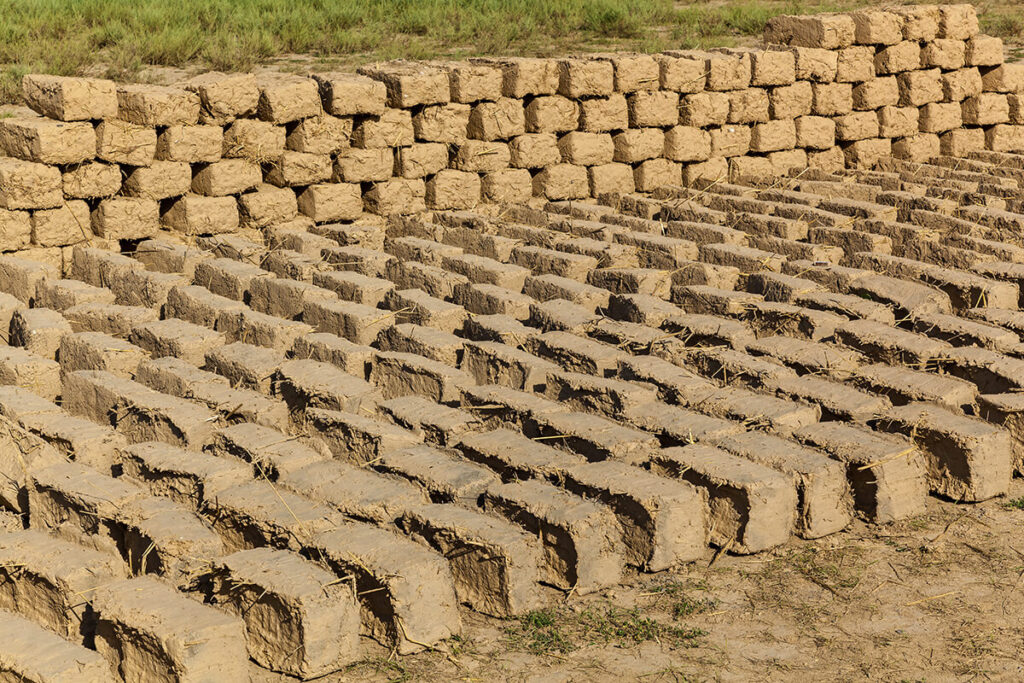
The Book of Exodus describes Egyptian overseers who made sure the slaves filled the daily brick quota. If they failed, brutal beatings followed:
The king of Egypt … commanded the taskmasters of the people and their officers, saying, ‘You shall no longer give the people straw to make bricks, as before. Let them go and gather straw for themselves. But the number of bricks which they made before, you shall require of them…’ (Ex. 5:4-14)
The brick industry that the Book of Exodus describes is completely accurate and could have existed only near the Nile flowing in Egypt, not in Israel.
Why?
Israel’s only significant river is the Jordan. The Jordan extends approximately 155 miles, compared to the Nile’s 4,130 miles. Because of this, the sediment of the Jordan is meagre. Israel simply lacked the essential raw materials for a brick industry. During the biblical period, the Israelites built with stones placed one on top of another.
Jochebed’s Papyrus Ark
Shortly after Pharaoh commanded that all Israelite boys be cast into the Nile, a beautiful child was born to slaves Jochebed and Amram – Moses. For three months, Jochebed managed to hide little Moses from Pharaoh’s men. When she could no longer conceal him, she wove a small papyrus basket and coated it with tar to waterproof it:
When she (Jochebed) could no longer hide him, she took a papyrus basket for him and coated it with tar and pitch. Then she put the child in it and laid it in the reeds by the river’s bank. (Ex. 2:3)
Papyrus is an aquatic plant that grows abundantly along the Nile. It appears in countless Egyptian wall paintings and pillars, testifying to its importance. The Egyptians used papyrus for everything. They wove it into ropes, baskets, and sandals. They made small boats from it to transport goods on the Nile. Most famously, they made writing material from papyrus, and the word “paper” preserves to this day the name of the plant from which it was made.
Since papyrus grew abundantly along both banks of the Nile, Jochebed naturally made a small basket from it. The tar she used to coat the basket was another material found in Egypt. The Egyptians used it to seal boats and to embalm mummies.
Could a woman have made a tar-coated papyrus basket millennia ago?
Of course!
But only in Egypt, not in Israel, which had no tar and very little papyrus along the Jordan.
The Journey Through the Sinai Desert
Egypt and Israel share a land border and a maritime border. Both countries border the Mediterranean Sea on their western coasts. The Sinai Desert connects them from the southeast. Anyone who looks at the map can see immediately: Moses should have led the travelers along the Mediterranean coastline. The journey would have been easy, taking at most two weeks. But the coastal route was blocked, so Moses had no choice but to lead the travelers through the harsh Sinai Desert.
Why was the coastal route blocked?
Two factors made it impossible for slaves to pass through. First, Egypt had been trading intensively with countries along the Mediterranean Sea for thousands of years. This trade was crucial to Egypt’s wealth. To protect it, Egypt built a chain of fortresses along the entire coast and stationed heavy guard forces there. Escaping slaves would have been spotted and captured immediately.
Second, the Egyptian-Philistine war was being fought along that very coast, as Exodus itself tells us:
When Pharaoh had let the people go, God didn’t lead them by the way of the land of the Philistines, although that was near; for God said: ‘Perhaps the people will change their minds when they see war, and they will return to Egypt’; but God led the people around by the way of the wilderness by the Red Sea… (Ex. 13:17-18)
The passage mentions “the land of the Philistines,” which is misleading because it might create the impression that there was a Philistine country – which never existed. What the passage refers to is the coastal war zone where Egyptian and Philistine forces clashed – a war extensively documented in Egyptian sources. With fortresses blocking the way and a war raging along the coast, the coastal route was simply impossible. The only escape route left was through the Sinai Desert.
The Complaints of the Travelers
The Sinai Desert is arid and sandy. I have visited it many times. After just a few hours of walking in this harsh desert, I can tell you: walking on sand dunes and sharp gravel is extremely difficult and agonizing. Yet the Sinai conceals small oases where water can be found throughout the year. For this reason, life was possible there thousands of years ago and remains possible today.
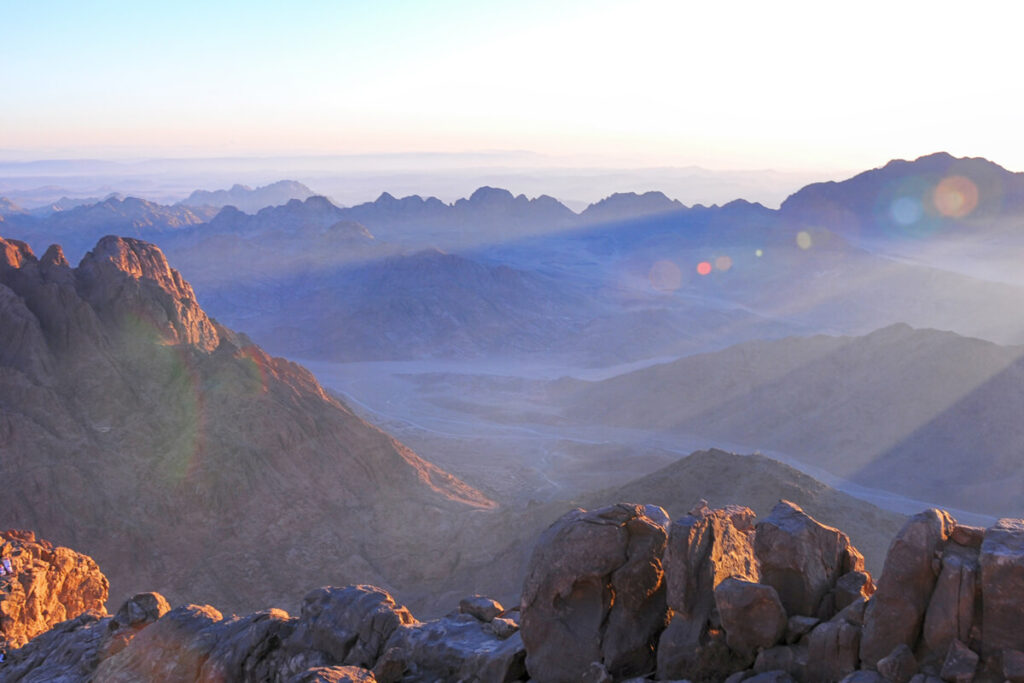
Soon after entering the desert, the Israelites began complaining to Moses that he had brought them there to die of thirst and hunger (Ex. 16:1-11). The hardship of walking in the desert made the travelers forget how difficult their lives as slaves in Egypt had been. Suddenly, even slave life seemed easier, and they were seized with longing for the food they had received in Egypt:
… the children of Israel also wept again, and said, ‘Who will give us meat to eat? We remember the fish, which we ate in Egypt for nothing; the cucumbers, and the melons, and the leeks, and the onions, and the garlic.’ (Numbers 11:4-5; Ex. 16:2-3)
The longing for these specific foods is not imaginary. It matches precisely what archaeology has found. In the slaves’ quarters, excavations revealed enormous kitchens where food was prepared. Egyptian documents show the slaves’ diet was relatively rich – meat, fish, and various vegetables. This makes sense. Keeping slaves healthy was essential for the hard work they performed.
The Quail
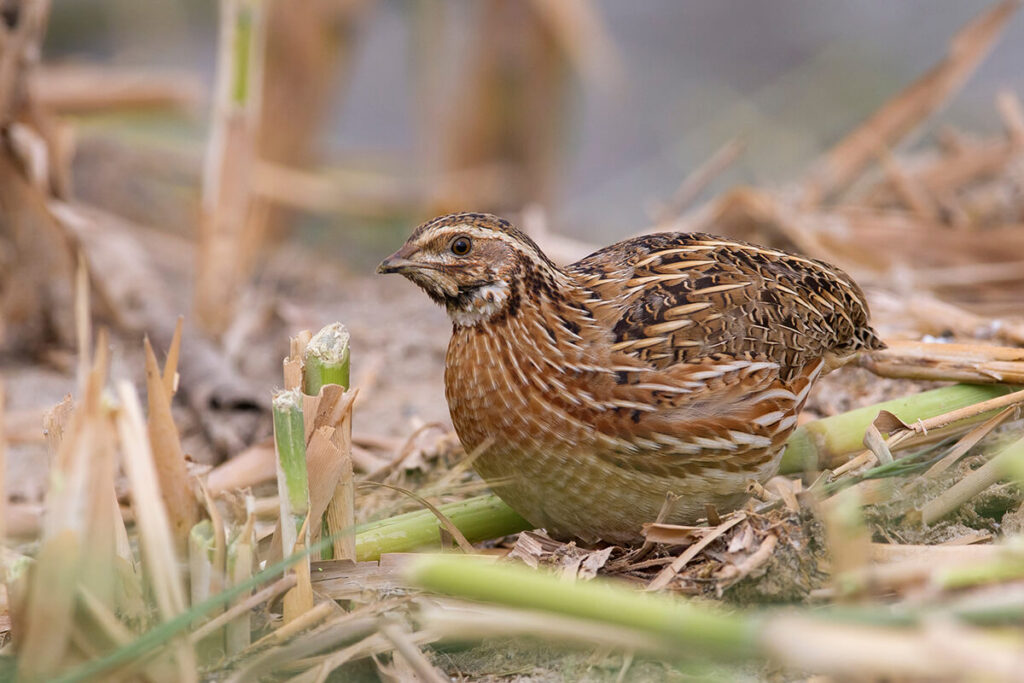
To satisfy the travelers’ hunger, God sent bread from heaven – manna (Ex. 16:4, 15). To this day, researchers haven’t identified what manna actually was. But the travelers wanted meat, so God sent them quail:
In the evening, quail came up and covered the camp… (Ex. 16:13; Num. 11:31-32)
Quail is a small, chicken-like bird. Quails migrate in enormous flocks from Europe to Africa and back. During their migration, the flocks land in the Sinai Desert to rest – in the late afternoon, exactly as the Bible describes. When they land exhausted, they’re easy to catch.
Quails don’t migrate over Israel, though small numbers reach it. Only someone crossing the Sinai would encounter enormous flocks of this bird. And the meat is considered a delicacy.
Summary
The story of the Exodus from Egypt is known throughout the Western world because of the miracles God performed. These miracles testify to God’s unlimited power and to His faithfulness in keeping the covenant He made with Abraham nearly six hundred years earlier (Gen. 15 and 17).
But these miracles did not take place in a vacuum. They unfolded against a very specific historical reality – one that could have existed in only one place and at one particular time: along the banks of the Nile, around 1250–1200 BCE.
There is a well-known historical principle: when a central regime begins to weaken, opportunities open up for slaves to escape. This is exactly what happened in Egypt around 1250–1200 BCE, in a way unparalleled at any other time. For centuries before the Exodus, masses of immigrants had entered this remarkable land, fleeing famine in their own countries. They settled in Egypt, became an economic burden, and threatened the stability of the pharaonic regime.
Another threat came from the Philistines, who attempted to penetrate Egypt by sea. The war against them, fought along the Mediterranean coast, left Moses and his people with only one option – to escape through the harsh and desolate Sinai Desert.
The final question we must ask is this: How did historical details that existed in Egypt – and could not possibly have existed in Israel – become known to the biblical writers?
Israel does not have the Nile’s rich sediment for brick production. It does not have abundant papyrus, nor natural tar. So how did the biblical writers know such precise details about the brick industry?
How did they know that small boats could be made from papyrus and sealed with tar – just like the tiny basket Jochebed prepared?
How did they know about the quail that land in the Sinai Desert toward evening?
The answer is simple and well known. In the ancient world, stories traveled with people as they moved from place to place – and this universal truth applies to the story of the Exodus as well.
Only someone who had been a slave in Egypt could pass on such accurate information about slave life and the industries that flourished along the Nile. Only someone who had walked across the Sinai Desert could describe the physical hardship that nearly led to rebellion against Moses. And of course, only such a person would know about a small bird called quail.
Let us end where we began: the great salvation God performed for the Israelites includes many details that may seem minor or unimportant. But those very details are historical testimony of immense importance. They could only have been preserved and passed down by people who were once slaves in Egypt and who crossed the Sinai Desert on foot. Together, they form a rare and dramatic picture – one that could only have taken place at one specific time and in one specific place.