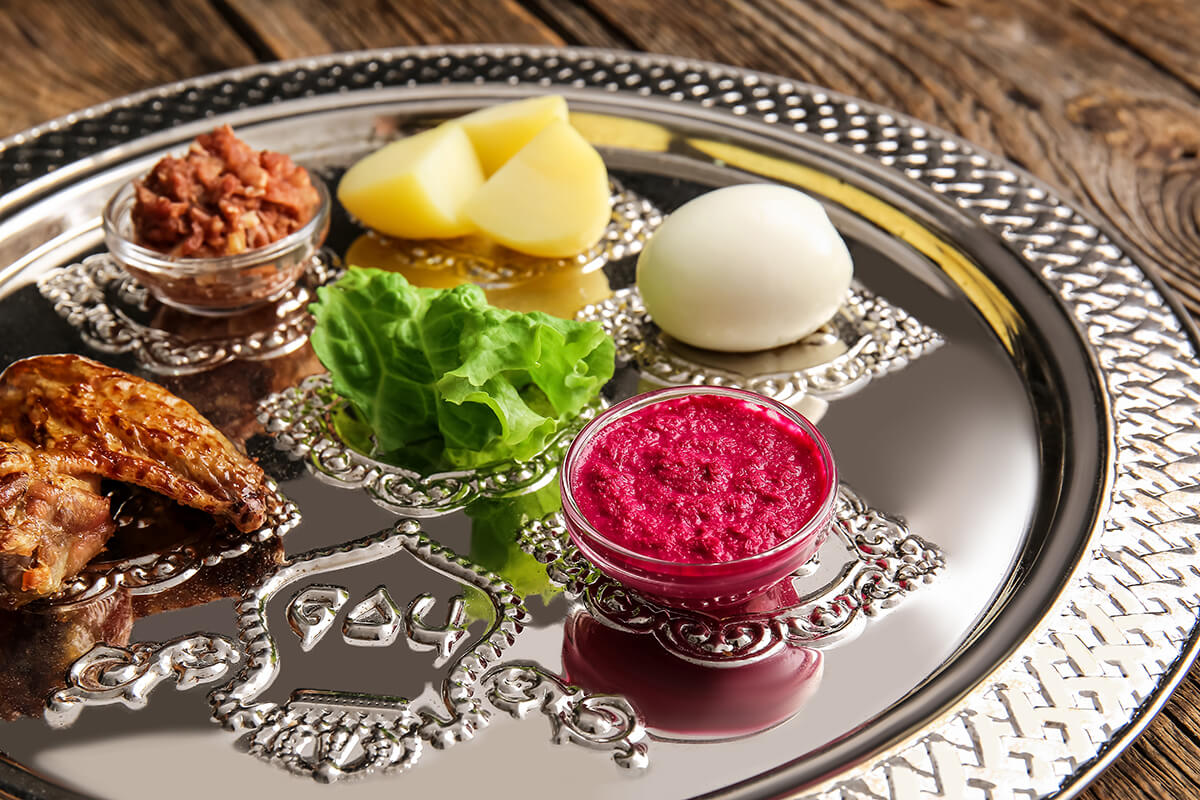
Every spring, as the air in Jerusalem begins to shift, I feel the same familiar pull of anticipation. Preparing for Passover is a marathon of cleaning and shopping, but everything changes the moment I pull my grandfather’s silver Seder plate out of its velvet bag.
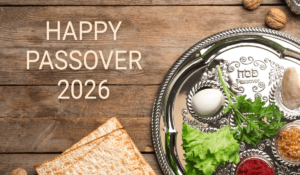
The Seder plate is the visual centerpiece of the Passover table, holding six symbolic foods that tell the story of the Exodus from Egypt. It is more than a dish; it is a sensory roadmap. As we sit down for our Seder in 2026, the items we place on this plate bridge the gap between our ancestors’ journey from slavery to freedom and our lives today.
In this guide, I will share the deep-seated meaning, symbolism, and traditions behind each of the six symbolic foods. Whether you are setting your first table or looking to deepen your understanding of the Passover Seder plate, this resource will provide the historical context, Talmudic origins, and practical tips I’ve gathered from years of hosting and studying our beautiful traditions. To complement this overview, have a look at my first night of Passover 2026 guide for a practical walkthrough of the Seder evening.
Quick Reference Table for Seder Plate Items
For those currently organizing their shopping lists, here is a clear breakdown of the seder plate items and meaning.
| Hebrew Name | English Name | What It Is | What It Symbolizes |
|---|---|---|---|
| Maror (מרור) | Bitter Herbs | Horseradish or romaine lettuce | The bitterness of slavery in Egypt |
| Charoset (חרוסת) | Sweet Paste | Apple, nuts, wine, cinnamon | The mortar used by Hebrew slaves |
| Karpas (כרפס) | Green Vegetable | Parsley, celery, or potato | Spring, renewal, and hope |
| Z’roa (זרוע) | Shankbone | Roasted lamb or chicken bone | The Passover sacrifice in the Temple |
| Beitzah (ביצה) | Roasted Egg | Hard-boiled, scorched egg | The festival offering and the cycle of life |
| Chazeret (חזרת) | Second Bitter Herb | Romaine lettuce | The intensifying bitterness of exile |
The Six Items – A Deep Dive
1. MAROR – מרור (Bitter Herbs)
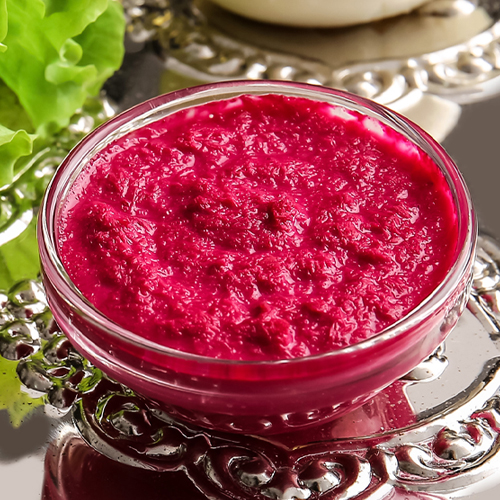
What It Is: Maror is the sharp, pungent reminder of our past. Traditionally, Ashkenazi families like mine use fresh horseradish root, while many Sephardic communities use romaine lettuce or even endives.
Symbolism: The seder plate meaning for Maror is rooted directly in the Torah: “And they embittered their lives with hard labor” (Exodus 1:14). It represents the raw, physical suffering of the Israelites. The bitterness must be felt in the mouth to truly fulfill the mitzvah (commandment) of remembering the hardship.
Traditions & Customs: During the Seder, we eat Maror twice. First, we dip it into the Charoset (to mitigate the harshness slightly) and recite a specific blessing. Second, we eat it as part of the Korech, the Hillel sandwich, where it is layered between two pieces of Matzah.
In my own kitchen, I’ve learned that the preparation is a ritual in itself. Grating the horseradish by hand is a “tears-only” affair. I remember my father used to say that the tears shed while grating the Maror were a physical connection to the tears shed in Egypt. If you are using romaine lettuce, it is vital to check the leaves thoroughly for insects, a practice I spent many hours doing with my mother every Passover eve.
Practical Tips:
- Where to buy: Look for fresh horseradish root in the produce section. It should be firm, not shriveled.
- What to avoid: Do not use “creamed” horseradish from a jar, as it often contains vinegar or dairy which can interfere with the ritual or dietary laws.
- Substitution: If you cannot find horseradish, romaine lettuce is highly recommended. According to the Orthodox Union (OU), the lettuce represents the Egyptian experience, it starts sweet but ends bitter.
2. CHAROSET – חרוסת (The Sweet Paste)
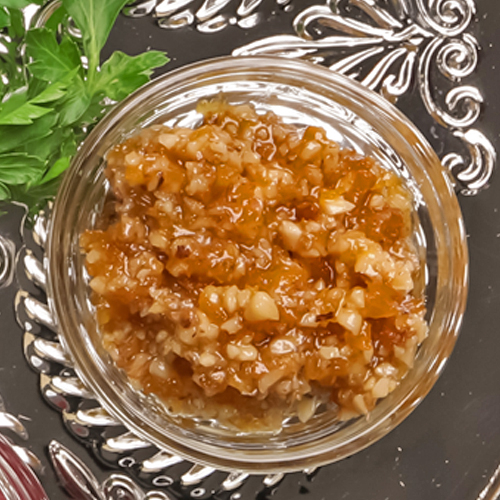
What It Is: If Maror is the pain, Charoset is the labor. It is a thick, sweet paste made from fruit, nuts, and wine.
Symbolism: The word Charoset comes from the Hebrew word cheres (clay). It symbolizes the mortar that the Hebrew slaves used to lay bricks for Pharaoh’s store cities, Pithom and Raamses. However, it also has a deeper, spiritual meaning. The Talmud (Pesachim 116a) suggests that Charoset reminds us of the apple trees in the orchards where Jewish mothers would secretly give birth to keep their children safe from the Egyptians’ decrees. It is a symbol of resilience amidst toil.
Traditions & Customs: Every family has their own recipe passed down through generations. In my home, we follow the Ashkenazi tradition of finely chopped walnuts, tart Granny Smith apples, a heavy dash of cinnamon, and sweet Manischewitz wine.
However, I’ve had the privilege of attending Seders with Sephardic friends whose Charoset is entirely different often a smooth, rich blend of dates, figs, and raisins. Some Persian recipes even include up to 40 different ingredients to represent the 40 years in the desert! Despite the recipe differences, we all use it the same way: to “sweeten” the bitterness of the Maror during the dipping ceremony.
Practical Tips:
- How to prepare: Make your Charoset at least 24 hours in advance. This allows the wine to soak into the fruit and the spices to meld together.
- Consistency: It should be thick and grainy to resemble actual mortar. If it’s too liquid, add more ground walnuts.
- Substitution: If you have nut allergies in the family, I’ve found that sunflower seeds or toasted oats (if you follow the custom of Kitniyot) provide a similar crunch and texture.
3. KARPAS – כרפס (The Green Vegetable)
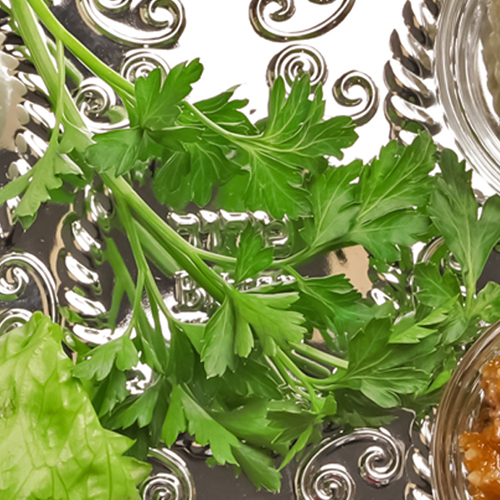
What It Is: Karpas is usually a simple sprig of parsley, a stalk of celery, or even a boiled potato. It represents the “appetizer” of the Seder, but its role is far more significant than a pre-meal snack.
Symbolism: Karpas embodies two contrasting ideas. On one hand, the green vegetable represents spring (Aviv), renewal, and the flourishing of the Jewish people. On the other hand, we dip the Karpas into salt water before eating it. The salt water represents the sweat and tears shed by our ancestors. This pairing reminds us that even in times of growth and hope, we must never forget the pain that preceded our liberation.
Traditions & Customs: We eat Karpas very early in the Seder (the third step, Karpas). In my family, we use a small bowl of salt water for every two guests to ensure everyone can participate comfortably. I’ve noticed that in many Eastern European (Ashkenazi) traditions, boiled potatoes are used because fresh green parsley was nearly impossible to find in cold climates during early spring. My grandfather always insisted on a potato, saying it reminded him of the “humble sustenance” of his youth.
Practical Tips:
- Preparation: Wash your parsley or celery thoroughly and keep it in a glass of water in the fridge so it stays crisp until the Seder starts.
- Substitution: If you aren’t a fan of parsley, sliced radishes or cucumbers are common modern substitutes that still retain the “crunch” and “freshness” of spring.
- What to Avoid: According to My Jewish Learning, we should eat less than a kazayit (the volume of an olive) of the Karpas to avoid triggering the requirement for a final blessing, keeping the focus on the meal to come.
4. Z’ROA – זרוע (The Shankbone)
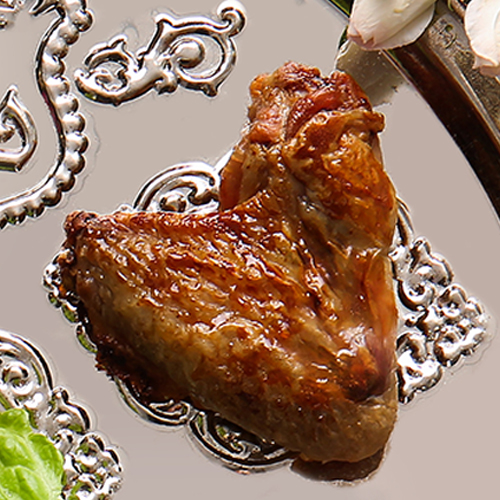
What It Is: The Z’roa is a roasted bone, typically from a lamb or a chicken. It is the only item on the plate that is purely symbolic and not eaten during the Seder itself.
Symbolism: The word Z’roa literally means “arm,” referring to the “outstretched arm” with which God redeemed us from Egypt. It primarily serves as a memorial for the Korban Pesach (the Passover lamb) that was sacrificed on the eve of the Exodus and later in the Holy Temple in Jerusalem. The Talmud (Pesachim 114b) explains that we need two cooked items on the Seder plate to represent the two sacrifices brought during the festival: the Passover offering and the Chagigah (festival offering).
Traditions & Customs: Because we no longer have the Temple, we do not eat roasted lamb on Seder night, as it might appear as if we are trying to replicate the sacred sacrifice. Therefore, the Z’roa sits on the plate as a visual reminder of what we have lost and what we hope will one day be restored. I usually roast a chicken neck over my stove’s gas flame until it is charred and “sacrificial” in appearance.
Practical Tips:
- Where to Buy: Most kosher butchers will provide a “Seder bone” upon request during the weeks leading up to Passover.
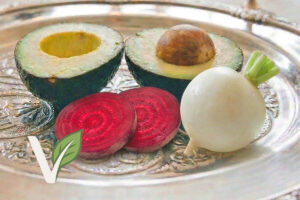
- Vegan/Vegetarian Alternative: A roasted beet is the most traditionally accepted substitute. Its deep red juice evokes the blood of the sacrifice. I have used a beet for many vegetarian guests, and it remains a striking and halakhically sound addition to the table. Make sure to have a look at our guide to the Vegan Seder Plate.
- Pro-Tip: If you use a real bone, wrap it in foil and freeze it after the Seder; many families reuse the same bone for the second Seder or even from year to year (if kept clean and dry).
5. BEITZAH – ביצה (The Roasted Egg)
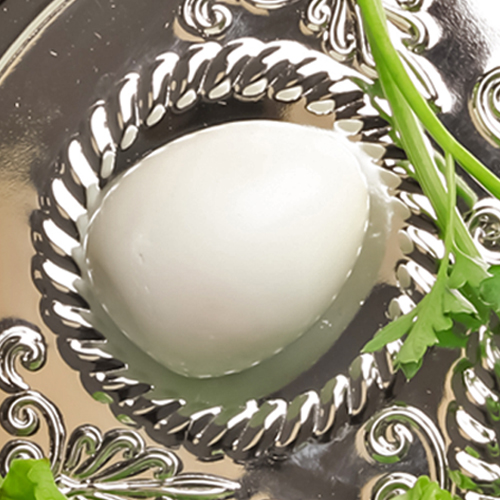
What It Is: A hard-boiled egg that has been roasted or scorched over a flame until the shell is brown and charred in spots.
Symbolism: The Beitzah represents the Chagigah sacrifice, the festival offering that was brought to the Temple on every major holiday. Beyond the sacrifice, the egg is a symbol of mourning for the destruction of the Temple. Its roundness represents the cycle of life, birth, death, and renewal. There is a beautiful teaching in Jewish tradition that the egg is unique because most foods get softer when you cook them, but an egg gets harder. This represents the Jewish people: the “heat” of persecution only serves to make us tougher and more resilient.
Traditions & Customs: While the egg on the Seder plate isn’t eaten during the ritual steps, most families (including mine) begin the actual meal (Shulchan Orech) by eating hard-boiled eggs dipped in salt water. It’s a somber but hopeful start to the feast.
Practical Tips:
- Preparation: Hard-boil the egg first. Once it’s cooled, you can scorch the shell by holding it with tongs over a flame or placing it in a hot oven for a few minutes.
- Vegan/Vegetarian Alternative: The egg on the Seder plate can also be adapted when preparing a vegan Seder. If you would like to explore common alternatives and how they are used, see our guide to the vegan Passover Seder plate.
- Customs: In some Sephardic traditions, the eggs are slow-cooked with onion skins (Huevos Haminados) until they turn a deep, rich brown.
6. CHAZERET – חזרת (Second Bitter Herb)
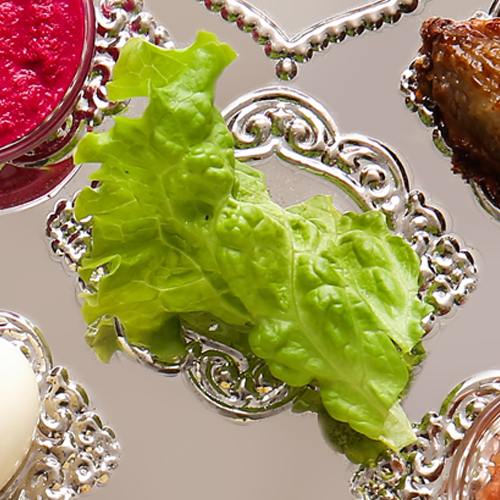
What It Is: This is the “hidden” item of the Seder plate. It is almost always romaine lettuce.
Symbolism: If Maror represents the sharp, immediate pain of slavery, Chazeret represents the way slavery “crept up” on the Israelites. Romaine lettuce starts out sweet and soft, but if left in the ground too long, the stalk becomes hard and incredibly bitter. This mirrors our experience in Egypt, which began with Joseph’s favor and ended in bitter bondage.
Traditions & Customs: Chazeret is specifically used for the Korech (the Hillel sandwich). We take the lettuce, wrap it in Matzah with some Maror and Charoset, and eat it to fulfill the ancient custom of Hillel the Elder.
Practical Tips:
- Preparation: Romaine lettuce must be checked very carefully for small bugs to remain kosher. I recommend buying “pre-checked” greenhouse-grown stalks if available.
- Note: Not every Seder plate has a separate indentation for Chazeret. If yours doesn’t, you can place it in a bowl next to the plate or stack it with the Maror.
The Arrangement & Order
Setting the Seder plate is an art form that follows specific spiritual and practical logic. According to the Ari (the great Kabbalist Rabbi Isaac Luria), the arrangement reflects the divine attributes (Sefirot) and the way God interacts with the world.
The Traditional Arrangement (The “Ari” Style)
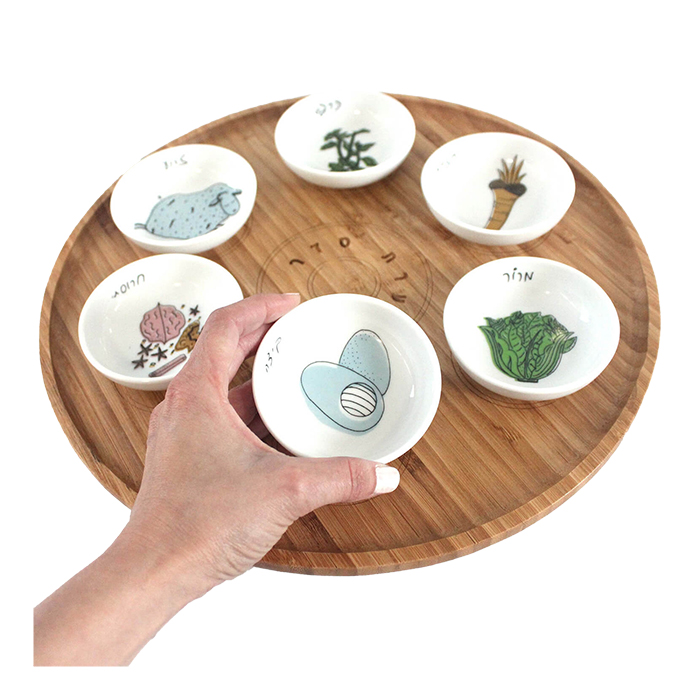
In this most common layout, the items are arranged in two triangles:
- Top Right: Z’roa (Strength/Judgment)
- Top Left: Beitzah (Lovingkindness)
- Center: Maror (Beauty/Balance)
- Bottom Right: Charoset (Endurance)
- Bottom Left: Karpas (Splendor)
- Bottom Center: Chazeret (Foundation)
Why the Order Matters
Practically, many people arrange the items so they are easy to reach in the order they are used. Jewish law suggests we should not “pass over” a mitzvah. This means the Karpas (used first) should be positioned so you don’t have to reach over the Maror to get to it.
Variations:
- Sephardic Customs: Many Sephardic families place the items directly on the three Matzahs rather than on a separate plate, or use a large basket to hold all the symbolic foods together.
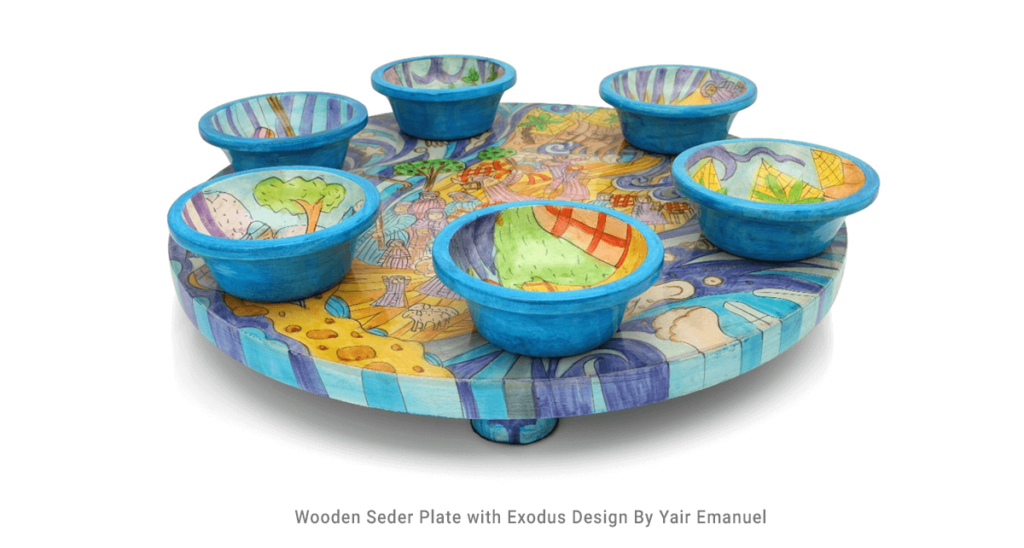
- Modern Artistic Arrangements: Today, many people use individual small bowls or tiered plates. While the aesthetics change, the spiritual “map” remains the same.
Contemporary Additions for 2026
While the six traditional items are the “halakhic core,” many contemporary families choose to add a seventh or eighth item to represent modern struggles for freedom and inclusivity. As we reflect on our world in 2026, here are three meaningful additions you might see:
The Orange
Perhaps the most famous modern addition, the orange represents the inclusion of LGBTQ+ individuals and women in Jewish leadership. The tradition involves spitting out the seeds to represent “spitting out” homophobia and prejudice. It reminds us that when every segment of the community is included, the “fruit” of our tradition is sweeter.
The Artichoke
I first saw an artichoke on a Seder plate at a friend’s house a few years ago. It has come to symbolize the complexity of interfaith families and “the heart” of Jewish identity. Like an artichoke, we often have many protective layers or “leaves,” but at the center is a tender heart that connects us all to the same source of liberation.
Fair Trade Chocolate or a Cocoa Bean
This is a powerful reminder of modern-day slavery. Despite our own Exodus, forced labor still exists in the global chocolate industry. Placing a piece of fair-trade chocolate on the plate invites a conversation about our responsibility as consumers to ensure that no one is enslaved to provide our comforts.
Modern & Unique Seder Plates
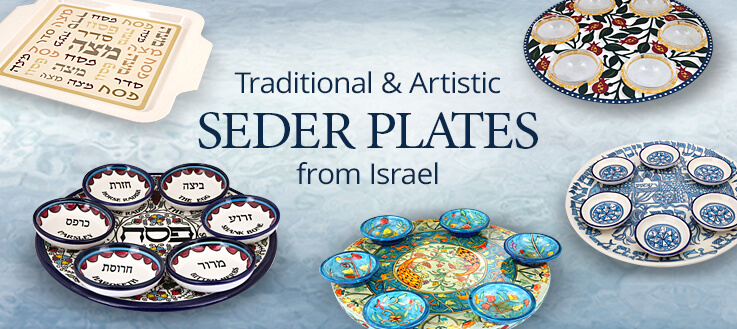
The Seder plate has evolved significantly over the centuries. Historically, it was often just a simple woven basket or a humble wooden tray. Today, it has become a canvas for Jewish artistic expression. In my travels through the workshops of Jerusalem, I have seen everything from hand-painted Armenian ceramics to sleek, industrial concrete designs that look like they belong in a modern art gallery.
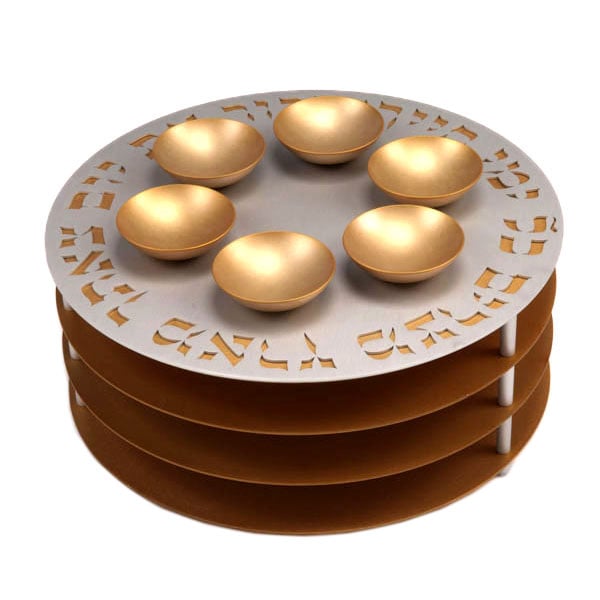
Three-Leveled Seder Plate By Agayof Design
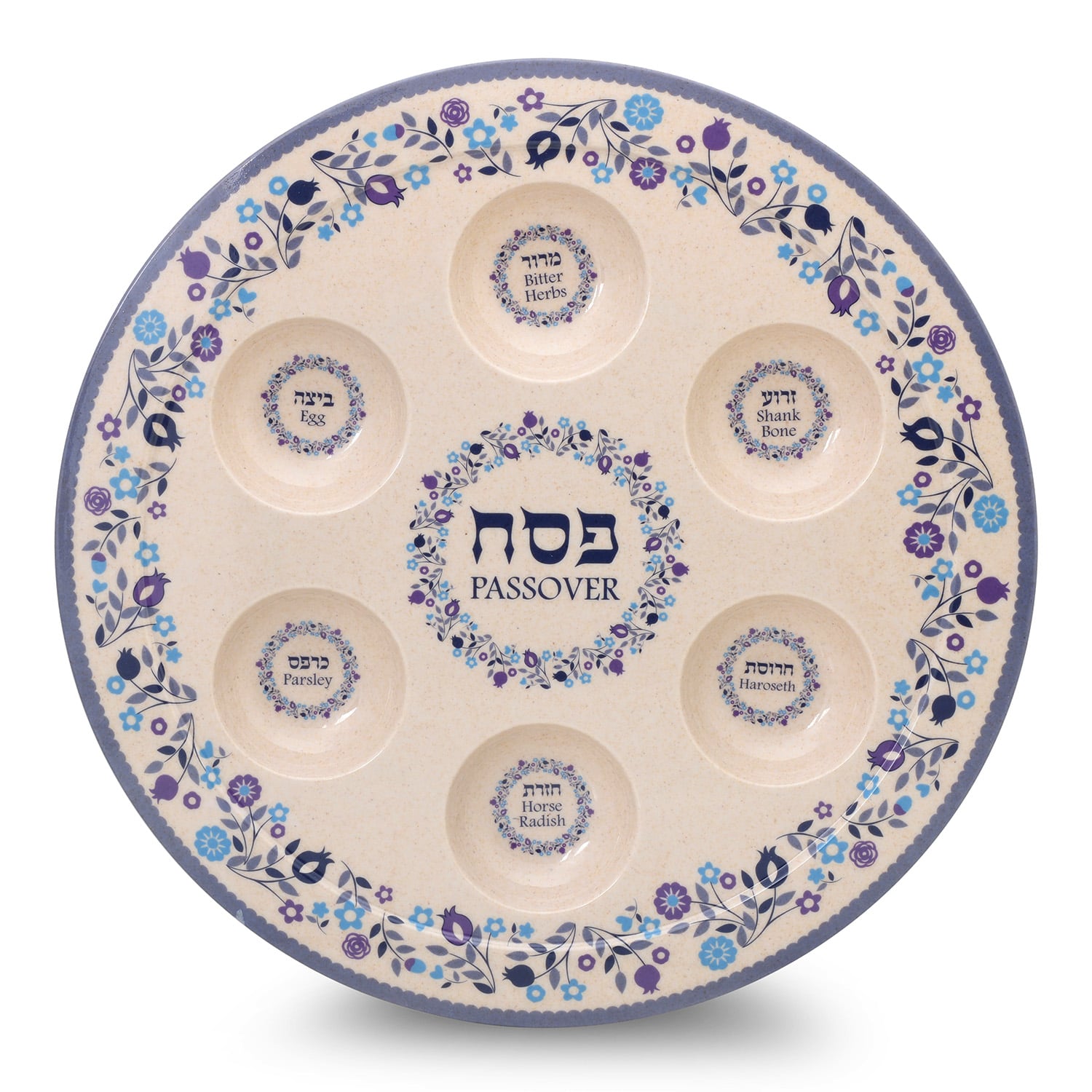
Stylish Passover Seder Plate With Floral Design
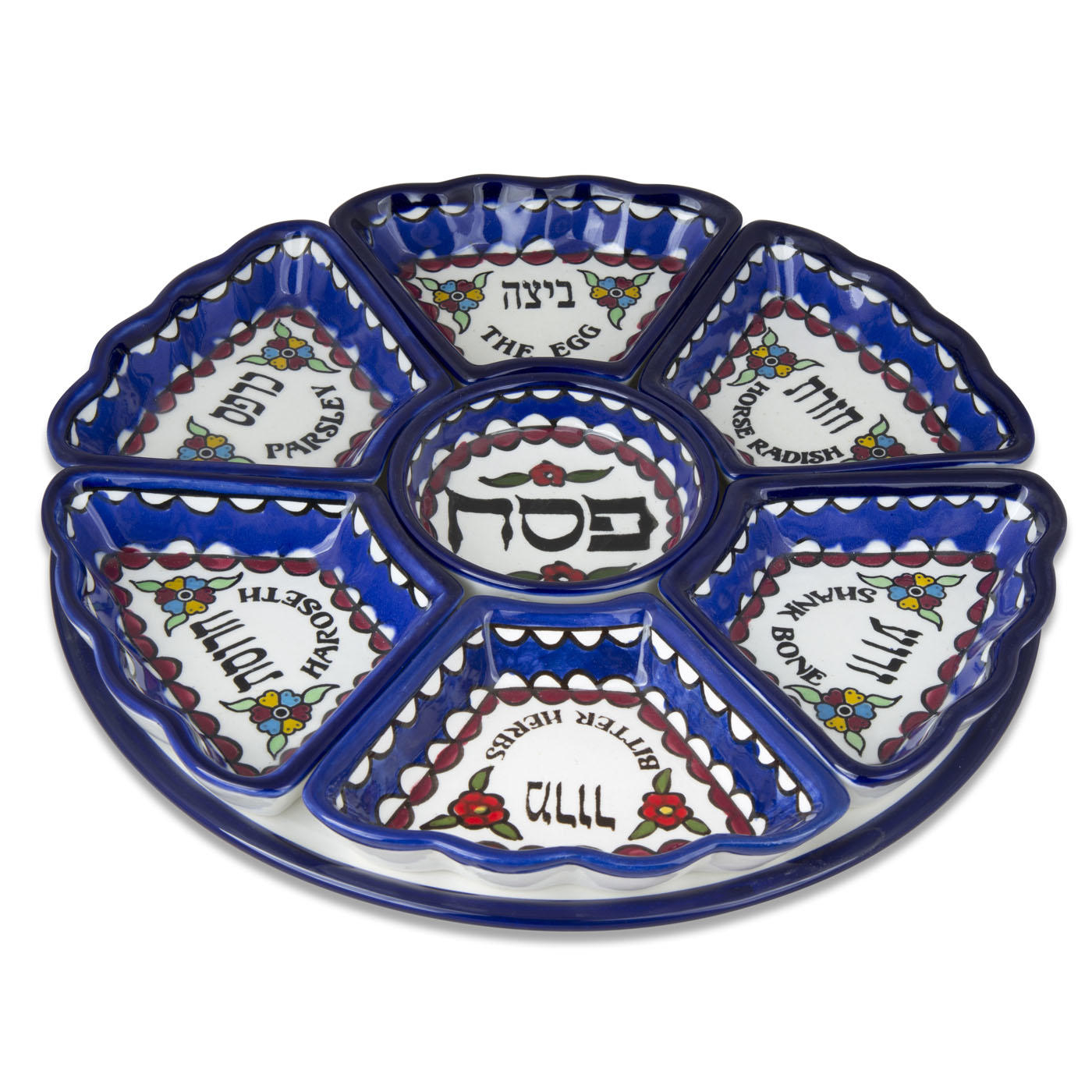
Deluxe Seder Plate With Floral Design By Armenian Ceramics
Choosing Your Style
Three-Tiered Plates
These are incredibly practical if you have a crowded table. They feature a top plate for the six items and three “drawers” or shelves underneath to hold the three ceremonial Matzahs.
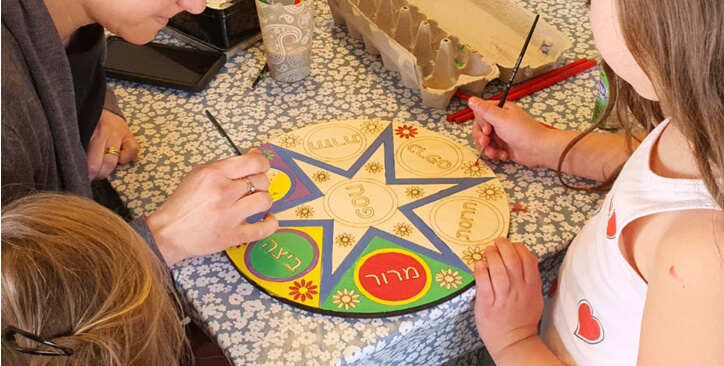
DIY Plates for Children
One of my favorite memories is the year my children made their own Seder plates out of salt dough. While we used the “official” silver plate for the leader, having the kids’ plates around the table kept them engaged and proud of their contribution.
Frequently Asked Questions
Do you eat everything on the Seder plate?
No. This is a common point of confusion for guests! The Z’roa (shankbone) and the Beitzah (egg) are purely symbolic and are not eaten during the Seder. However, the Maror, Karpas, and Charoset are essential parts of the meal’s rituals. The Chazeret is also eaten as part of the Hillel sandwich.
What if I can’t find certain items?
Don’t panic, tradition is flexible when it comes to availability.
- If you can’t find a shankbone, a roasted chicken wing or neck works perfectly.
- If parsley isn’t available for Karpas, use a boiled potato or celery.
- For Maror, if fresh horseradish is too intense, romaine lettuce is a fully acceptable alternative according to the OU.
Is the egg boiled or roasted?
It is both. You should hard-boil the egg first to ensure it is solid, then carefully char the outside of the shell over a gas flame or under a broiler. This “roasting” is what connects it to the ancient festival sacrifice.
How many Seder plates do you need?
Traditionally, only one plate is required at the head of the table. However, in our family, we’ve found that for large gatherings, it’s much easier to have “satellite” plates or small bowls of Maror and Charoset scattered down the table so everyone can reach them easily without interrupting the flow of the night.
What do you do with the items after the Seder?
Items used for a mitzvah should be treated with respect. In my home, we usually wrap the shankbone and discard it separately. The Charoset, however, is far too delicious to waste! We keep the leftovers and eat them with Matzah for breakfast throughout the week.
Can you make a vegan Passover Seder plate?
Yes. The symbolism of the Seder plate can still be preserved by using traditional alternatives, such as a roasted beet instead of the shank bone. For more examples and explanations, see our guide to the vegan Passover Seder plate.
Conclusion & Next Steps
The Seder plate is more than just a tradition; it is a physical testimony to our journey from slavery to freedom. Each year, as I arrange the six items, I am reminded that the story of the Exodus is not just a historical event, it is a living, breathing reality. Whether you choose a traditional silver heirloom or a modern ceramic piece, the items you place on your plate tell the story of who we were, who we are, and who we hope to become.
As you prepare your Seder plate for 2026, I encourage you to think about what each item means to you personally. Is the Maror particularly sharp this year? Does the Charoset feel especially sweet? Let these flavors guide your conversation and your reflections on freedom.
Ready to complete your Passover preparations?
- All you need to know from cleaning to Passover greetings: Passover 2026: The Complete Guide
- Learn the Ritual: Read our Practical Guide to the 15 Steps of the Seder
- Find Your Voice: Choose the Perfect Haggadah
- Preparing a Vegan Seder? See our Guide to the Vegan Passover Seder Plate
May your Seder table be full, your questions be many, and your journey toward freedom be meaningful!
For more information about our research process, sourcing, and editorial review, please see our editorial standards and content policy.