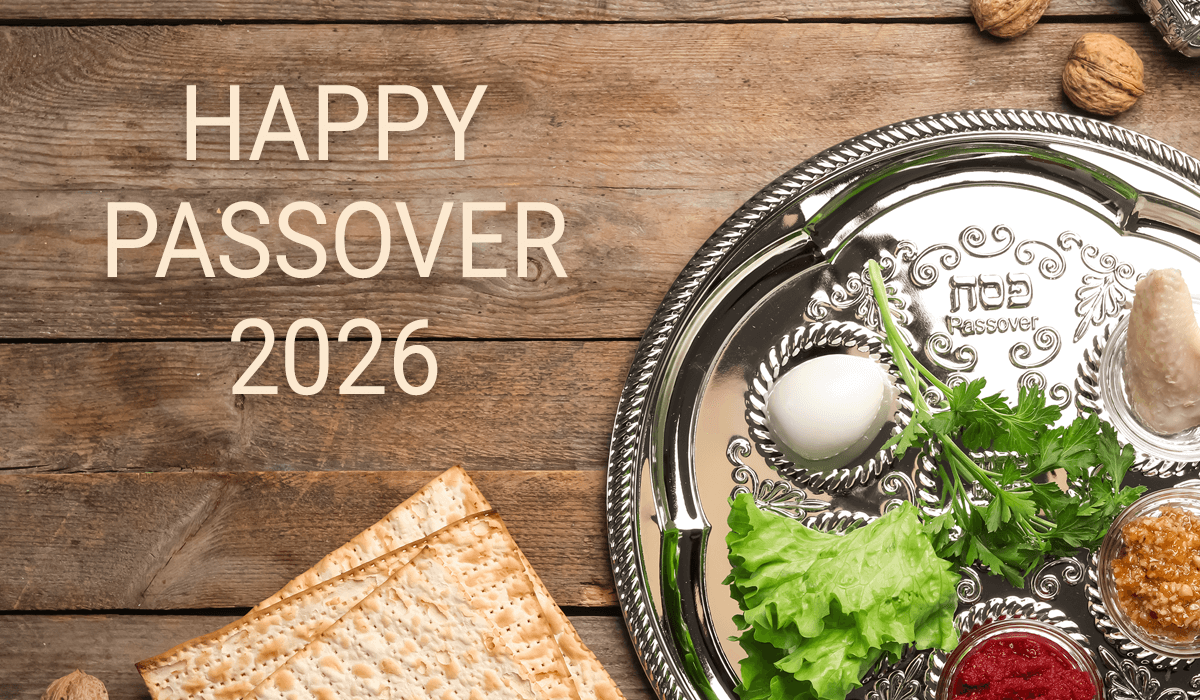
Whether you’re planning your first Seder or refreshing your family traditions, this Passover guide walks you through every step. Explore the sections below to easily find what you’re looking for, from key dates and preparation tips to Seder rituals and meaningful symbols, and find exactly what you need for a festive and well-prepared Pesach.
1. When does Passover start in 2026?
2. One Holiday, Three Names, Endless Meaning
3. Preparing for Passover
4. The Seder Night: Reliving the Pesach Story
5. The Seder Plate Symbols
6. Matzah and Traditions
7. Greetings, Gifts & Etiquette
8. The Passover Meal
1. When does Passover start in 2026?
Passover 2026 begins on Wednesday evening, April 1, and concludes on Thursday evening, April 9. For Jewish communities in the United States and the Diaspora, Passover lasts a total of eight days.
Passover 2026 Calendar (Outside Israel)
| Date | Day | Observance |
|---|---|---|
| April 1, 2026 | Wednesday evening | First Seder, Start of Passover |
| April 2, 2026 | Thursday | Day 1 |
| April 3, 2026 | Friday | Day 2 |
| April 4, 2026 | Saturday | Chol HaMoed |
| April 5, 2026 | Sunday | Chol HaMoed |
| April 6, 2026 | Monday | Chol HaMoed |
| April 7, 2026 | Tuesday | Chol HaMoed |
| April 8, 2026 | Wednesday | Day 7 |
| April 9, 2026 | Thursday evening | Passover Ends |
✓ Tip: Pin this table to the fridge a couple of weeks before Pesach. This makes Seder night, workdays, and family visits much easier to coordinate.
Pesach in Israel vs. outside Israel
In Israel, Passover is observed for seven days and ends on Wednesday evening, April 8, 2026. Outside of Israel, including the United States and Europe, Passover is celebrated for eight days and ends on Thursday evening, April 9.
The extra day outside Israel is rooted in historical calendar uncertainty. In ancient times, Jewish communities outside the Land of Israel did not always receive confirmation of the new month in time, so an additional festival day was observed to ensure the holiday was kept correctly. Even though the calendar is now fixed, this tradition remains widely observed in the Diaspora.
From experience, this difference often surprises guests who are used to celebrating in Israel or who are attending their first Seder abroad, so it is something I always clarify early when inviting people.
Why the dates change every year
Passover follows the Hebrew lunar calendar and always begins on the 15th of Nisan. Because the Hebrew calendar is lunar-based and the Gregorian calendar is solar-based, the dates shift each year on the civil calendar.
Despite this yearly shift, Passover always falls in the spring, reflecting the biblical description of the Exodus taking place in the season of renewal. So in essence, the Hebrew calendar is lunar and solar. This means Pesach can fall anywhere from late March to late April, which is why checking the Pesach 2026 calendar early is especially helpful for travel and Seder planning.
For a deeper explanation of what happens on that first evening and why it is so central, see our detailed article on the First Night of Passover.
2. One Holiday, Three Names, Endless Meaning
The word “Passover” comes from the biblical story in which God “passed over” the homes of the Israelites during the final plague in Egypt, sparing their firstborn. This moment is central to what is Passover and why the holiday exists at all.
In Hebrew, the holiday is called Pesach (פסח). The Hebrew root means “to pass over” or “to spare.”
Passover is also known as Chag HaHerut, the Festival of Freedom. This name highlights the deeper meaning of Passover beyond the historical event. It is not only about what happened in Egypt, but about the enduring idea of freedom, dignity, and responsibility. In many families, including my own, this theme shapes the entire Passover ceremony, from the questions we ask to the stories we tell.
The story of the Exodus
At the heart of the Jewish festival of Passover is a dramatic human story. It begins in Egypt, where the Israelites are trapped in slavery, their lives defined by hard labor and fear. Generation after generation grows up knowing only oppression, until Moses steps forward with a simple but dangerous message: “Let my people go!”

Pharaoh refuses, and the story turns dark. The Ten Plagues unfold one by one, each more unsettling than the last. Yet the ten plagues Passover story is not told to glorify suffering. During the Seder, we recite the plagues and, according to some traditions, deliberately lessen our joy by spilling a drop of wine for each one, acknowledging that our freedom came at the cost of Egyptian suffering. In Ashkenazi tradition, this act also symbolically “pours away” the danger of the plagues, protecting those gathered at the table.
Freedom, however, is not the end of the story. It is the beginning. The Exodus leads not straight into comfort, but into the desert, into uncertainty, and eventually toward receiving the Torah. Passover reminds us that leaving Egypt was only the first step. True freedom comes with responsibility and the ongoing work of shaping a people. That unfinished journey is why the Exodus still feels alive every time we tell it again.
What makes Passover distinctive is that it isn’t just celebrated, it is performed through a carefully structured Passover ceremony. The heart of this ceremony is the Seder (meaning “order” in Hebrew), a ritual meal guided by the Haggadah, the traditional text that sets the sequence of readings and songs used to retell the Exodus story step by step. This makes Passover unique among Jewish holidays. Rather than simply commemorating history, we actively relive it around the table. Be sure to explore our full First Night of Passover 2026 Guide for all the details.
3. Preparing for Passover
Preparing for Passover is not something that happens in a single afternoon. In our home, it begins weeks before the Seder, with both physical Passover and a new buzz in the house that signals something meaningful is on the way.
Cleaning and removing chametz
One of the central elements of Passover preparation is removing chametz, any leavened bread product made from wheat, barley, rye, oats, or spelt that has risen. This includes obvious items like bread and pasta, but also crumbs in drawers, forgotten cereal boxes, and anything containing even small amounts of leaven.

The process of cleaning for Passover can feel intense, especially the first time. I remember thinking it was only about crumbs. Over time, I understood that the physical cleaning carries symbolic weight. Chametz, which rises and expands, is often described in Jewish thought as representing ego or “puffed up” pride. Removing it from our homes becomes a way of reflecting on what needs clearing out internally as well.
On the evening before Passover begins, we perform Bedikat Chametz, the traditional search for chametz. By candlelight, we walk through the house and check carefully for any remaining crumbs. There is something surprisingly moving about this ritual. It slows everyone down. The children get involved. It turns into a fun ceremony.
✓ Tip: Once a room has been cleaned and checked for chametz, mark it clearly. In our house, a floor cloth placed at the entrance sends a clear message: “Wipe your feet, and absolutely no snacks beyond this point.” Fewer arguments, and no need to recheck a room you have already declared Pesach-ready.
Shopping and transitioning the kitchen
Alongside cleaning for Passover comes Passover shopping and the full transition to a kosher for Passover kitchen. This means putting away regular dishes and cookware and bringing out special sets reserved only for Pesach. In Israel, I have seen entire supermarket aisles transform weeks in advance, filled with clearly marked kosher for Passover products.
What should you look for? Products labeled “Kosher for Passover” are certified to contain no chametz and to meet additional holiday requirements. Depending on tradition, some communities also avoid kitniyot, such as rice and legumes, so it is always wise to follow your family custom or consult your rabbi for specific guidance.
As for timing, I have found that starting Passover preparation at least two to three weeks in advance makes a tremendous difference. Begin with pantry checks and basic Passover shopping, then move into deeper kitchen cleaning closer to the holiday. The earlier you organize your kosher for Passover essentials, the calmer the final days before the Seder will feel.
✓ Tip: From Purim onward, try not to stock up on pantry items you will not realistically finish before Passover. It makes the transition to a chametz-free kitchen far simpler.
Preparation sets the tone for the entire holiday. Having the right tools, a properly prepared kitchen, and thoughtfully chosen Passover essentials does not just make things easier, it allows you to focus on the meaning of the Seder itself.
After the weeks of cleaning, labeling, storing, and reorganizing, the practical work gives way to something more beautiful. The kitchen is ready. The shelves are cleared. And now, instead of putting things away, we begin taking out the special pieces reserved just for Pesach. That is when preparation turns into celebration.
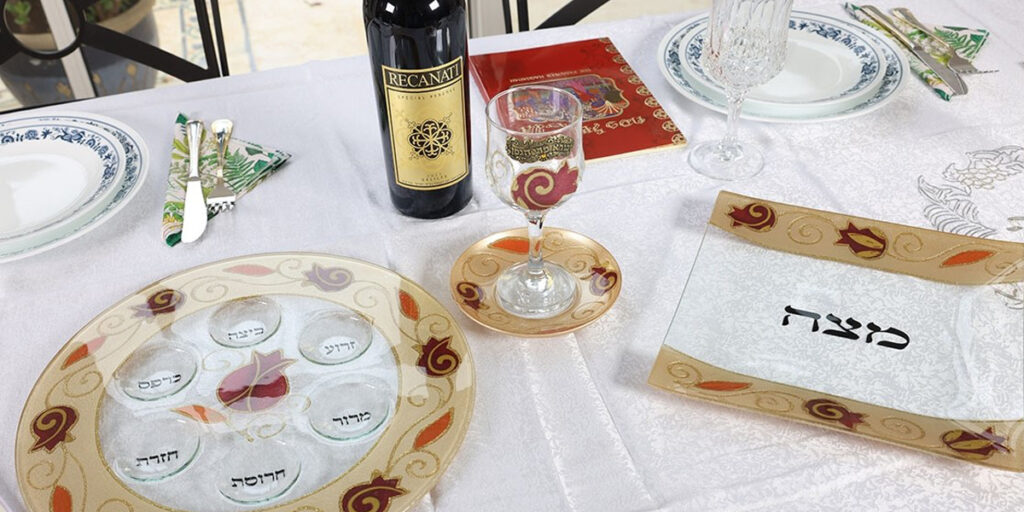
The Night We Set the Table Like Royalty
There is something else I have always found striking about Passover. On most Jewish holidays, even at our most joyful moments, there is an undercurrent of modesty, a quiet awareness of the destruction of the Temple in Jerusalem that tempers celebration.
But on Pesach, the tradition in many homes is the opposite. This is the night when families bring out the silver, the heirloom Kiddush cups, the beautifully crafted Seder plates, and special Judaica used only once a year. The table shines. It is as if, for this one evening, we allow ourselves to fully express our joy and freedom.
4. The Seder Night: Reliving the Pesach Story
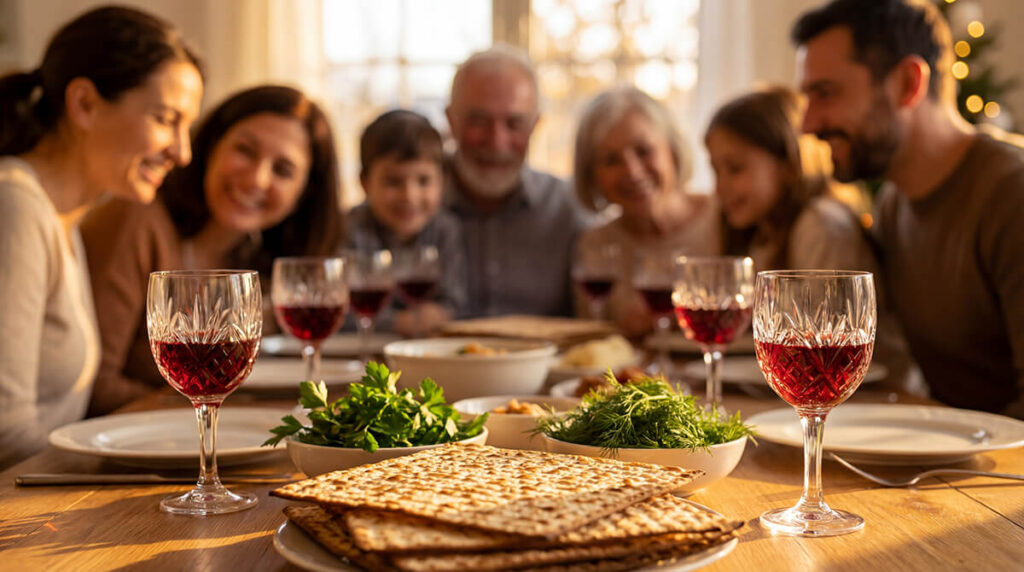
If you have ever wondered what is Passover Seder, the simplest answer is this: it is an ordered ritual meal. The word “Seder” literally means “order,” and the entire evening follows a carefully structured seder order designed to retell the Exodus story step by step.
But a Passover seder is more than a meal. It is an experience built around memory, symbolism, and participation. We do not just talk about leaving Egypt. We taste it in the matzah and the bitter herbs, and act it out through questions and rituals.
In 2026, the first Seder will be held on the evening of April 1. In the United States and other countries outside Israel, a second Seder takes place on April 2. That second night often feels slightly more relaxed, but the structure remains the same, guiding us once again through the story of freedom.
The Haggadah: Your Guide for the Evening
What is a Haggadah? It is the book that sets out the entire evening, including the blessings, narrative passages, songs, and instructions that shape the seder meal.
The passover haggadah is both script and soundtrack. It tells us when to drink, when to eat, when to sing, and when to pause and explain. Some families use traditional editions filled with classic rabbinic commentary. Others choose modern versions with illustrated pages that make it easier for children to follow along. The text itself remains consistent, but the style can vary widely, allowing each household to find a Haggadah that feels right for them. Have a look at our blog on Haggadahs from around the world.
If you are preparing for your own Seder, choosing a Haggadah that matches your family’s style can make a meaningful difference.
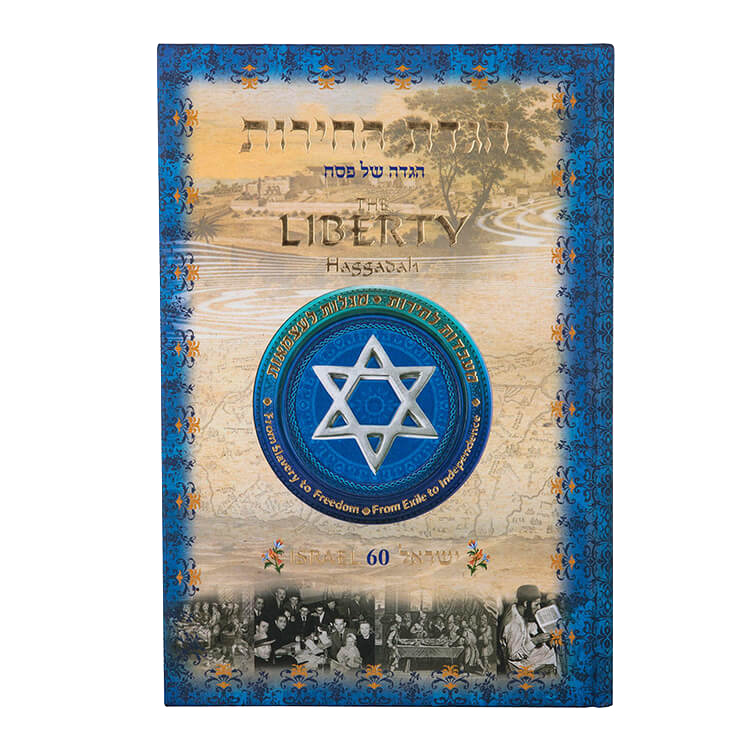
The Gold Edition Liberty Hebrew-English Haggadah
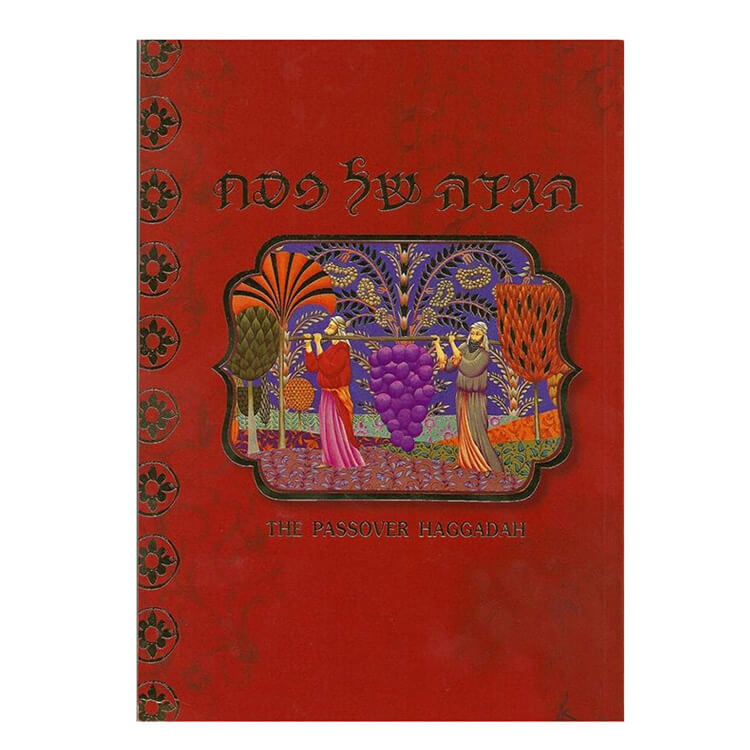
Illustated Passover Haggadah in Hebrew and English
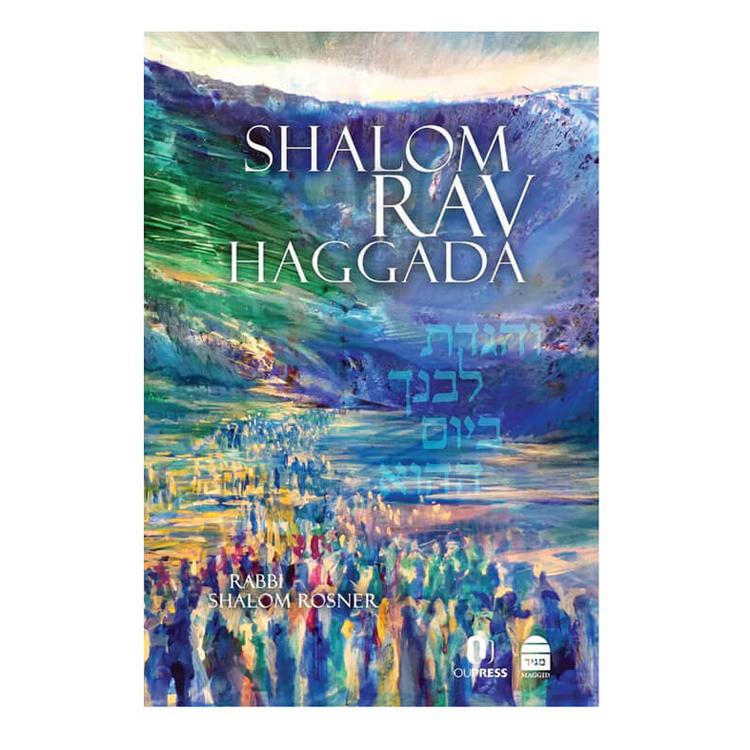
The Koren Shalom Rav Passover Haggadah in Hebrew and English
The Structure Behind the Seder Order
The Seder is built around fifteen distinct steps, forming the classic seder order. While most people do not memorize all fifteen names, the structure quietly holds the evening together. It begins with Kadesh, the blessing over the first cup of wine, and moves through symbolic foods, storytelling, songs, and the festive seder meal itself.
This clear structure is one of the reasons the Seder works so well across generations. Even when conversations wander or children grow restless, the order gently brings everyone back to the flow of the evening.
The Four Questions and Why We Ask Them
One of the most memorable moments of the night is the Four Questions, known as the Ma Nishtana. Traditionally recited by the youngest participant who is able, the four questions Passover section begins with: “Why is this night different from all other nights?”
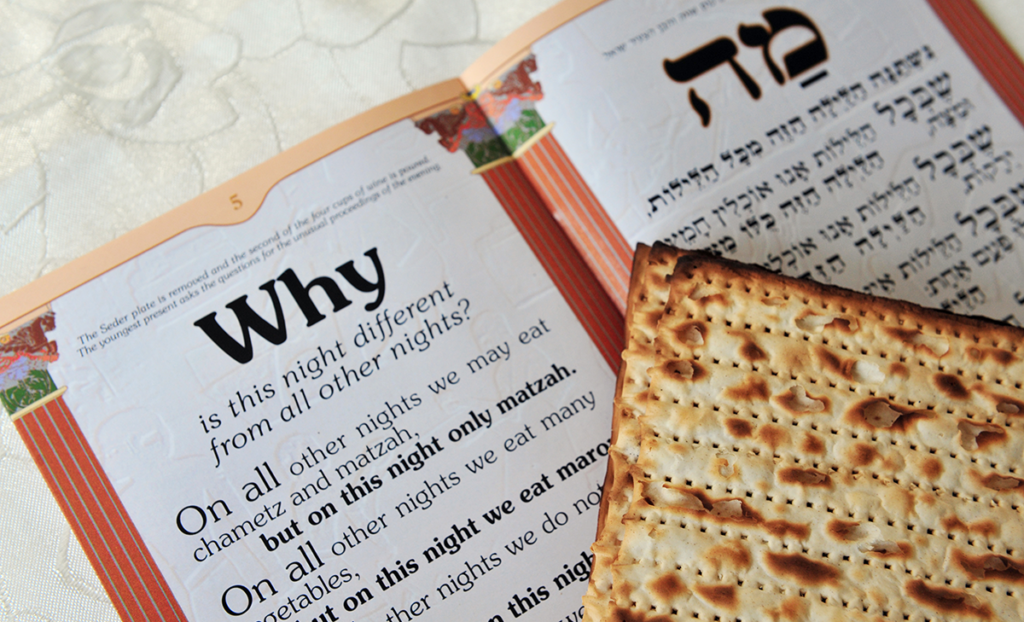
The questions focus on unusual elements of the evening, eating matzah instead of regular bread, dipping foods twice, reclining, and eating bitter herbs. But the deeper purpose is not simply to ask. It is to spark curiosity. The Seder is designed to engage the next generation. By encouraging questions, the Passover tradition ensures that the story is not passively received but actively explored.
The Four Cups of Passover
Throughout the evening, we drink four cups of wine or grape juice. Each cup marks a key stage in the narrative and corresponds to the four biblical expressions of redemption: “I will bring you out,” “I will deliver you,” “I will redeem you,” and “I will take you as My people.”
In practical terms, the four cups create natural pauses in the evening. They slow us down and anchor the flow of the seder meal. Whether using simple glasses or beautifully crafted Kiddush cups, this ritual adds both symbolism and rhythm to the night.
The Cup of Elijah and the Open Door
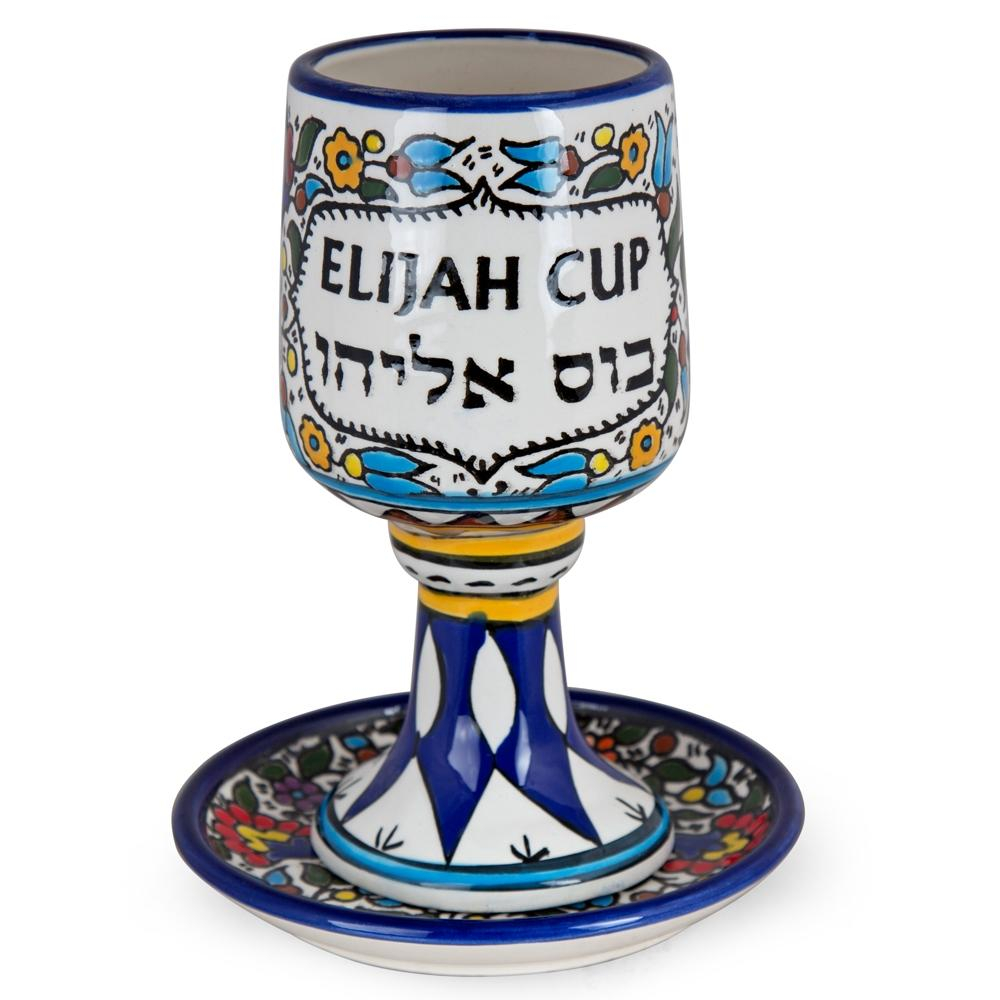
Toward the end of the Seder, an additional cup is poured but not drunk. This is the cup associated with Elijah the Prophet, a central figure in the Elijah Passover tradition. At a designated moment, the door is opened.
Why open the door? Traditionally, it is an expression of faith and trust. On the very night we speak about redemption, we symbolically welcome Elijah, who in Jewish tradition is believed to visit every generation and herald the arrival of the Messiah. The Cup of Elijah reminds us that the story of freedom did not end in Egypt and is not yet complete.
As a child, this was always one of the most suspenseful parts of the evening for me. Even as adults, there is something powerful about that brief pause, the open doorway, and the shared sense of anticipation.
We Must See Ourselves as If We Left Egypt
The Passover Seder is carefully structured, but it never feels mechanical. In my experience, this ceremonial retelling is what transforms the Jewish festival of Passover from a historical lesson into something personal. As the Passover Haggadah itself teaches, “In every generation a person is obligated to see himself as if he personally went out of Egypt” (Mishnah Pesachim 10:5). That instruction invites each of us to step into the story anew.

On a personal note, I only fully understood how powerful that structure is when we moved to Israel. Outside of Israel, we had always celebrated two nights, and the second seder was noticeably more relaxed. The pressure was off, the explanations flowed more naturally, and the children asked deeper questions because they already knew what was coming. When that second evening disappeared, our kids genuinely missed it. They missed the chance to relive the story again, to go through the steps once more and make it their own. The Seder becomes something we grow into and carry with us.
Whether you’re hosting your first Seder or just want to deepen your understanding of each step, this all-in-one 2026 Seder Guide walks through everything you need to know. You can also learn more about the symbolic Seder plate foods and their meaning in this dedicated guide.
5. The Seder Plate Symbols
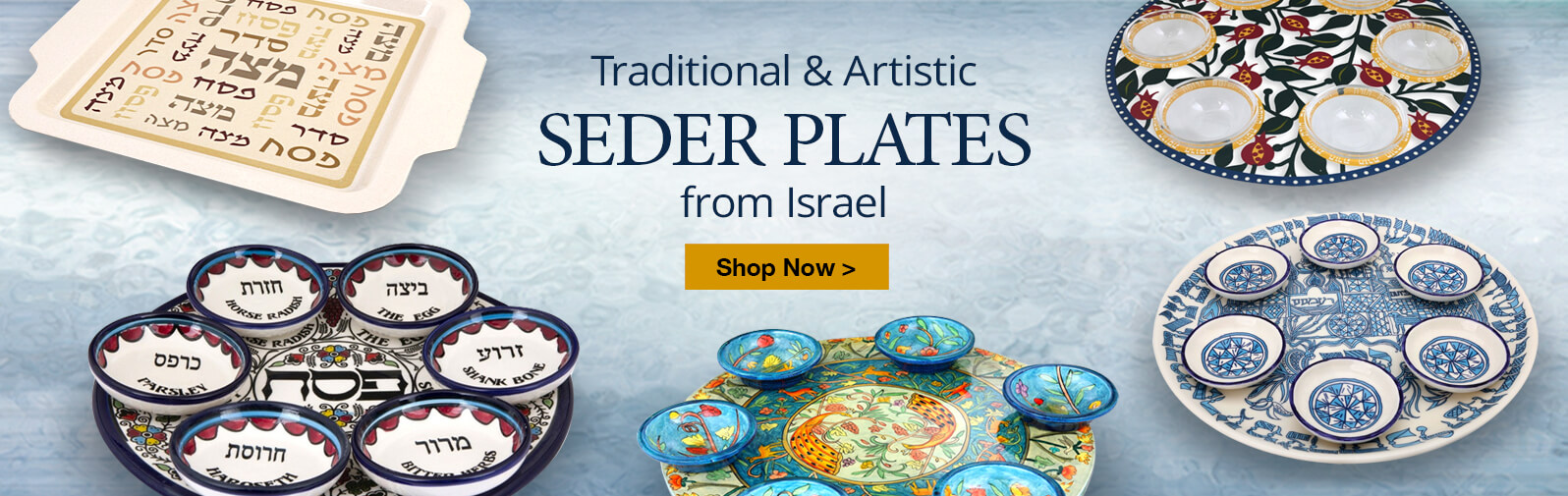
If you walk into a home on Seder night, your eye is almost immediately drawn to the Seder plate. The Passover seder plate sits at the center of the table, not just as decoration, but as a visual summary of the entire story. For many guests, especially children, the seder plate is the first thing they study. What is on a seder plate? Why these foods? Why these shapes and colors?
In our home, setting the Seder plate is the moment when everything begins to feel real. After weeks of passover preparation, the symbols finally come together in one place. It becomes the centerpiece around which the entire evening unfolds.
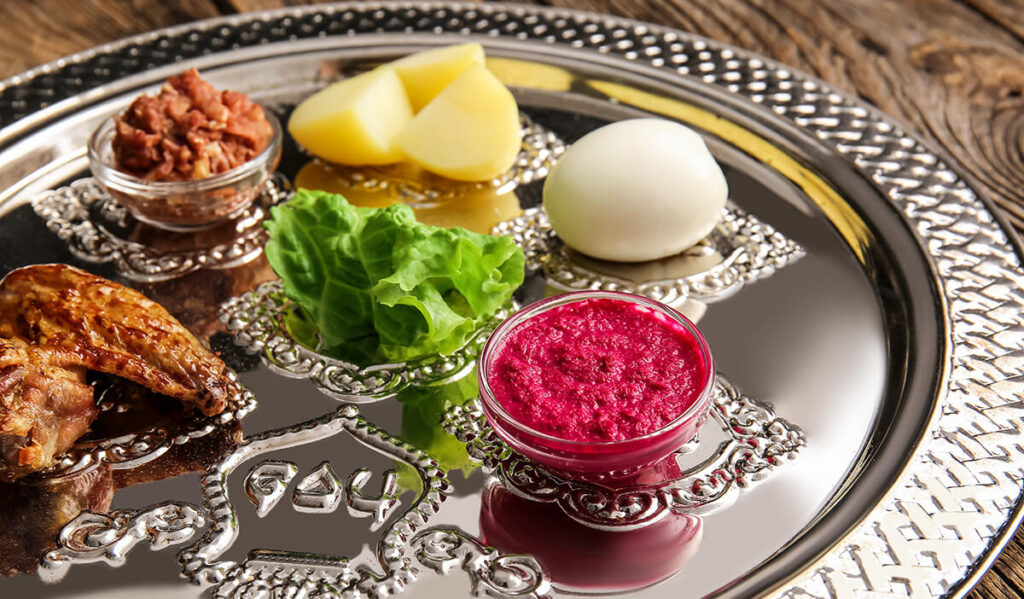
The Six Symbolic Foods
So what is on a seder plate? Traditionally, there are six symbolic foods, each representing a different element of the Exodus story. While each has deep layers of meaning, here is a brief overview:
| Item | Description | Symbolism |
|---|---|---|
| Maror | Bitter herbs, often horseradish or romaine lettuce | Represents the bitterness of slavery |
| Charoset | A sweet paste made of fruit, nuts, and wine | Symbolizes the mortar used by the Israelites in forced labor |
| Karpas | A green vegetable such as parsley, dipped in salt water. In some Ashkenazi traditions, a boiled potato is used instead. | Recalls the tears shed in slavery |
| Z’roa | A roasted shank bone | Represents the Passover sacrifice brought in the Temple in Jerusalem |
| Beitzah | An egg | Symbolizes mourning for the destroyed Temple and the cycle of renewal |
| Chazeret | A second bitter herb used later in the meal, often romaine lettuce | Used for the Hillel sandwich or to wrap the Maror |
Each of these seder plate items carries both historical and emotional weight. Customs may vary by community, and interpretations can differ slightly between Ashkenazi and Sephardic traditions, so it is always wise to follow your family custom or consult your rabbi for specific guidance. To better understand the symbolic foods that shape the evening, visit our dedicated Passover Seder plate items guide.
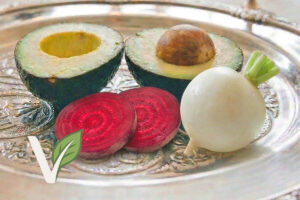
If you are planning a vegan Seder, no worries. See our guide to a vegan Passover Seder plate with Traditional Alternatives.
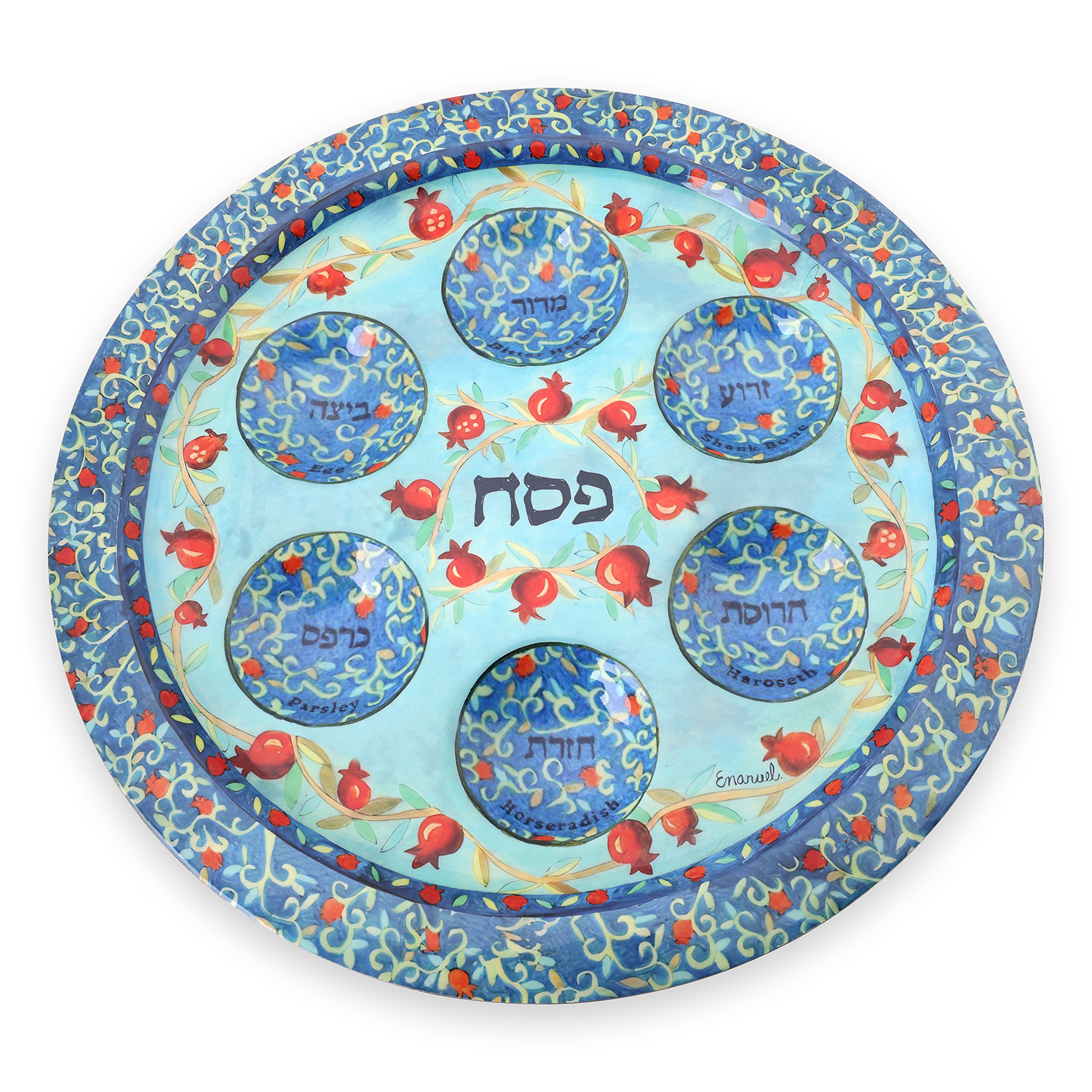
Hand Painted Aluminum Seder Plate by Yair Emanuel
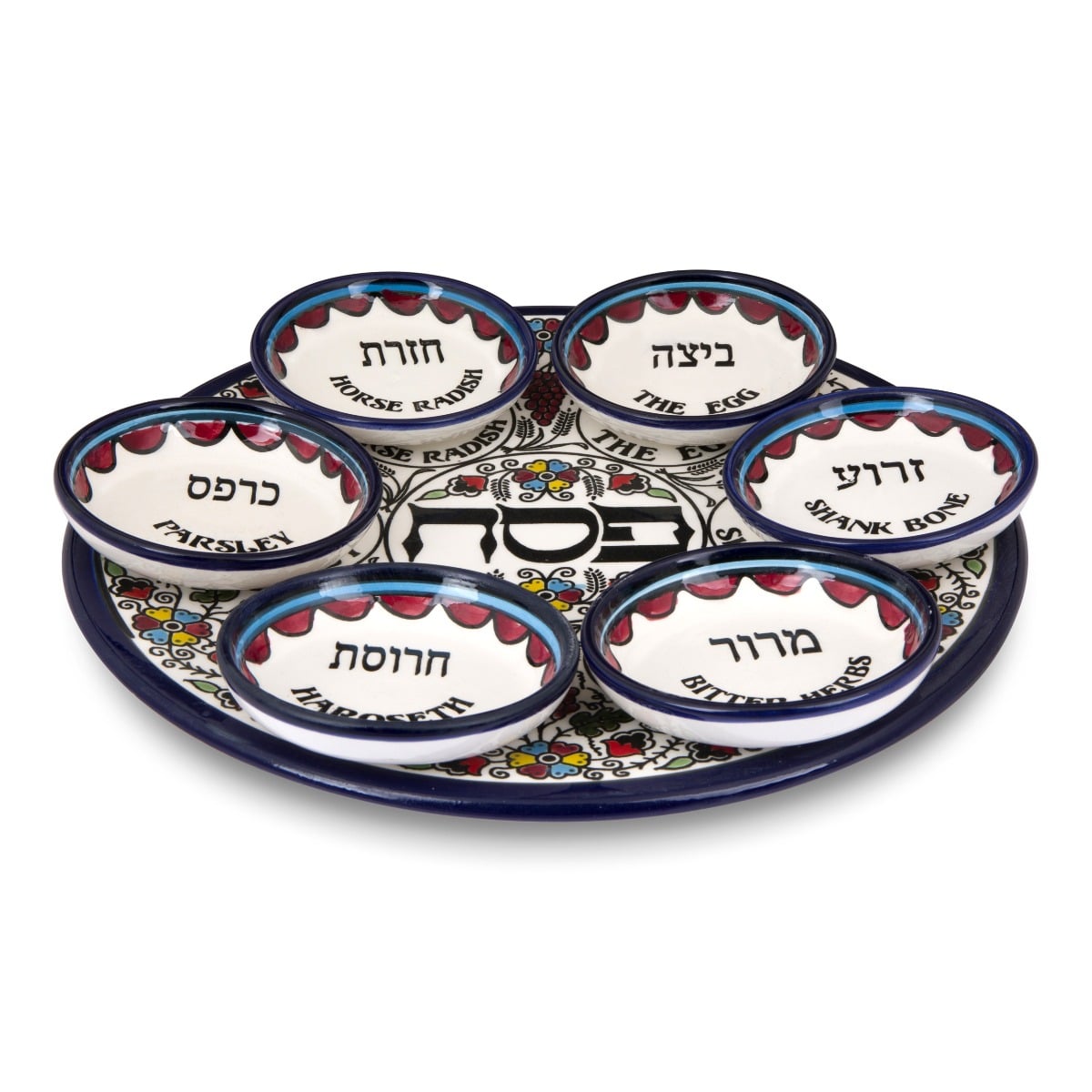
Seven-Piece Seder Plate By Armenian Ceramics
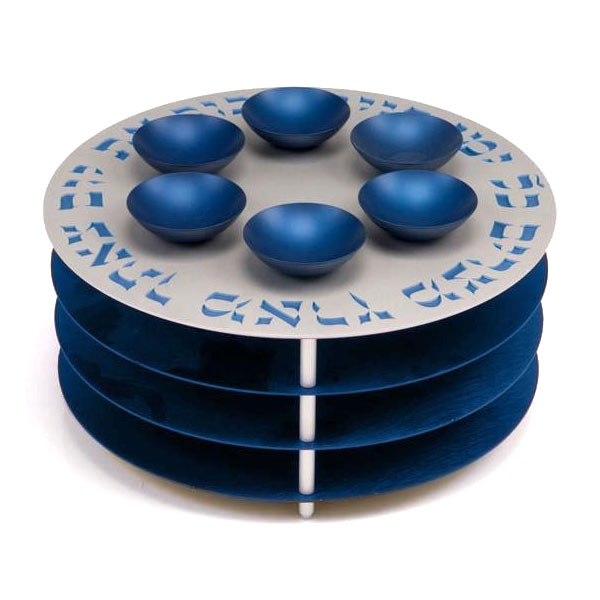
Three-Leveled Seder Plate By Agayof Design (Choice of Colors)
If you would like a deeper explanation of the meaning and sources behind each symbol, learn the full symbolism of each Seder Plate item in our detailed guide.
Many of the seder plate items are naturally plant-based, and with a couple of simple substitutions, you can create a beautiful vegan or vegetarian Seder plate.
The Matzah Tray: Holding the Core of the Story
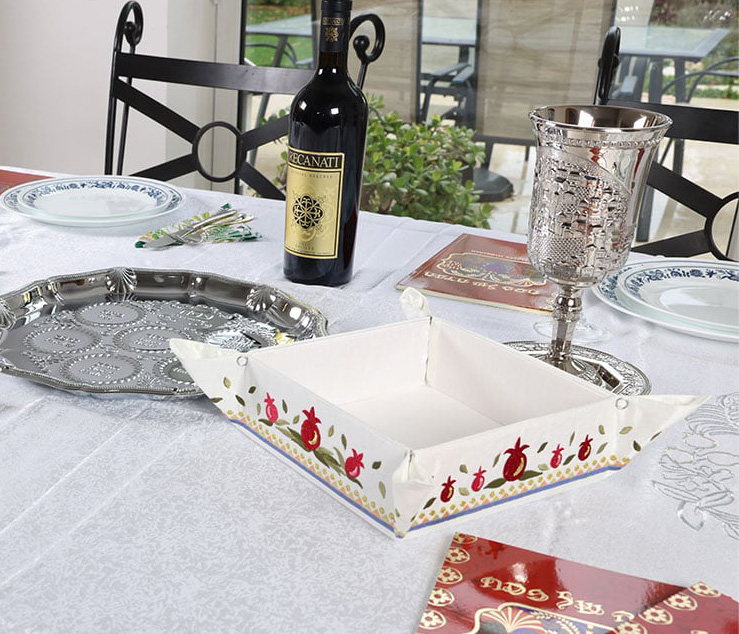
Alongside the Passover seder plate sits another essential element: the matzah tray. During the Seder, three matzot are placed together, often separated by a cloth or divided layer, and used at different moments in the ceremony.
Today, the matzah tray is both practical and beautiful. Modern seder plate designs often coordinate with matching matzah trays, combining traditional symbolism with contemporary craftsmanship. Whether simple or intricately decorated, these pieces elevate the table and help organize the ritual with clarity.
6. Matzah and Traditions
The Bread of Affliction and Freedom
At the center of the Passover table lies something deceptively simple: matzah. This flat, crisp unleavened bread replaces regular bread throughout the holiday and becomes one of the most recognizable symbols of Pesach. Whether you call it Passover matzah or Passover matzo, it is the food that defines the week.
Why do we eat matzah? According to the Exodus story, when the Israelites left Egypt, they left in such haste that their dough did not have time to rise. What they carried with them was unleavened bread, quickly baked and practical for the journey. During the Seder, we hold up the matzah and call it “the bread of affliction,” recalling the hardship of slavery.
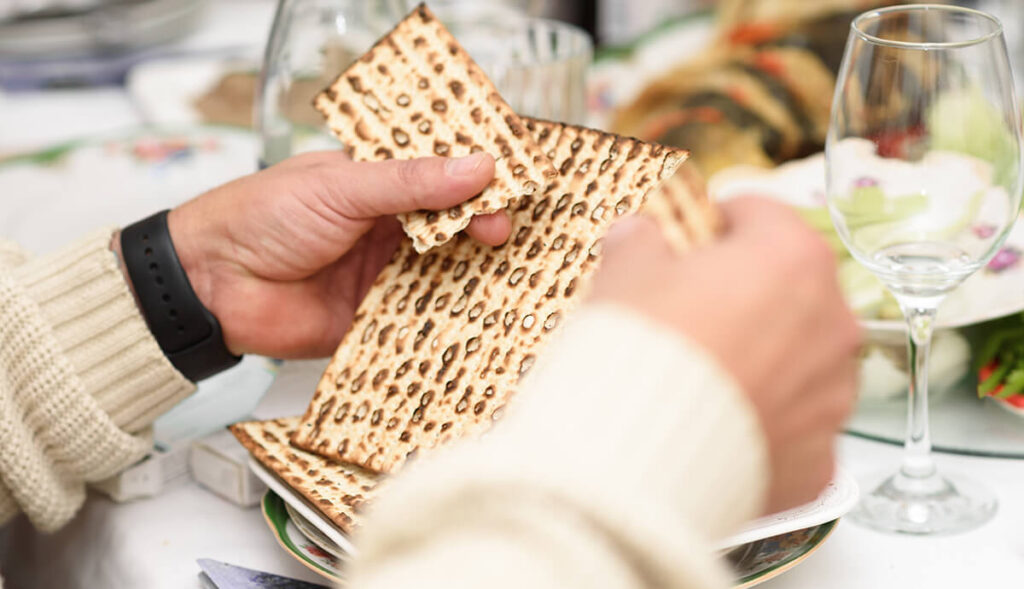
And yet matzah is also the bread of freedom. It represents the moment of departure, the first taste of liberation. I have always found this paradox powerful. The same simple food can symbolize both suffering and redemption. Perhaps that tension is exactly the point. Freedom often begins in discomfort, in uncertainty, in a hurried step into the unknown.
Throughout Passover, matzah replaces leavened bread entirely. It becomes part of daily meals, snacks, and of course the structured moments of the Seder itself. If you would like a deeper exploration of its history and halachic background, see our detailed guide: The History and Laws of Matzah.
The Afikomen: Now You See It, Now You Don’t
One of the most anticipated parts of the Seder for children is the Afikomen. So what is the afikomen meaning? Early in the evening, the middle of the three matzot is broken in two. The larger piece is wrapped and set aside. This is the afikomen. Later in the Seder, after the main seder meal, the afikomen is brought back and eaten as the final taste of the night.
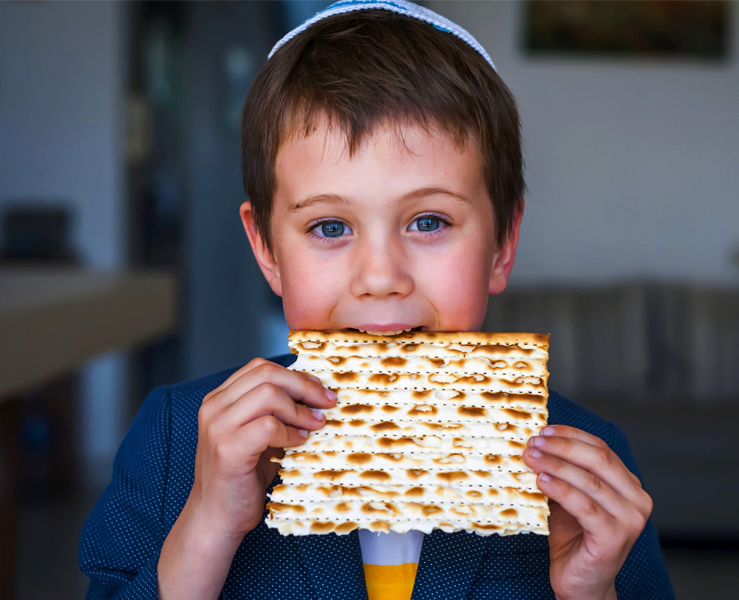
In many homes, it is hidden and children search for it, turning the ritual into a playful treasure hunt. The child who finds the afikomen often receives a small gift or prize in exchange for returning it. Alternatively, the children “steal” the afikoman and hold it for “ransom.” In either case, a small reward is given.
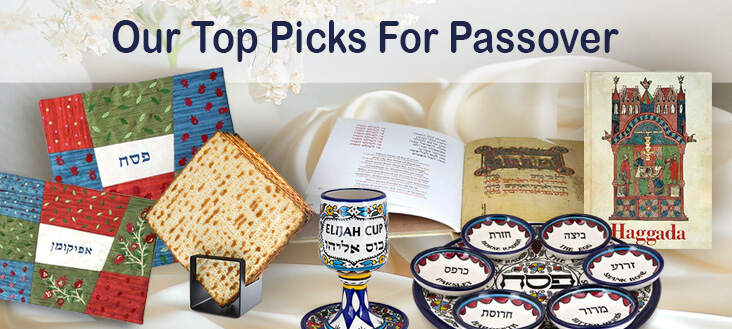
In our home, the afikomen search has always been a highlight. It keeps younger participants engaged and gives them a sense of ownership in the evening. Beautiful afikomen bags and thoughtful small gifts can add both elegance and excitement to this tradition.
Matzah may look plain, but it carries layers of meaning. Each bite connects the present table to the hurried steps out of Egypt.
7. Greetings, Gifts & Etiquette
Passover greetings: what to say and when
Whether you’re attending a Seder, sending a message, or writing a card to include with Passover baskets or other Passover gift ideas, a few Hebrew words go a long way. Here are the most common Passover greetings in Hebrew, with transliteration and guidance on when to use them:
| Greeting | Transliteration | Meaning | When to Use |
|---|---|---|---|
| Chag Pesach Sameach | Khag Peh-sakh Sah-meh-akh | Happy Passover | Most specific greeting for Pesach. Appropriate throughout the holiday, including Chol HaMoed. |
| Chag Sameach | Khag Sah-meh-akh | Happy Holiday | General festival greeting. Warm and safe to use for any Jewish holiday. |
| Chag Kasher V’Sameach | Khag Kah-sher Veh-sah-meh-akh | A kosher and happy holiday | Often used in more traditional communities. Emphasizes both joy and Passover observance. |
Chag Kasher V’Sameach, or Chag Pesach Kasher V’Sameach, reflects the special preparations of Passover, when many Jewish families remove chametz and follow detailed dietary laws. It acknowledges both the spiritual joy and the halachic observance of the holiday. You will often see this phrase used in more traditional communities or printed on Passover greeting cards.
Customs and pronunciation may vary slightly between Ashkenazi and Sephardic communities. You may hear differences in how certain Hebrew letters are pronounced, but the meaning and warmth of the greeting remain the same.
Passover gift ideas
One of the lesser-known but beautiful teachings about Passover appears in the Shulchan Aruch, Orach Chayim 529:2. A person must ensure the happiness of their household during the festival. The Shulchan Aruch expresses this in very concrete terms:
- For women: receiving new clothing or jewelry, according to the household’s financial ability.
- For children: joy is encouraged through sweets and nuts, small treats that help keep them engaged, especially during the long Seder night.
- For men: the traditional expression of festival joy is associated with eating meat and drinking wine, part of the broader mitzvah of rejoicing on Yom Tov.
While customs and roles have evolved, the core idea remains the same: to make the holiday feel joyful for the people you love. At Judaica Webstore, we offer a thoughtfully curated selection of meaningful Passover gifts for every taste and every budget. Make sure to have a look at our Passover gift guide.
Jewelry Gifts for Passover
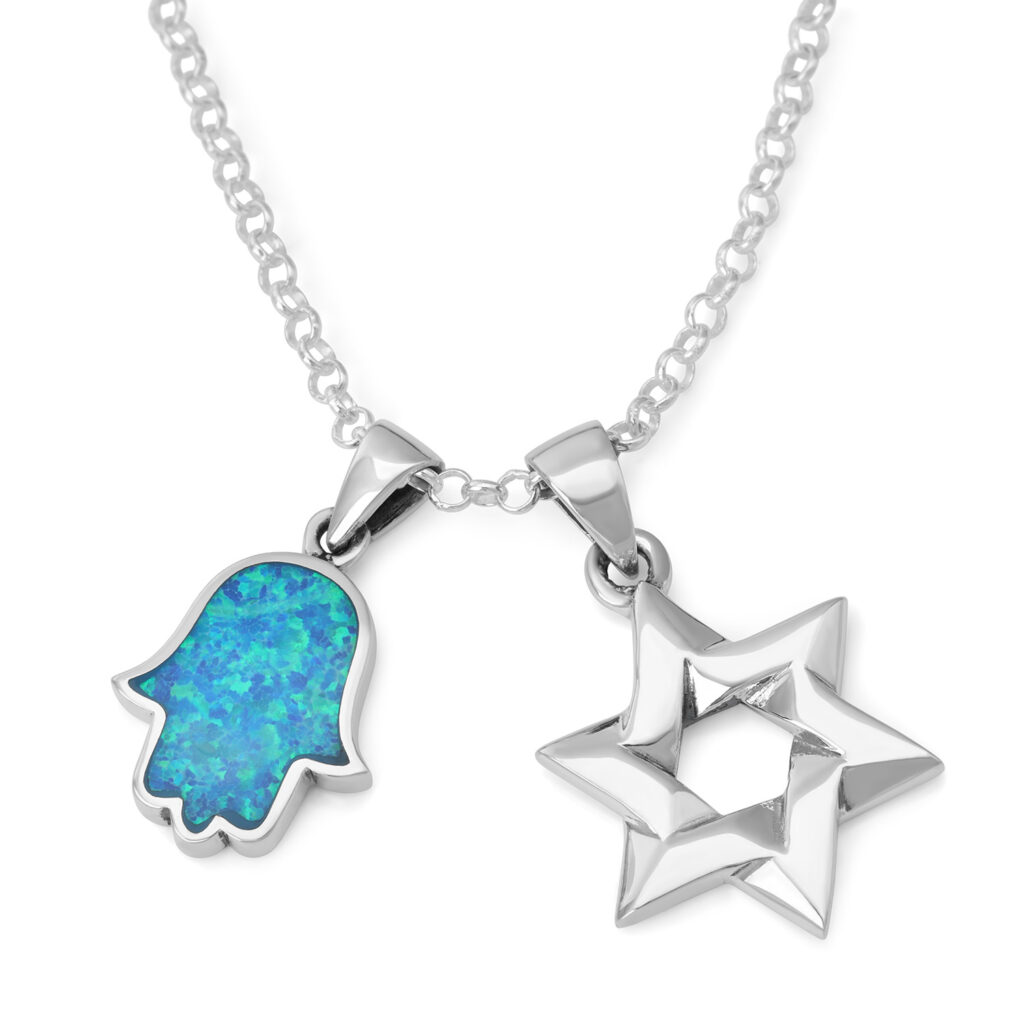
Jewelry remains one of the most meaningful Passover gift ideas. Many families choose symbolic pieces for the holiday, such as Star of David necklaces, Hamsa jewelry, or delicate Jerusalem-inspired designs.
These kinds of Judaica jewelry connect the joy of the festival with Jewish identity in a personal way. In the spirit of the Shulchan Aruch, the gift does not need to be extravagant. It simply needs to be thoughtful and bring happiness to the recipient.
Gift Ideas for Seder Hosts
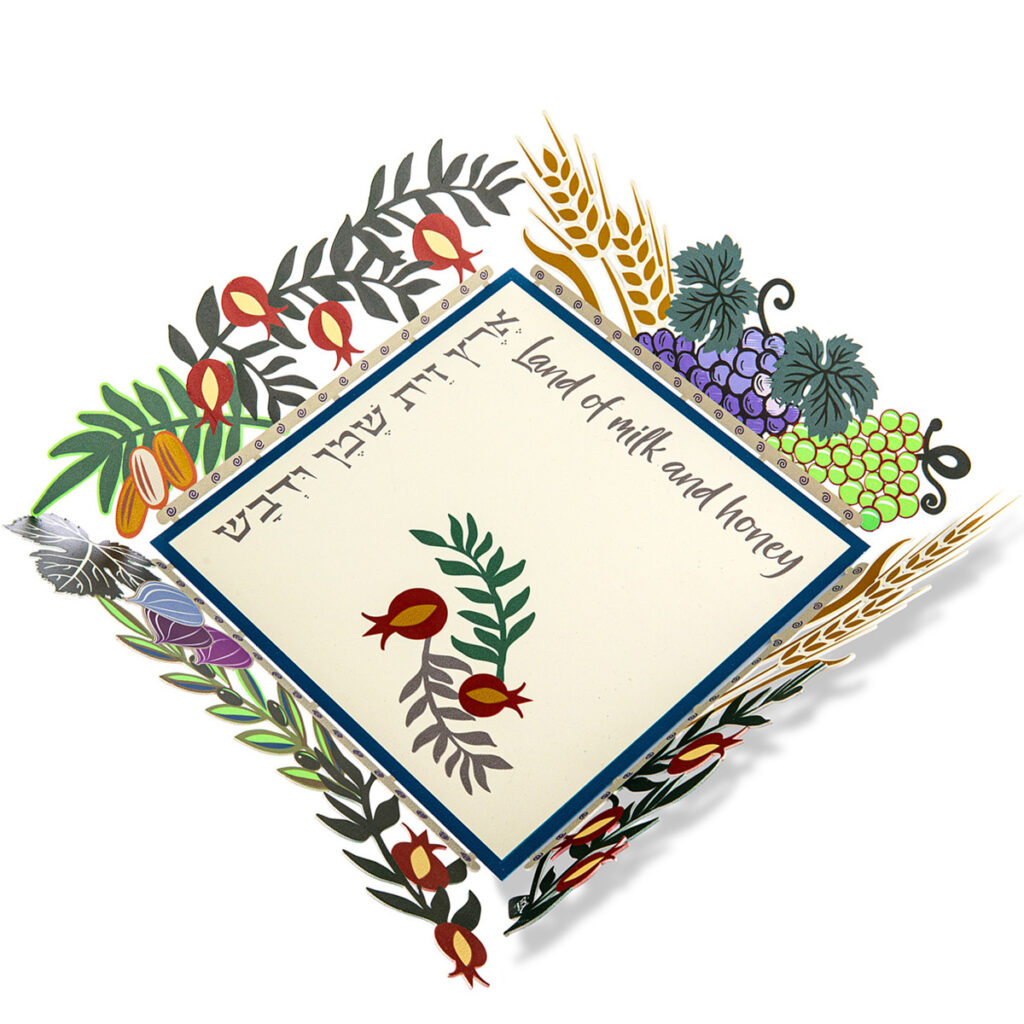
If you are invited to a Passover Seder, bringing a thoughtful gift is both gracious and meaningful. A bottle of kosher-for-Passover wine, a beautiful serving dish, matzah cover, or a high-quality Haggadah makes a host feel appreciated. Small, elegant Judaica items from Israel can add something special to a Seder table that is already carefully prepared.
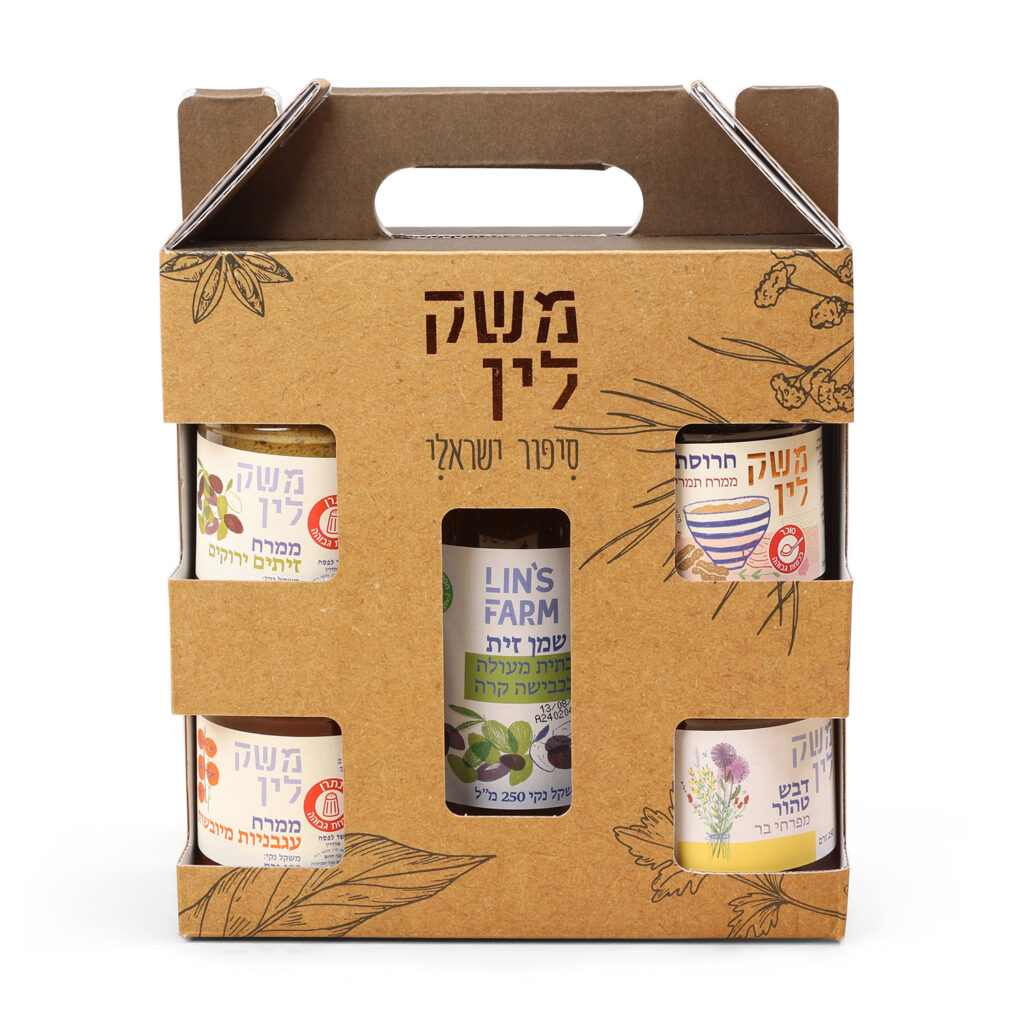
Passover Gift Baskets
Passover gift baskets are a practical and festive option. Look for certified kosher-for-Passover treats, specialty chocolates, premium nuts, dried fruit, or boutique wines. A well-curated basket reflects the spirit of the holiday while respecting its dietary laws.
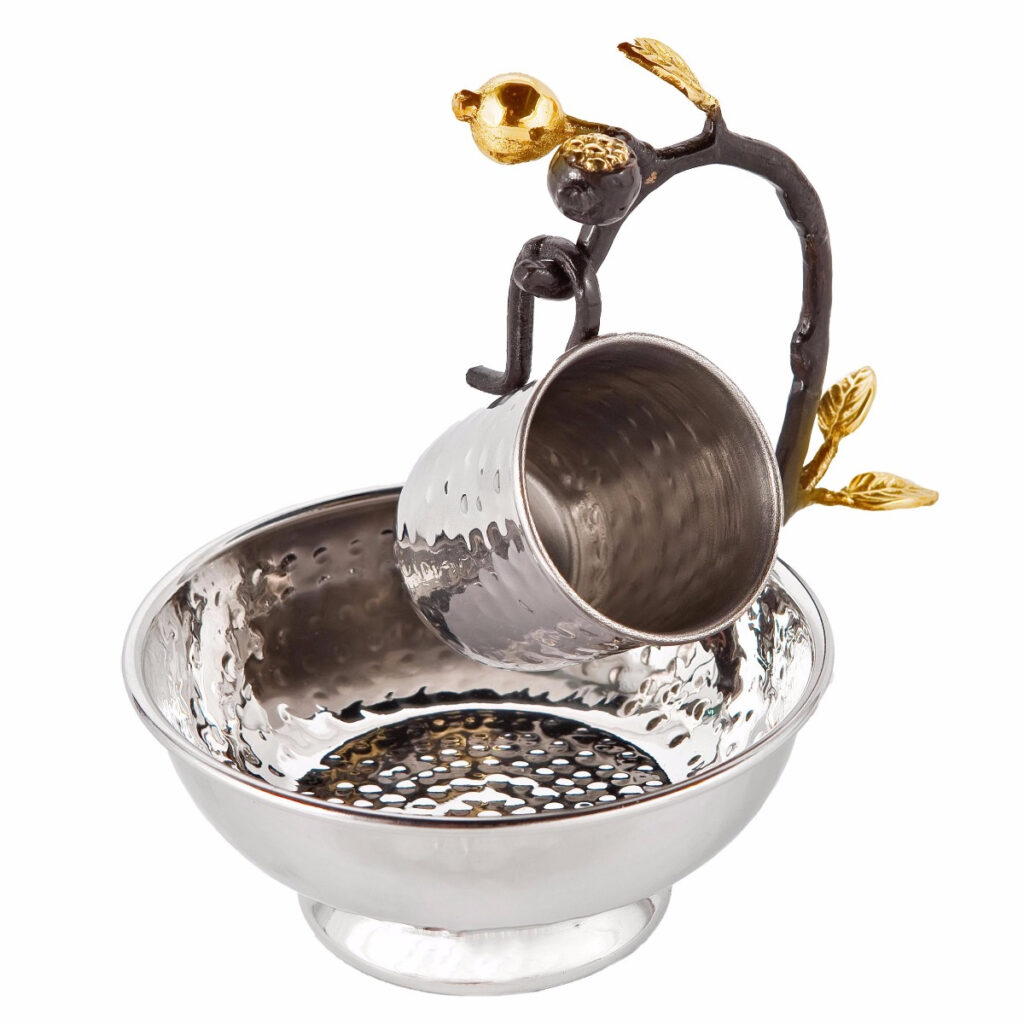
Thoughtful Judaica from Israel
Because Pesach is the night when many families bring out their finest ceremonial pieces, gifting beautifully crafted Judaica feels especially appropriate. A new Kiddush cup, a Seder plate, a matzah tray, or even a decorative Elijah’s cup can become part of a family’s tradition for years to come.
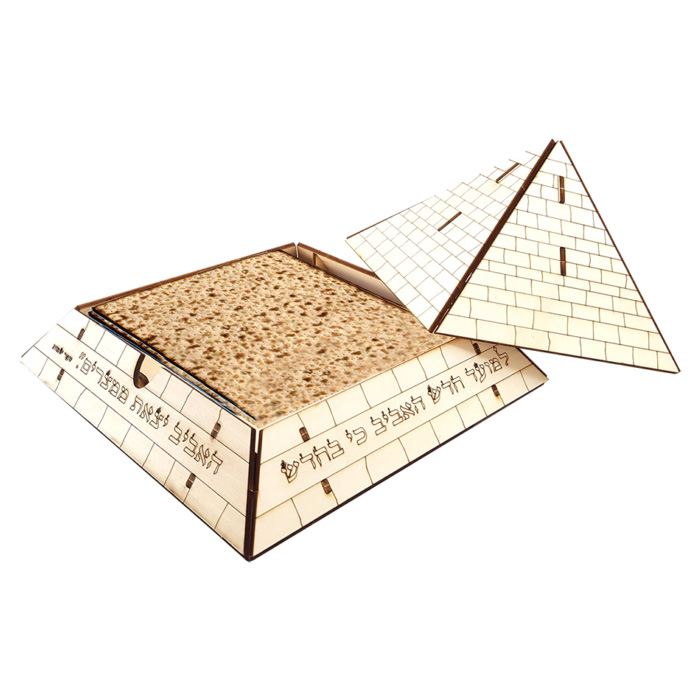
Afikomen Gifts for Children
The Shulchan Aruch already hints at keeping children engaged with treats, and the Afikomen tradition builds on that beautifully. Small prizes, books, games, or meaningful Jewish-themed gifts for kids make the search for the Afikomen exciting. Even something simple, wrapped thoughtfully, can turn that moment into a highlight of the evening.
A Note on Etiquette
Passover etiquette is largely about sensitivity and respect. If you are unsure what to bring or how to greet someone, a sincere “Chag Pesach Sameach” and a thoughtful, kosher-for-Passover gift are always appropriate. As with many Jewish traditions, customs differ between Ashkenazi and Sephardic communities and from family to family, so when in doubt, it is perfectly acceptable to ask your host in advance.
If you are invited to a Seder, arrive on time, as the evening follows a structured order. Avoid bringing food unless you are certain it is certified kosher for Passover and aligns with your host’s customs. During the Seder itself, follow along in the Haggadah, participate when invited, and remember that questions are welcome. The goal of the night is shared experience, not perfection.
A Passover Gift Not for the Fainthearted
One year I invited our dear non-Jewish neighbors to join us for the Seder. When they arrived, they proudly handed me a gift: a large bottle of premium vodka. Their reasoning was flawless. “It’s clear,” they thought. “No cake, no dough. Completely safe for Passover.”
Technically true. Halachically… not quite. Most vodka is grain-based, which on Passover is exactly what we spend weeks removing from our homes. I thanked them warmly, kept the bottle in my hands, and at the first discreet opportunity slipped outside and deposited it straight into the street trash container. A very unceremonious end for such a well-meant gift.
Years later, after they had moved away and we had lost touch for quite some time, we met again. It was during their conversion process. We laughed about it together, and they told me how deeply that first Seder night had moved them. The vodka did not survive the holiday. The impression of the Seder did!
8. The Passover Meal
Traditional Seder Foods
The Seder meal is both symbolic and celebratory. While the early part of the evening focuses on ritual foods placed on the Seder plate, the Passover Seder meal itself is festive, generous, and deeply traditional.
What is typically served at a seder meal? It varies by family and community, but certain dishes appear again and again.
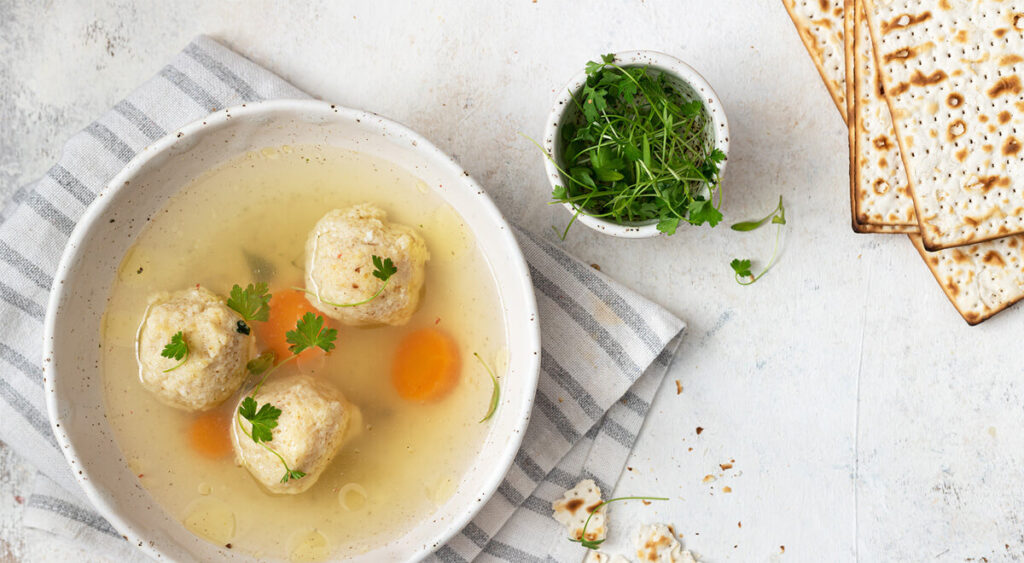
Matzah ball soup
In many Ashkenazi homes, the Passover seder meal begins with matzah ball soup. The matzah balls, made from matzah meal and eggs, are simmered in rich chicken broth and can be light or dense, depending on family preference. For many families, the aroma of matzah ball soup alone announces that Pesach has truly arrived. In Sephardic communities, the opening course may look quite different. Soups featuring lamb or beef, often flavored with fresh herbs, lemon, and vegetables, are common, reflecting regional culinary traditions.
Main courses and side dishes
Main courses often include brisket, slow-cooked and tender, roasted chicken, or baked fish, dishes that can be prepared in advance and served to a large table of guests. In some Sephardic households, lamb may take center stage, echoing the memory of the original Pesach sacrifice.
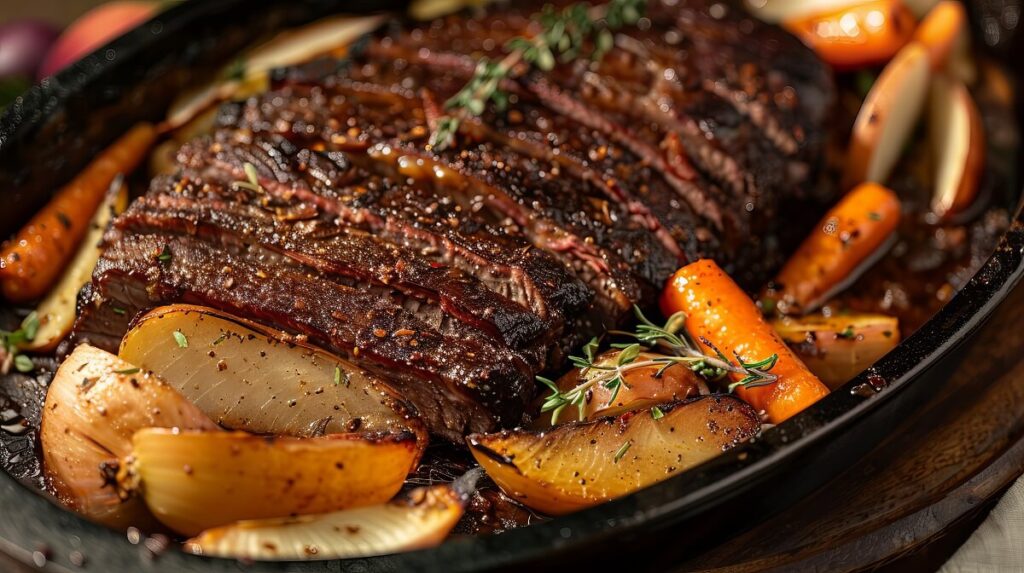
Side dishes often include roasted vegetables, potato kugel, or fresh salads that comply with Passover dietary restrictions. In many Sephardic homes, rice also appears on the table, as kitniyot such as rice are traditionally permitted in those communities.
Charoset
Charoset, which begins the evening as one of the symbolic foods on the Seder plate, often appears again in larger portions during the meal itself. Its ingredients vary widely, from apple and walnut mixtures common in Ashkenazi kitchens to date-based versions with figs and spices in Sephardic traditions. For something sweet, see our blog on Passover dessert recipes.
From Symbolic Bites to a Generous Table
By the time you have tasted the matzah, dipped the greens, sampled the bitter herbs, and eaten the obligatory hard-boiled egg, you might wonder how there could possibly be room left for a full Passover meal. And yet, somehow, there always is. The symbolic bites are small by design, just enough to tell the story. The real Passover Seder meal comes later, generous and unhurried, with platters of classic Seder dishes that turn a ritual evening into a true feast. For more inspiration, explore our blog on Passover recipes from around the world.
Dietary Restrictions During Passover
For the eight days of Passover outside Israel, chametz, leavened bread and products made from wheat, barley, rye, oats, or spelt that have risen, is forbidden. This includes bread, pasta, most baked goods, and many processed foods unless specially certified.
Instead, meals revolve around Passover food that is certified kosher for Passover. Matzah replaces regular bread, and recipes are adapted using potato starch, matzah meal, or nut-based flours.
One important distinction between communities involves kitniyot, legumes and certain grains such as rice and corn. In Ashkenazi tradition, kitniyot are avoided during Passover, while Sephardic Jews typically permit them. As with many aspects of Pesach observance, it is important to follow your family custom when preparing Pesach food or consult your rabbi for specific guidance.
✓ Tip: Before planning your Passover meal, check with your guests well in advance about any dietary preferences or customs. Are they vegetarian or vegan? Do they eat kitniyot? Do they prefer wine or grape juice for the Seder? A quick conversation ahead of time makes all the difference.
Chag Pesach Sameach!
As you prepare for the holiday, all of us at Judaica Webstore wish you a joyful and meaningful Pesach. With decades of expertise and a carefully curated selection from leading Israeli artists and designers, we are honored to help you find everything you need for a beautiful and memorable Passover. Chag Pesach Sameach!
For more information about our research process, sourcing, and editorial review, please see our editorial standards and content policy.