Hebrew belongs to the Northwest Semitic family of languages, which makes it a relative of ancient Phoenician, Moabite, Ammonite, and Edomite. Hebrew is a regional dialect of the Canaanite languages and was natively spoken by the Israelites in the land of Canaan, emerging in the ancient Near East during the late second millennium BCE, around 3,000 years ago.
The word "Hebrew" (or Ivrit: עִברִית) itself comes from "Eber" (עֵבֶר), meaning "the other side" or "beyond," possibly referring to those who came from "beyond the river" (the Euphrates). Some trace it to Eber, a descendant of Noah's son Shem mentioned in Genesis, which is why Hebrew and related languages are called "Semitic" after Shem.
The Earliest Evidence: When Hebrew First Appeared
The earliest archeological evidence of written Hebrew dates back to at least the 10th century BCE, during the time of the united Kingdom of Israel under King David and King Solomon. One of the earliest known examples is the Gezer calendar, a small limestone tablet found in the ancient city of Gezer. This agricultural calendar presents a list of seasons and related farming activities: a farmer's simple record of planting and harvest times that gives us a precious glimpse into everyday life in ancient Israel.
Other early Hebrew inscriptions include the Khirbet Qeiyafa ostracon (pottery shard with writing) from around the same period, and the Siloam inscription from the 8th century BCE, which describes the construction of the water tunnel built by King Hezekiah in Jerusalem. These archaeological treasures prove that Hebrew was being written and used for both practical and monumental purposes during the biblical period.
Scholars generally agree that the oldest form of Hebrew preserved in writing is that of some of the poems in the Hebrew Bible, especially the "Song of Deborah" in chapter 5 of Judges and the "Song of the Sea" in Exodus 15. These ancient poems, dated by linguists to around the 12th century BCE, preserve archaic features of the Hebrew language that were already becoming rare by the time most other biblical texts were composed.

The Hebrew Alphabet: From Ancient Pictures to Sacred Letters
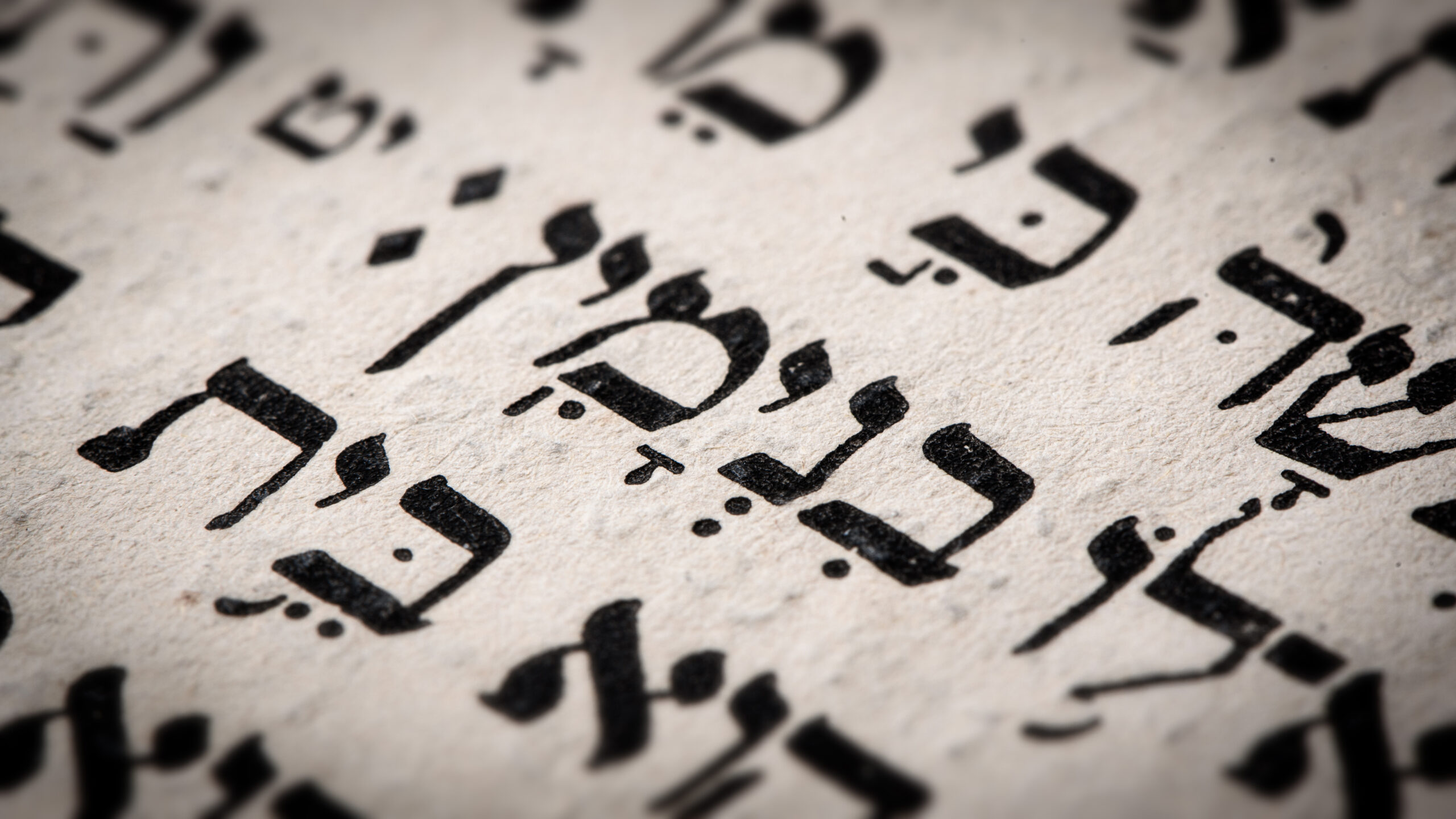
One of the most fascinating aspects of Hebrew's origins is the evolution of its alphabet. The Hebrew letters you see today - the elegant "square script" used in Torah scrolls and modern Hebrew books - aren't the original Hebrew letters at all!
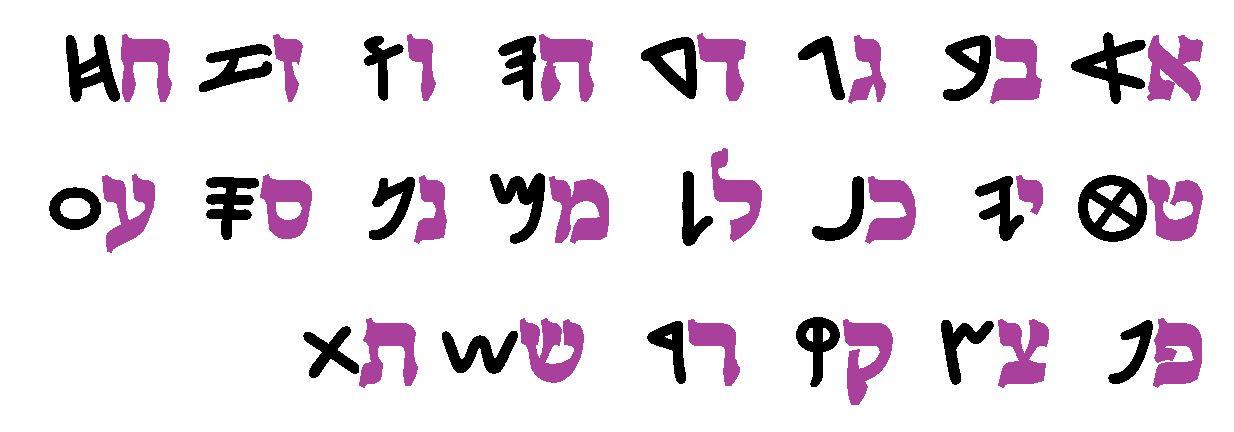
The earliest Hebrew script, called Paleo-Hebrew (or "Old Hebrew" or "Ancient Hebrew"), looked quite different from today's familiar letters. The Paleo-Hebrew alphabet was derived from the Phoenician alphabet around the 10th century BCE, and both shared the same pictographic origins. Each letter began as a simple picture representing a concrete object; for example:
- Aleph (א) originally depicted an ox head (the horns are still visible if you tilt the letter)
- Bet (ב) represented a house or tent
- Gimel (ג) showed a camel or throwing stick
- Dalet (ד) was a door
- Mem (מ) represented water
- Ayin (ע) depicted an eye
- Qof (ק) showed the back of the head or the eye of a needle
The Paleo-Hebrew script was used throughout the First Temple period (roughly 1000-586 BCE). It can be seen on the Siloam inscription and various seals and coins from ancient Israel. After the Babylonian exile in 586 BCE, when the Jews were taken to Babylon and later returned to rebuild Jerusalem, they gradually adopted the square Aramaic script that was used throughout the Persian Empire. The Hebrew alphabet as we know it today was derived from the Aramaic alphabet during the Persian, Hellenistic and Roman periods (around 500 BCE to 50 CE), and it replaced the Paleo-Hebrew alphabet.
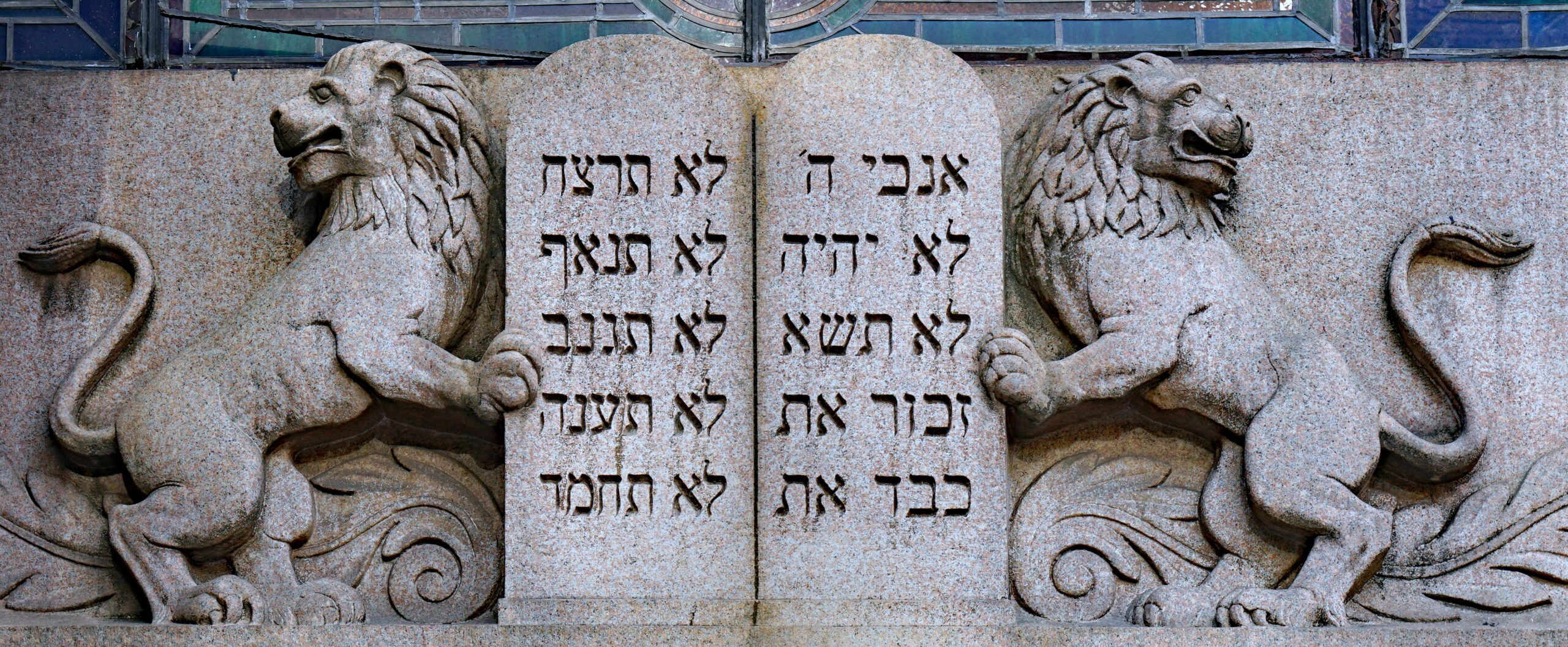
By the time of the Second Temple period and the writing of the Dead Sea Scrolls (3rd century BCE to 1st century CE), most Hebrew texts were in the square script. This script became standard and evolved into the beautiful letters we know today - the letters used in every Torah, mezuzah scroll, and tefillin.
Biblical Hebrew: The Language of Scripture
Biblical Hebrew - the Hebrew of the Torah, Prophets, and Writings - represents the golden age of the language. This is the Hebrew that gave us the Psalms of David, the wisdom of Proverbs, the prophecies of Isaiah and Jeremiah, the love poetry of the Song of Songs, and the creation story in Genesis.
Biblical Hebrew was spoken and written throughout the First Temple period (roughly 1000-586 BCE) and continued to be used as a literary language even as Aramaic gradually became more common for everyday speech. The language was rich in poetic expression, vivid imagery, and subtle wordplay. Hebrew prophets used puns, metaphors, and linguistic artistry to convey God's messages to the people of Israel.
The vocabulary of Biblical Hebrew is relatively compact - scholars estimate around 8,000 unique words in the entire Hebrew Bible - but incredibly expressive. Verb forms can be used to convey not just tense but also intensity, completeness, and aspect. In addition, the same root letters of words can be reconfigured to create related meanings, creating webs of connection throughout the text.
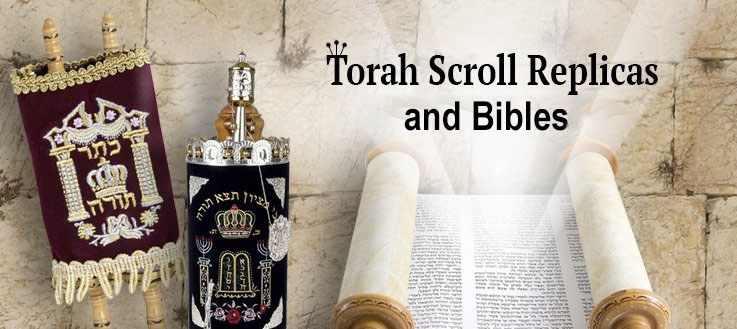
Connect with Biblical Hebrew with your own Hebrew Bible from Israel!