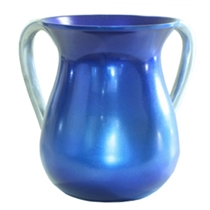
 In the Jewish tradition, there is a big emphasis placed on a ritualized washing of the hands at various points throughout every day. Often, a special cup is used to pour water alternatively over each hand, a process known as “netliat yedaim.” One of the times when this is required is before the eating of bread. Let’s examine why:
In the Torah it states, “And you shall sanctify yourselves and be holy, for I am the Lord your God” (Vayikra 20:7). The goal of Judaism is to transform the physical world into a vessel for the Divine, iincluding man himself. One of the most primal acts in life is that of eating, and so in the quest to make eating into a holy activity, it requires certain guidelines. For most foods this means only a short blessing before and after, but for bread, it requires a little more. According to the Kitzur Shuchan Arukh, the famous codification of Jewish law, this same verse (Vayikra 20:7) is the reason for the Rabbinic decree to ritually wash one’s hands before bread, lending tremendous significance to a seemingly trivial act, and making it much more than just a physical cleansing but a spiritual one as well.
This expression of washing away impurity from one’s hands dates back to Temple times when the Kohanim (Jewish priests) would wash their hands before approaching the alter to offer sacrifices (Exodus 30:17-21) . . .”and it shall be for them a statute forever.” After the destruction of the Second Temple in 70 C.E., the Jewish Sages transferred conceptually various Temple practices into the everyday life of the Jew to carry with him into the exile. For example, the dinner table in the home now came to represent the Temple alter, while the bread placed on it symbolized the offerings that were once brought on it. Although the original reason for washing the hands no longer applied, the ritual was continued on the grounds that a certain level of purity demands a special, ritualistic washing of the hands. Therefore, the Sages commanded that Jews wash their hands before eating bread, just as the priests washed before offering sacrifices.
Indeed, netilat yedaim is a ritual that connects the past to the present to the future, for in Judaism it’s all connected. Do you want to connect to this beautiful tradition? It is now possible to purchase beautifully crafted and artistically decorated washing cups in Israel, the source of it all!