
From stealth fighters and laser defense to record-breaking pilots, take a look inside the Israeli Air Force in 2026 and discover the technology and innovation shaping today’s skies. Today the Israeli Air Force is one of the most advanced air forces in the world. But its beginning were very modest, and nothing short of a miracle.
In this article:
• The Beginning: Four Hastily Assembled Planes That Bluffed an Army
• The IAF Today: Fleet and Modernization
• Inside the F-35I Adir: Israel’s Customized Stealth Fighter with “Beast Mode”
• The First Female Jet Fighter Pilot and an Extraordinary Family Story
• Integrated air defense – The New Or Eitan Laser Defense System
• Who is the Highest-scoring Jet Ace in the World?
• Sources
The Beginning: Four Hastily Assembled Planes That Bluffed an Army
At the end of May 1948, the situation on Israel’s southern front was desperate. The Egyptian army was pushing steadily north along the coastal road. Their objective was clear: Tel Aviv.
The column was enormous by the standards of the young war. Roughly 500 vehicles, supported by about 2,500 soldiers, moved up the road toward the coastal plain. Israeli defenders from the Givati Brigade had already blown up the bridge over the Lakhish River near Ashdod in an attempt to slow them down.
But the demolition only bought time. If the Egyptians repaired the crossing or found a way around it, the road to Tel Aviv would lie open.
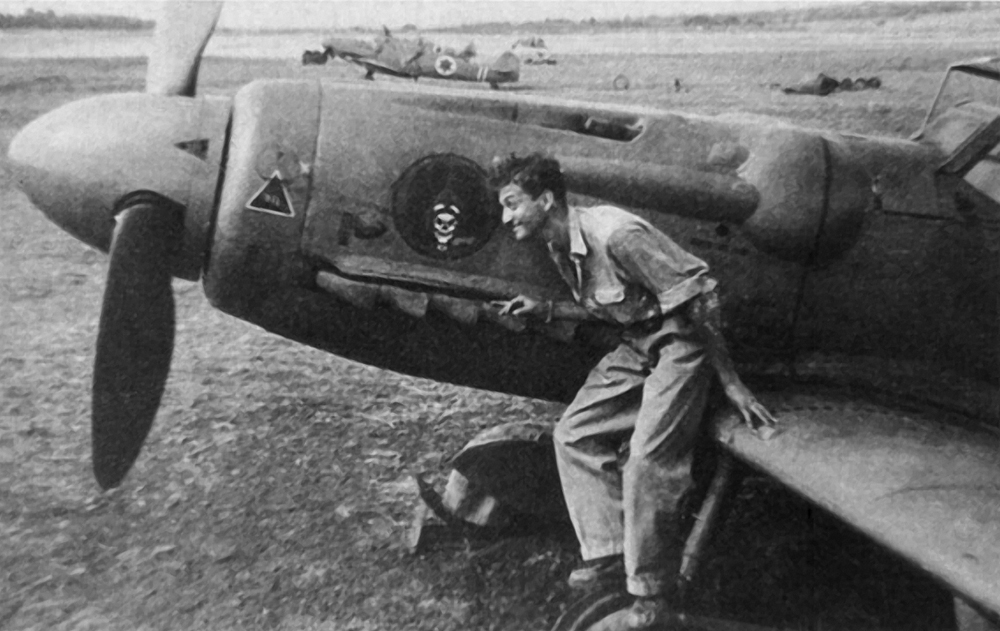
At that moment, Israel technically had an air force, but in reality, it had almost nothing. Four newly arrived fighter planes had just been unpacked from crates. They were Avia S-199 fighters from Czechoslovakia, essentially modified versions of the German Messerschmitt Bf 109 left over from World War II. Mechanics worked around the clock to assemble them. The aircraft were temperamental, difficult to fly, and barely ready for combat. On May 29, 1948, the four hastily assembled fighters took off for what would become the first combat mission in the history of the Israeli Air Force.
The pilots of the newly formed 101st Squadron represented the improvised character of the young state itself. Lou Lenart, an American volunteer and World War II veteran of the U.S. Marine Corps, led the mission. Modi Alon, the squadron commander, flew alongside him. Ezer Weizman, who decades later would become commander of the Israeli Air Force and eventually Israel’s seventh president, was one of the young pilots in the formation. Eddie Cohen, a volunteer from South Africa, completed the four-plane force.
The attack itself was chaotic. The Avia S-199 was notorious for mechanical problems, and some of the aircraft experienced weapon malfunctions. The pilots nevertheless dived toward the Egyptian column and dropped their bombs and then strafed the vehicles below. In purely military terms, the damage was limited. A few vehicles were hit, but the Egyptian column remained largely intact.
Yet something far more important happened. The Egyptian commanders had been convinced that Israel had no fighter aircraft at all. Suddenly, four Israeli fighters appeared overhead and attacked their advancing force. From the ground, it was impossible to know how many more planes might follow. The psychological effect was immediate. The Egyptian advance halted and the column reorganized and turned back. That moment gave the site its name: “Ad Halom,” meaning “Until Here.”

The mission came at a cost. Eddie Cohen, a volunteer pilot from South Africa, was killed when his aircraft was hit by Egyptian anti-aircraft fire, becoming the first combat casualty of the Israeli Air Force. He was a Machalnik, one of the thousands of overseas volunteers (Machal) who came from abroad to help defend Israel during the 1948 War of Independence.
Today, the area around the bridge is a historical site known as Ad Halom Park. A memorial plaque marks the place where the first IAF combat mission took place. Nearby stands an Egyptian monument honoring soldiers who fell there, erected decades later as part of the peace agreement between Israel and Egypt.
The Israeli Air Force today: Fleet and Modernization
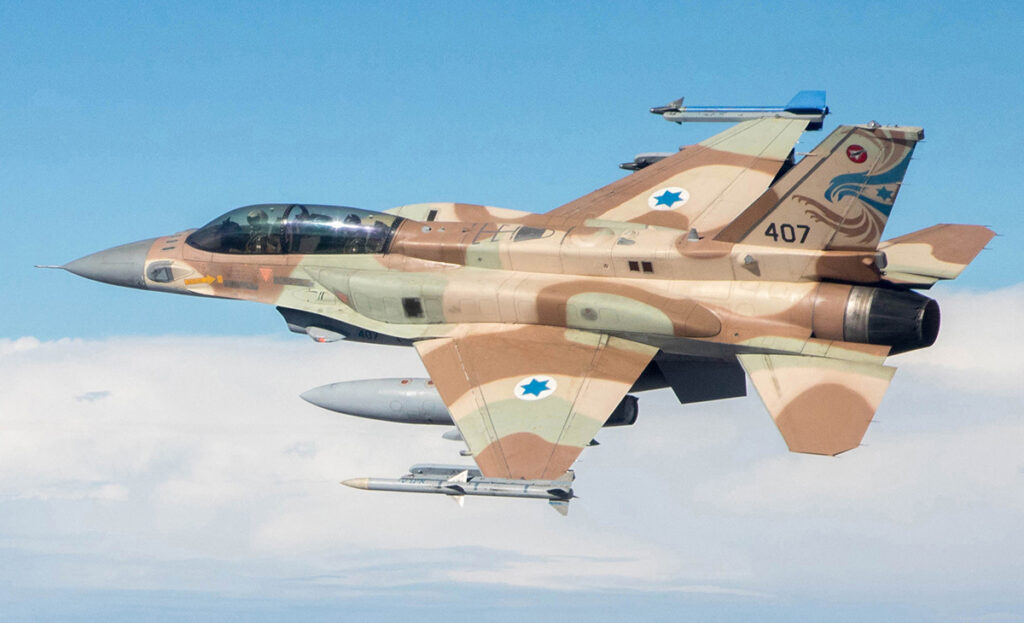
The Israeli Air Force (IAF) (officially the “Air and Space Arm”) is considered one of the most advanced and battle-hardened air forces globally. As of March 2026, it is characterized by its transition to fifth-generation stealth technology and its role in significant long-range regional operations.
The Israeli Air Force is staffed by roughly 34,000 active personnel, supported by about 55,000 reservists who can be mobilized during emergencies.
As of 2026, the Israeli Air Force operates roughly 530 to nearly 600 aircraft across its fighter, transport, and support fleets. In recent years the focus has increasingly shifted toward stealth technology and long-range strike capability.
One of the most significant developments is the introduction of the F-35I “Adir,” Israel’s customized version of the fifth-generation stealth fighter. The IAF currently operates 48 of these aircraft. Two additional jets are expected later in 2026 to complete the first order of 50, and long-term plans call for expanding the fleet to about 75 aircraft.
Alongside the F-35, the backbone of Israel’s fighter force still consists of upgraded F-15 and F-16 aircraft. The IAF operates roughly 100 F-16C and F-16I fighters and about 66 F-15 variants. In early 2026 Israel approved the purchase of 25 new F-15IA aircraft, designed to strengthen the air force’s heavy strike and long-range mission capabilities.
Israel operates a diverse fleet of over 100 combat and transport helicopters. The fleet includes CH-53 Sea Stallions, AH-64 Apache gunships, and UH-60 Black Hawks. Israel is currently upgrading its heavy-lift capability by procuring new CH-53K King Stallion helicopters.
Israel is also a global leader in unmanned aerial vehicles. The Israeli Air Force operates a wide range of domestically developed drones used for reconnaissance, surveillance, intelligence gathering, and precision strikes. These systems have become a critical component of modern air operations.
Inside the F-35I Adir: Israel’s Customized Stealth Fighter with “Beast Mode”
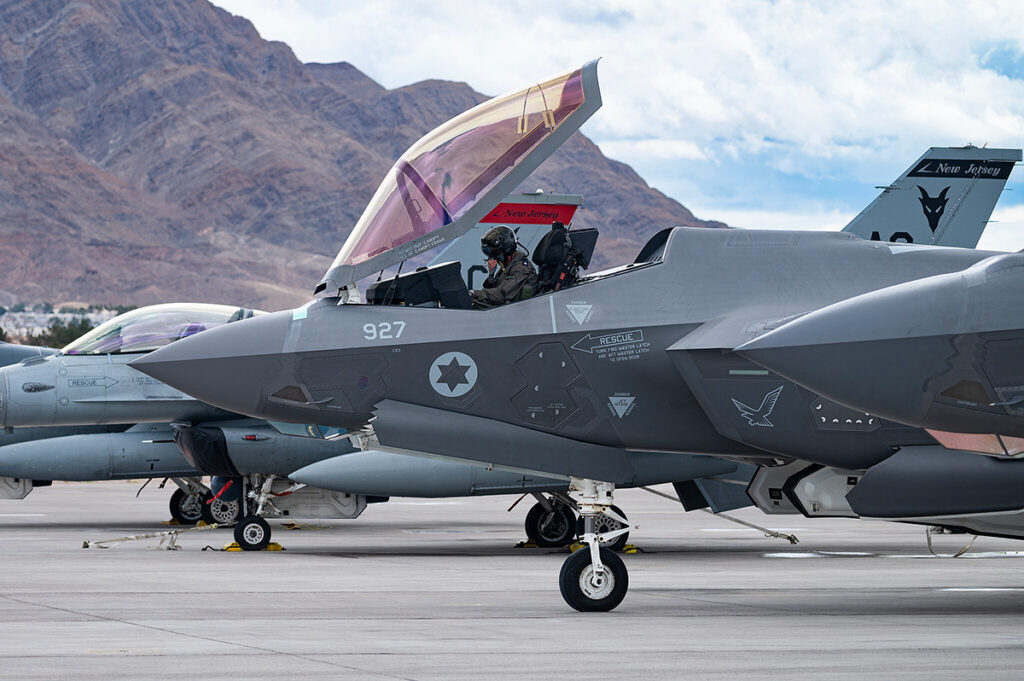
The F-35I “Adir” is the most advanced fighter jet in the Israeli Air Force, a customized version of the F-35A stealth aircraft tailored to Israel’s operational needs. Israel is the only country allowed to integrate its own electronic warfare systems and command-and-control software directly into the aircraft.
The Adir is also designed for long-range missions. With specialized fuel modifications and advanced mission planning systems, the aircraft can strike targets more than 1,600 kilometers away, allowing it to reach distant threats without relying heavily on aerial refueling.
Another key feature is its ability to carry Israeli-developed weapons. The aircraft uses a flexible “plug-and-play” architecture that allows it to deploy munitions such as the SPICE-1000 precision bomb and the Python-5 air-to-air missile alongside American systems.
In addition to its stealth configuration, the Adir can also operate in what pilots call “Beast Mode.” In this setup the aircraft carries additional weapons on external pylons, sacrificing some stealth in exchange for a much larger payload when maximum firepower is needed.
The aircraft has already seen combat. On March 4, 2026, an Israeli F-35I shot down an Iranian Yak-130 jet over Tehran, marking the first time an F-35 had downed a manned aircraft in air-to-air combat.
The First Female Jet Fighter Pilot and an Extraordinary Family Story
In June 2001, Roni Zuckerman became the first female jet fighter pilot in the Israeli Air Force. She went on to fly F-16 fighter jets in an operational squadron in northern Israel and later served as a commander at the IAF Flight Academy.
Her story carries a remarkable historical connection. Zuckerman is the granddaughter of two key leaders of the 1943 Warsaw Ghetto Uprising: deputy commander of the Jewish Fighting Organization (ŻOB), Yitzhak “Antek” Zuckerman, and Zivia Lubetkin, one of the uprising’s most prominent female resistance leaders.
After World War II, her grandparents helped found Kibbutz Lohamei HaGeta’ot, the “Ghetto Fighters’ Kibbutz,” where Roni Zuckerman was born and raised.

In recent years, more women have entered the prestigious Israeli Air Force pilot course, marking steady progress in a field long dominated by men. Most female graduates currently serve as transport pilots, helicopter pilots, or navigators, with only a few earning a place in fighter squadrons. By 2026, more than 70 women had successfully completed the IAF’s rigorous pilot training program, serving in a range of vital aircrew roles across the force.
Integrated air defense and the Or Eitan Laser Defense System
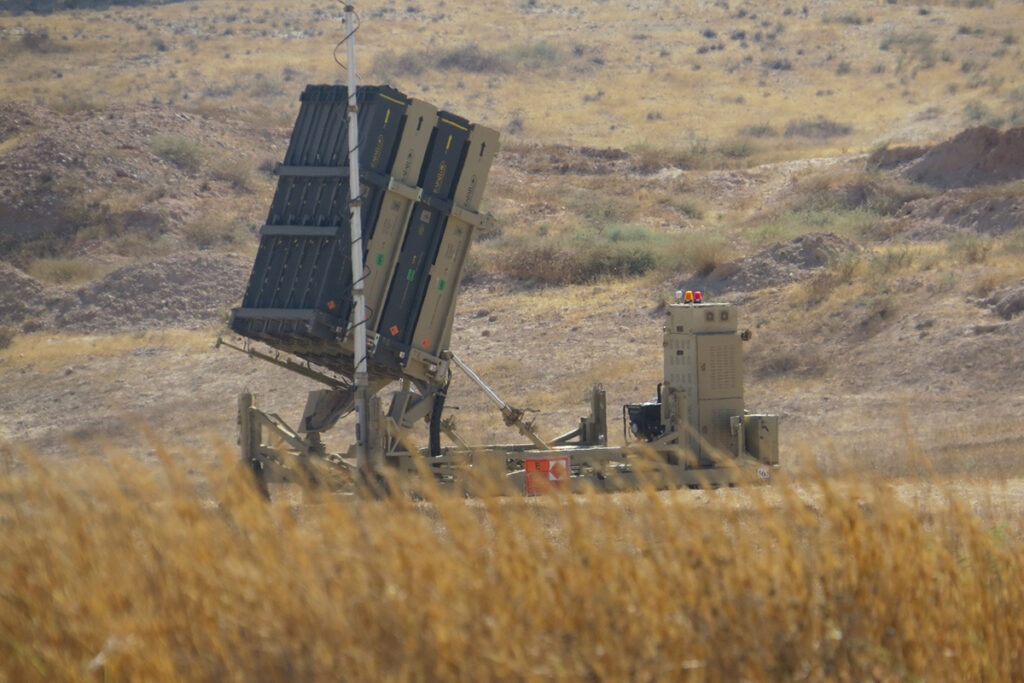
Beyond offensive capabilities, the IAF also manages Israel’s multi-layered air defense network. This system includes Iron Dome for short-range threats, David’s Sling for medium-range missiles, and the Arrow system designed to intercept ballistic missiles.
Or Eitan: The Iron Beam laser defense system
Imagine stopping a rocket with a weapon that costs only a few dollars to fire. That is exactly what Israel’s new Iron Beam system is designed to do. Developed by Rafael Advanced Defense Systems, Iron Beam is a high-energy laser weapon capable of destroying aerial threats at the speed of light. The system uses a powerful 100-kilowatt laser beam to intercept rockets, drones, and other airborne targets.
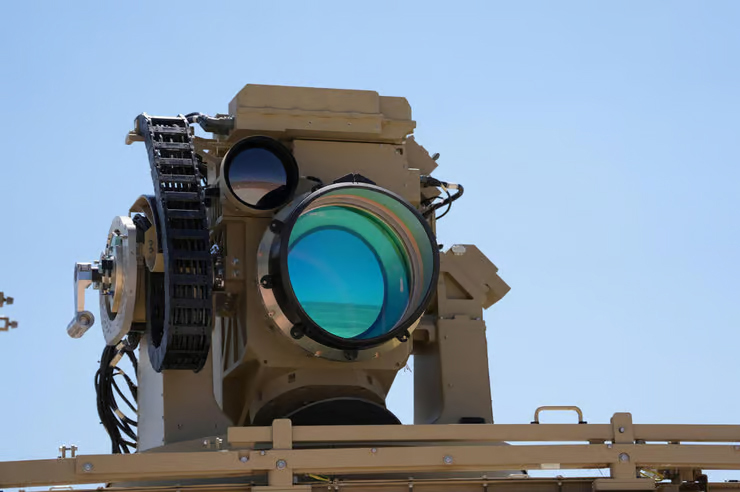
In late 2025, Iron Beam was officially integrated into Israel’s multi-layered air defense network. By early 2026 it had already been used operationally to intercept rockets and drones. What makes the system particularly remarkable is its cost. While intercepting a rocket with an Iron Dome missile can cost tens of thousands of dollars, a single Iron Beam interception costs only about 2 to 10 dollars, essentially the price of the electricity required to fire the laser. Because it uses energy rather than missiles, it effectively has an unlimited magazine as long as electrical power is available.
Meanwhile, Elbit Systems is working on a miniaturized airborne version that could be mounted on aircraft. Such a system would allow Israeli pilots to intercept rockets and drones from above the clouds, overcoming some of the weather limitations that affect ground-based laser systems.
The system was originally called Magen Or (“Shield of Light”), but in September 2025 the Ministry of Defense renamed it Or Eitan (“Eitan’s Light”) in memory of Captain Eitan Oster, who was the first soldier killed in the ground maneuver in Lebanon in October 2024. His father, Dov (Dubi) Oster, is one of the key scientists behind the laser project. At the December 28, 2025 ceremony marking the delivery of the first operational system to the Israeli Air Force, he recited the Shehecheyanu blessing in honor of both the achievement and his son’s memory.
Fun fact: the world record still belongs to… Israel
Israeli pilot Giora “Hawkeye” Epstein remains the most successful jet fighter ace in history. With 17 confirmed aerial victories (16 jets and one helicopter), he holds the world record for the most kills in a jet aircraft.
Most of his victories came during the 1973 Yom Kippur War, when he shot down 12 enemy aircraft in just one week. More than 50 years later, his record still stands and will most likely never be surpassed, as modern air combat now relies heavily on beyond-visual-range missiles rather than the close-range dogfights in which Epstein excelled.
Brigadier General (res.) Giora Epstein passed away on July 19, 2025, at the age of 87, leaving behind a remarkable legacy in the history of aerial combat.

Sources
Primary Official Records
- Israel Ministry of Defense (MoD): Official development data on the Or Eitan (Iron Beam) system and 2026 procurement updates.
- Official IAF Website: Definitive logs for the Ad Halom mission, squadron history, and pilot biographies (Giora Epstein).
- IDF Official Website: Current data on the F-35I “Adir” fleet, air defense integration, and personnel records.
Historical & Biographical Archives
- Machal Volunteers Archive: Authenticated records for Eddie Cohen and international volunteers.
- Ghetto Fighters’ House Museum: History of the Zuckerman-Lubetkin family and the Warsaw Ghetto connection.
Technical & Industry Analysis
- Rafael Advanced Defense Systems: Technical specifications for the Iron Beam laser defense system.
- The Times of Israel: Reporting on the 2026 naming ceremonies and current IAF operational milestones.

For more information about our research process, sourcing, and editorial review, please see our editorial standards and content policy.