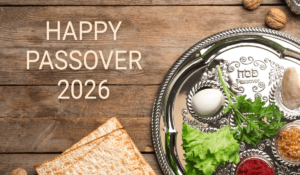
Creating a vegan Seder plate is easier than you might think. In fact, most of the traditional items are already plant-based. Out of the six symbolic foods placed on the Seder plate, four are naturally vegan. This means that if you want to prepare a vegan Passover Seder plate or a vegetarian Seder plate, you are already more than halfway there. Many people assume that adapting the Seder plate for a plant-based Passover requires major changes, but in reality only two items need thoughtful substitutes.
In this article:
• Four Seder Plate Items that Are Already Plant-Based
• Two Simple Substitutes for Your Vegan Seder Plate
• Z’roa (Shankbone): Use a Roasted Beet
• Beitzah (Egg): Creative Vegan Alternatives
• Putting It All Together: Your Complete Vegan Seder Plate
• A Few Reassuring Thoughts About Vegan Seder Plates
• Let the Seder Feast Begin: Vegan Passover Meal Ideas
• Frequently Asked Questions
• Conclusion
There is also a growing number of Jewish vegans and vegetarians around the world. In Israel especially, plant-based eating has become very common, with one of the highest percentages of vegans per capita globally. Even in families that are not fully vegan, it is increasingly common to have a vegan guest, child, or grandchild at the Seder table. As a result, many hosts look for ways to honor tradition while making sure everyone can participate comfortably.
I first started preparing a vegan Seder plate when my daughter adopted a vegan diet. At first I wondered whether it would feel less traditional, but I quickly discovered that thoughtful substitutions can preserve the symbolism beautifully. In this guide, you will learn how to create a meaningful vegan Seder plate using traditional, halachically accepted alternatives, along with practical tips for preparation and presentation.
Four Seder Plate Items that Are Already Plant-Based
Before we talk about substitutions, let’s start with the good news. Four of the six traditional Seder plate items are naturally vegan. If you are preparing a vegan Seder plate or vegetarian Seder plate, most of the symbolic foods already fit perfectly into a plant-based Passover meal. In other words, the majority of the plant-based Seder plate items require no changes at all.
Here is a quick overview of which Seder plate items are already vegan and which need substitutes:
| Seder Plate Item | Traditional Food | Vegan-Friendly? | Notes for a Vegan Seder Plate |
|---|---|---|---|
| Maror (Bitter Herbs) | Horseradish or romaine lettuce | Usually | Check prepared horseradish for dairy or cream |
| Chazeret (Second Bitter Herb) | Romaine lettuce | Yes | Naturally vegan, no changes needed |
| Charoset (Sweet Paste) | Apples, nuts, wine, spices | Usually | Some recipes use honey. Replace with date syrup, maple syrup, or sugar |
| Karpas (Green Vegetable) | Parsley, celery, or potato | Yes | Already perfect for a vegan Passover Seder |
| Z’roa (Shankbone) | Roasted lamb bone | No | Traditionally replaced with a roasted beet |
| Beitzah (Egg) | Roasted egg | No | Several vegan alternatives are used today |
Maror – Bitter Herbs
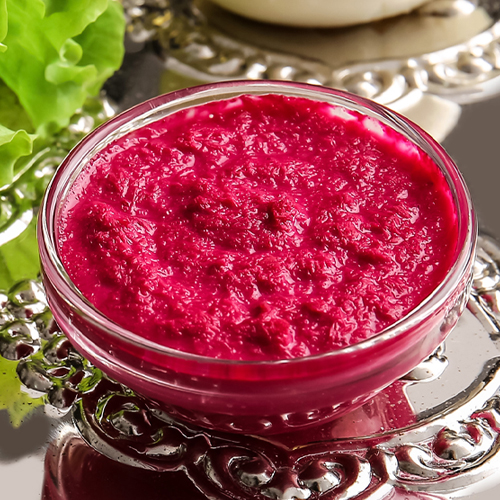
Maror represents the bitterness of slavery in Egypt. The most common choices are horseradish or romaine lettuce, both of which are naturally vegan.
If you choose horseradish, one important tip is to check the ingredients when buying prepared horseradish from a jar. Some brands add cream or other dairy products. To keep your vegan Passover Seder fully plant-based, it is best to use freshly grated horseradish or plain horseradish root. Romaine lettuce hearts are another widely used and completely vegan option.
Karpas – Green Vegetable
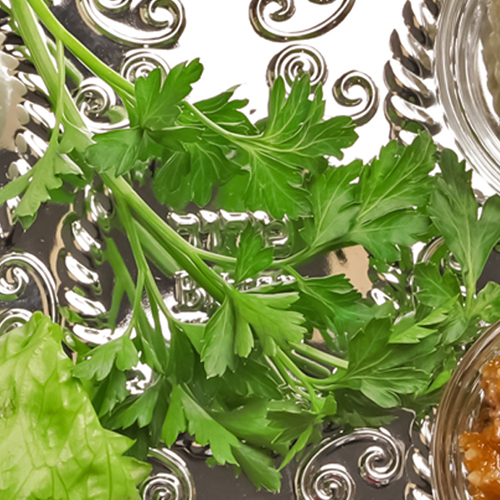
Karpas is usually a green vegetable such as parsley or celery, though some families also use a small piece of potato. It is the first of the symbolic foods eaten during the Seder. The vegetable is dipped in salt water and then eaten, a simple act that recalls the tears shed by the Israelites during their slavery in Egypt.
Because karpas is simply a fresh vegetable, it naturally fits into a vegan Passover Seder without any adjustments. Whether you choose parsley, celery, or potato, this Seder plate item is already completely plant-based.
Charoset – Sweet Paste
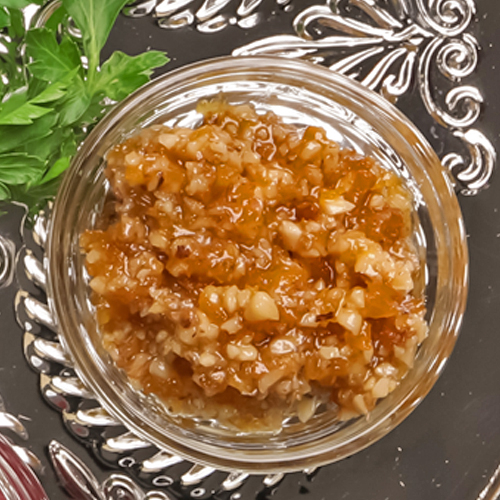
Charoset symbolizes the mortar used by the Israelites when they were enslaved in Egypt. Traditional Ashkenazi recipes usually include apples, nuts, wine, and spices, which makes charoset naturally close to vegan.
The one ingredient to watch for is honey. Many traditional recipes use honey as a sweetener. For a vegan charoset, you can easily substitute date syrup, agave nectar, maple syrup, or simple sugar. I often prefer date syrup because it adds a deep, rich flavor and is also common in Sephardic charoset recipes.
Chazeret – Second Bitter Herb
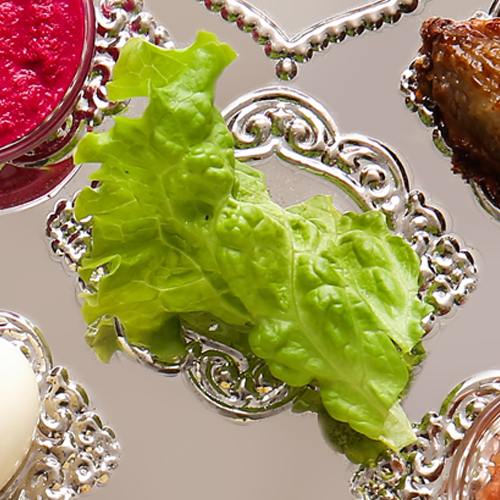
Chazeret is the second bitter herb placed on the Seder plate. It is used later in the Seder during the ritual known as korech, when matzah, bitter herbs, and charoset are combined into a small sandwich. This custom recalls the practice described by Hillel during the time of the Temple, when these foods were eaten together as part of the Passover meal.
Like maror, chazeret symbolizes the bitterness of slavery experienced by the Israelites in Egypt. It is most commonly romaine lettuce, though some traditions also use horseradish. Since both options are plant-based, chazeret naturally fits on a vegan Seder plate and requires no substitutions.
As you can see, you are already two-thirds of the way to a vegan Seder plate. Only two traditional items require substitutes, and both have well-known and widely used plant-based alternatives. Let’s take a look at those next.
Two Simple Substitutes for Your Vegan Seder Plate
Only two items on the traditional Seder plate require substitutions for a vegan version. The good news is that both have meaningful and widely used alternatives. In fact, one of them is even rooted in traditional Jewish sources.
Z’roa (Shankbone): Use a Roasted Beet
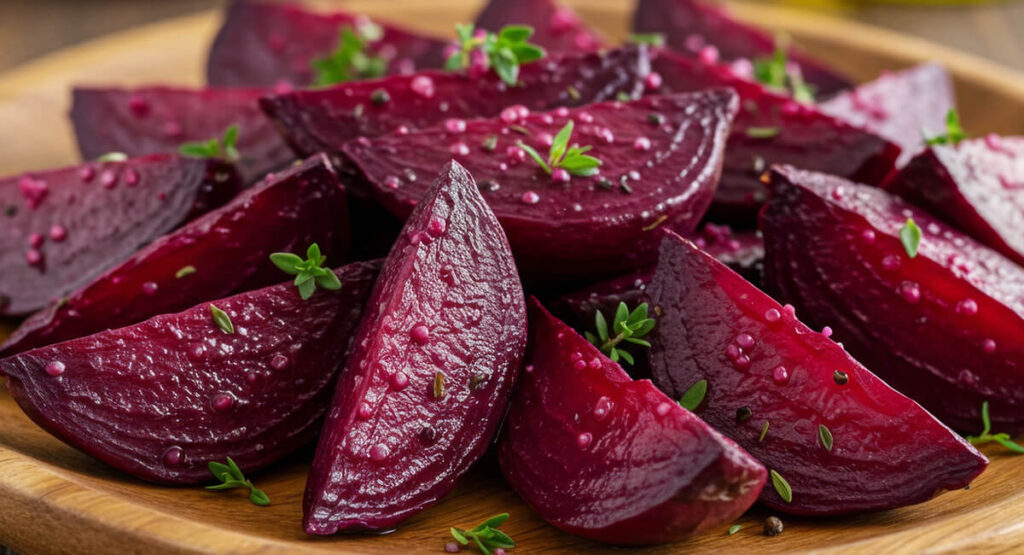
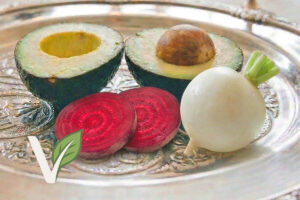
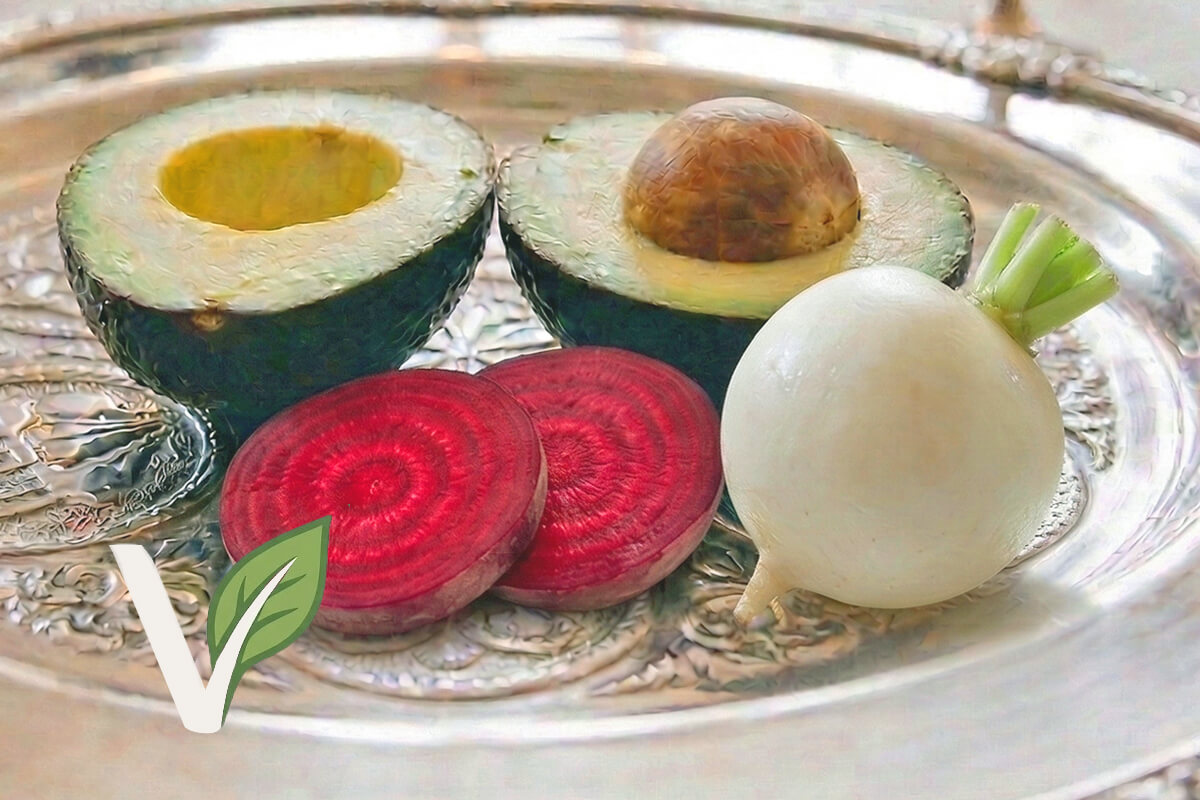
The z’roa traditionally represents the roasted lamb sacrifice that was offered in the Temple in Jerusalem on Passover. On a vegan Seder plate, the most widely accepted substitute is a roasted beet. This is not simply a modern vegan workaround. In fact, the Talmud mentions a roasted beet as a Seder food (Babylonian Talmud, Pesachim 114b). Because of this historical precedent, many authorities consider the roasted beet a halachically acceptable and traditionally recognized option for a vegetarian zeroa.
The symbolism works surprisingly well. When roasted, the beet develops a deep red color that naturally evokes the blood of the Passover sacrifice. Its roasted appearance can even resemble cooked meat, making it a visually fitting replacement on the Seder plate. For many families preparing a vegan Passover meal, the roasted beet has become the most common vegan shankbone alternative.
Preparing the beet is very simple. Use a whole small beet or cut a large beet into a chunky piece. Roast it in the oven at about 400°F (200°C) for 45 to 60 minutes until tender. Some people like to char it slightly over an open flame at the end to give it a darker roasted look that echoes the traditional sacrifice. I often roast several beets at once and save the extras for Passover salads during the week. The one for the Seder plate I char briefly over my gas stove so it has that authentic roasted appearance.
Some families experiment with other substitutes, such as a roasted portobello mushroom. In very liberal communities you may even see a wooden stick or branch used symbolically. However, the roasted beet remains the most widely recognized vegetarian zeroa and is the closest connection to traditional Jewish sources.
Beitzah (Egg): Creative Vegan Alternatives
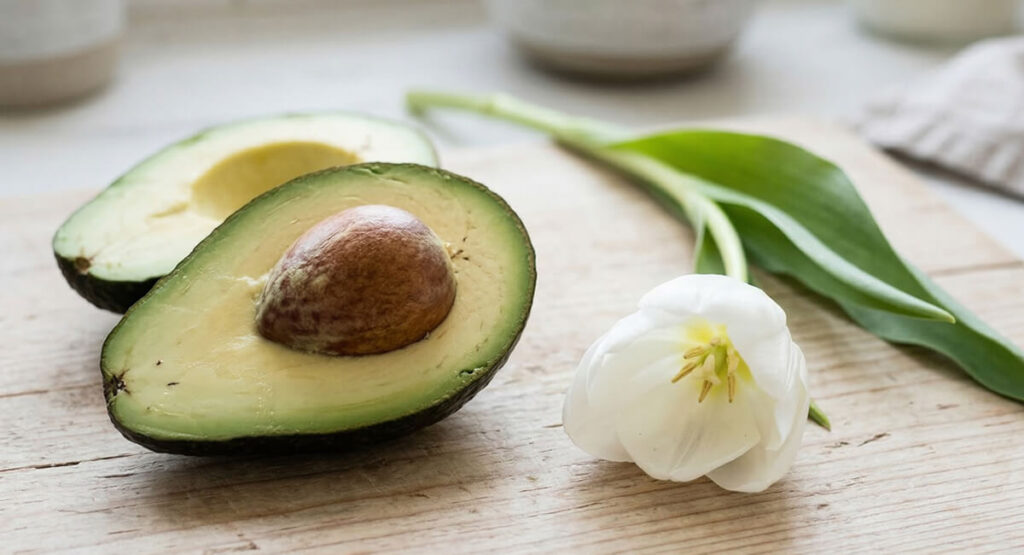
The beitzah, or egg, is the one item on the Seder plate that is inherently not vegan. Traditionally it symbolizes several ideas connected to Passover, including the festival offering known as the chagigah, the cycle of life, mourning for the destruction of the Temple, and the themes of renewal associated with spring.
Because the egg carries symbolic meaning rather than being eaten during the ritual itself, many vegan Seders use a vegan egg substitute that reflects these same ideas. Unlike the roasted beet, there is no single traditional replacement for the egg, so different families choose what feels most meaningful to them.
One popular beitzah alternative is an avocado pit. Its round shape and the fact that it contains the seed of a future tree make it a powerful symbol of potential and new life. Others prefer a small white flower placed on the Seder plate, representing springtime, renewal, and hope. This can create a particularly beautiful and meaningful vegan Seder plate.
For those who prefer something that visually resembles a traditional egg, a peeled white radish can work surprisingly well. When completely peeled, it looks very similar to a hard-boiled egg.
Another plant-based Seder plate egg option is a small cooked potato, which already appears on many Seder tables in Ashkenazi traditions and can symbolize sustenance and resilience. Other creative beitzah alternatives include a small white eggplant (such as a de-stemmed Japanese white eggplant), a white button mushroom cap, or a smooth white stone used purely as a symbolic, non-edible substitute.
Here is a quick overview of the most common vegan alternatives for the Seder plate egg:
| Alternative | Symbolism | Pros | Cons | How to Use | Best For |
|---|---|---|---|---|---|
| Avocado Pit | Round shape symbolizing potential and new life, containing a seed that can grow into a tree | Natural, meaningful symbolism, readily available | Does not visually resemble an egg | Remove from avocado, clean thoroughly, dry, and leave whole | Those who value the symbolism of the “seed of life” |
| Small White Flower | Spring, renewal, beauty, hope, and new beginnings | Beautiful and clearly represents springtime | Delicate, may wilt during a long Seder | Use a white tulip, rose, or similar round flower | Those who want visual beauty and spring symbolism |
| Peeled White Radish | Spring, renewal, and the cycle of life | Looks very similar to a hard-boiled egg | Requires peeling and preparation | Use a small round radish and peel completely until white | Those who want the closest visual match to a traditional egg |
| Small Cooked Potato | Renewal, sustenance, humility, and resilience | Already used in some Ashkenazi traditions, can be roasted for color | Does not resemble an egg | Use a small whole potato, boiled or roasted | Those who prefer an option with some traditional precedent |
Personally, I often use an avocado pit because I love the symbolism of the seed holding future life inside it. But I have also attended Seders where a white flower was used, and it looked absolutely stunning on the plate.
It is worth noting that while the roasted beet has a traditional halachic precedent, the egg substitutes are modern adaptations. There is no single correct choice. The goal is simply to choose a symbol that feels meaningful for your vegan Passover Seder and reflects the themes of renewal and life associated with the traditional egg.
Putting It All Together: Your Complete Vegan Seder Plate
Now that you know the alternatives, it’s time to put everything together. Creating a beautiful vegan Seder plate is surprisingly simple once you see how the pieces fit.
Your shopping list:
- 1 medium beet (for the z’roa substitute)
- Fresh horseradish root or a jar of vegan horseradish
- 1 head of romaine lettuce
- 1 bunch of fresh parsley
- Ingredients for charoset: apples, walnuts, wine, cinnamon, and date syrup
- Your chosen egg substitute: avocado (for the pit), a small white flower, or a radish
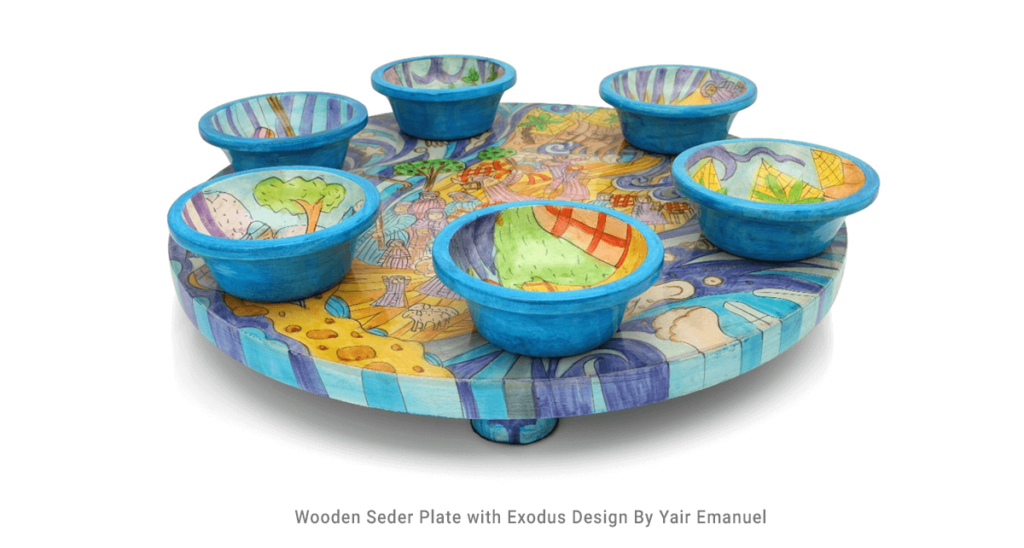
Time for a New Seder Plate?
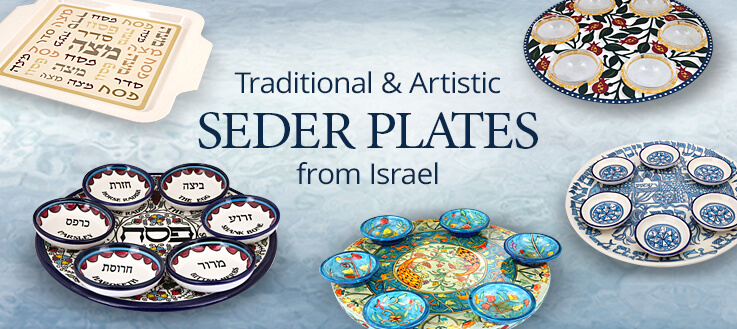
Traditional Seder plates work perfectly for vegan Seders. The plate itself does not change. What matters is the symbolism of the foods placed on it. If you are looking for a beautiful way to present your vegan Passover Seder, you can explore our collection of handcrafted Seder plates from Israel, designed to bring both tradition and elegance to your holiday table.
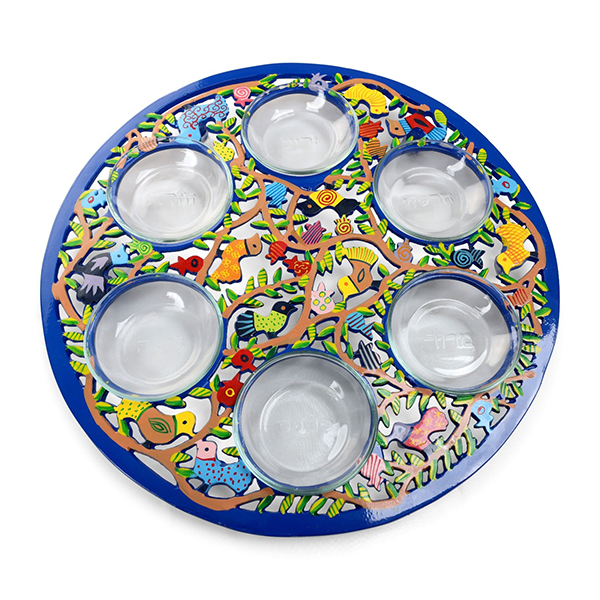
Hand Painted Laser Cut Seder Seder Plate by Yair Emanuel
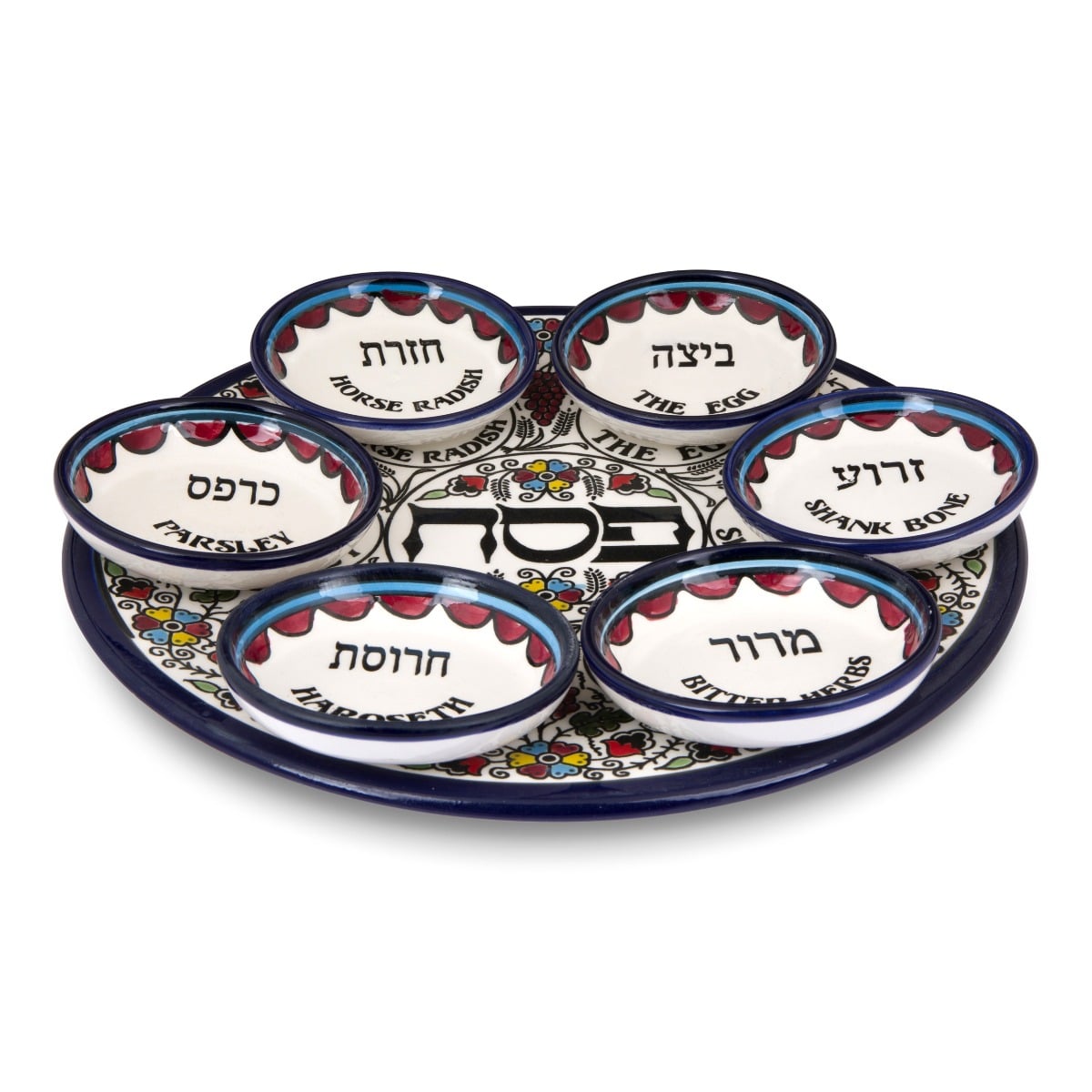
Seven-Piece Seder Plate By Armenian Ceramics
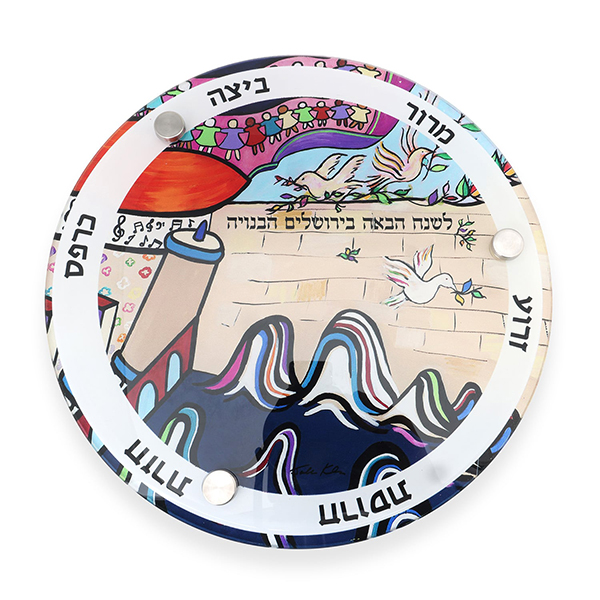
Jordana Klein Next Year in Jerusalem Seder Plate
A Few Reassuring Thoughts About Vegan Seder Plates
If you’re making a vegan Seder plate for the first time, it’s completely natural to have a few questions. The Seder is one of the most meaningful traditions in Jewish life, and many people want to be sure they are honoring it properly.
Is this really okay halakhically?
Yes, it can be. The roasted beet used as a substitute for the z’roa has traditional Jewish support. The Babylonian Talmud (Pesachim 114b) mentions a roasted beet as one of the foods associated with the Seder meal. Because of this reference, the roasted beet on a Seder plate is not simply a modern vegan invention but a substitution with centuries of precedent in Jewish tradition. Many authorities consider it a halachically acceptable vegetarian zeroa.
The egg substitute allows more flexibility. The beitzah on the Seder plate is primarily symbolic and is not eaten during the ritual itself. For that reason, many families feel comfortable choosing a vegan egg substitute that reflects the themes of renewal and the cycle of life. If you have concerns about your own community’s practice, you can always consult your rabbi, but vegan and vegetarian Seder plate adaptations are widely used today.
Will my family or guests be uncomfortable with the substitutions?
In most cases, people are curious rather than uncomfortable. When the symbolism is explained, guests often appreciate the thought behind the choices. For example, once people hear that the deep red color of the roasted beet represents the Passover sacrifice, the connection usually makes immediate sense.
In my experience, a vegan Seder plate often sparks thoughtful conversations about freedom, compassion, and the values we want to express during Passover. One helpful idea is to place a small card next to the Seder plate explaining each item and its symbolism. This turns the substitutions into a meaningful conversation starter rather than something surprising.
If you’re hosting a mixed group, you also have options. Some families prepare both a traditional and a vegan Seder plate, while others simply use the vegan Seder plate as the ceremonial one and provide traditional foods separately for those who prefer them.
Does it still count as a proper Seder?
Absolutely. The heart of the Seder is the retelling of the Exodus story and the experience of freedom. The foods on the Seder plate are symbolic teaching tools meant to help bring that story to life.
Using a roasted beet instead of a shankbone still preserves the traditional symbolism. The z’roa itself is not eaten during the Seder, since it represents the Passover sacrifice that was offered in the Temple in Jerusalem. The egg, while symbolic, is often eaten later in the meal in many traditions, but it is not part of the ritual actions of the Seder plate itself.
What matters most is the meaning behind the ritual and the intention we bring to the evening. A vegan Seder plate fully supports the purpose of the Seder and allows everyone at the table to participate in the story of Passover.
What if I’m the only vegan at a mixed Seder?
This situation is actually very common today. Many families include a mix of dietary preferences at the Seder table, and there are several easy ways to handle it.
You might prepare a fully vegan Seder plate for everyone, which often works beautifully since most of the traditional items are already plant-based. Another option is to place both a traditional and a vegan Seder plate on the table. Some hosts also use the vegan Seder plate as the ceremonial one while making traditional items available elsewhere.
In many ways, a vegan Seder plate can enrich the evening. The Seder is built around asking questions and discussing the meaning of freedom. Thoughtful adaptations often lead to deeper conversations about values, compassion, and how ancient traditions continue to speak to modern life.
Let the Seder Feast Begin: Vegan Passover Meal Ideas
The Seder plate is just the beginning of your vegan Passover celebration. Once the symbolic foods have been explained and the story of the Exodus begins to unfold, the meal itself becomes another opportunity to celebrate freedom, tradition, and the flavors of the season. A thoughtful vegan Passover meal can feel just as festive and satisfying as a traditional one.
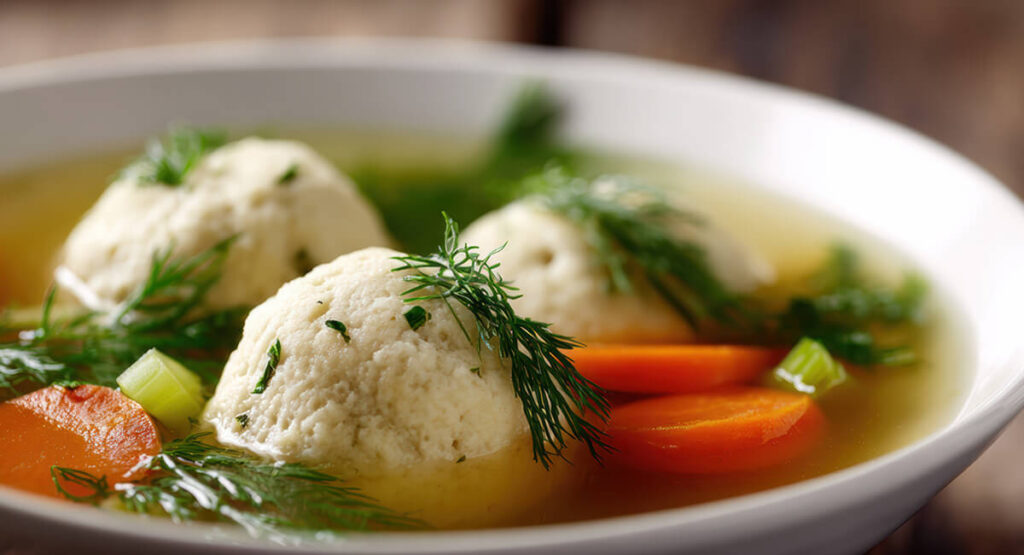
Many classic Passover dishes are already plant-based or can easily be adapted. A light vegetable soup with vegan matzo balls is a comforting way to start the meal. Roasted spring vegetables such as carrots, asparagus, and potatoes bring seasonal color to the table and naturally align with the themes of renewal associated with Passover.
For a filling side dish, many families enjoy a quinoa pilaf, though it is always wise to check whether quinoa is accepted in your family’s Passover tradition.
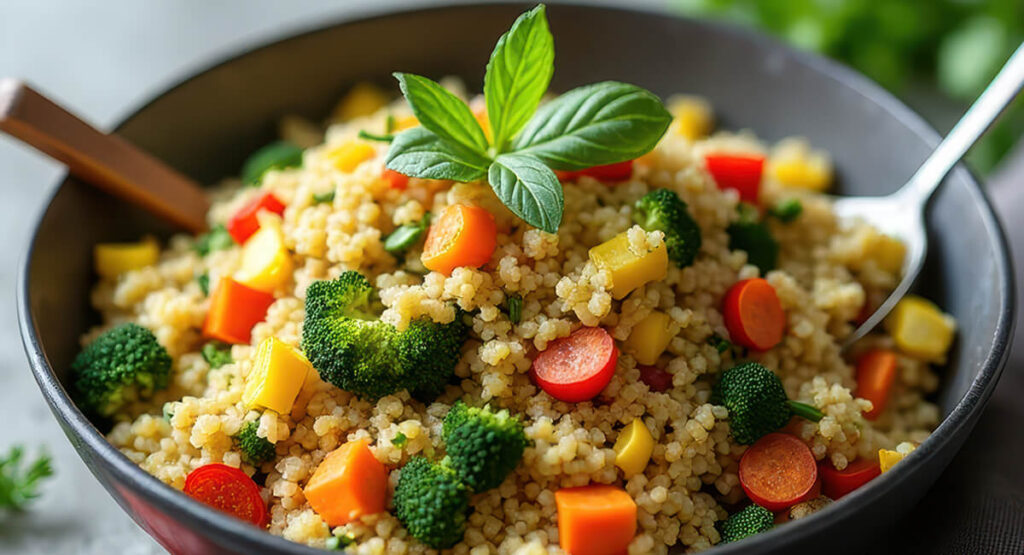
Note: Many modern rabbinic authorities do not consider quinoa to be kitniyot because it was not included when the Ashkenazi custom first developed. Others are more cautious since quinoa is cooked and used similarly to grains. If you are planning to serve quinoa at your Seder, it’s a good idea to check your guests’ traditions.
Coconut macaroons are one of the most beloved Passover desserts and are often naturally vegan, making them a perfect sweet treat for a plant-based Seder. You can also find a few simple for inspiration. Charoset can also appear beyond the Seder plate, and extra charoset makes a delicious spread on matzah during the meal. For something lighter, fresh fruit platters or simple fruit-based desserts are refreshing and naturally suited to a vegan Passover menu.
When planning your Passover meal, focus on seasonal vegetables and simple ingredients. Many traditional Passover dishes can easily be adapted for a vegan menu.

Frequently Asked Questions
Can you make a vegan Seder plate?
Yes. Four of the six traditional Seder plate items are already naturally plant-based. Only two require substitutions: the z’roa and the beitzah. A roasted beet works well as a vegan shankbone alternative, and several simple options can replace the egg.
What vegetable can replace the shankbone on a Seder plate?
The most common substitute is a roasted beet. This vegan Seder plate alternative has traditional precedent and is mentioned in the Talmud (Pesachim 114b). Its deep red color also visually represents the Passover sacrifice. Some people use roasted mushrooms, though the beet remains the most widely accepted option.
Is a vegan Seder plate kosher for Passover?
Yes, a vegan Seder plate can be kosher for Passover. The important thing is that all ingredients are kosher for Passover. Check that prepared items such as horseradish or wine for charoset have proper certification.
Do I need to tell my guests the Seder plate is vegan?
That is entirely your choice, but I personally prefer to mention it openly. It can be helpful to check with your guests beforehand, especially if they have their own Passover traditions. When people understand the symbolism behind the substitutions, they are usually curious and supportive. In many Seders I’ve been to, a vegan Seder plate has opened up thoughtful conversations about tradition and the values we want to bring into our lives today.
Where can I buy vegan Seder plate items?
Most items are available at any grocery store. Fresh herbs, horseradish, and vegetables can be found in the produce section. If you are looking for a Seder plate, browse our collection of beautifully crafted Seder plates.
Honor Tradition While Staying True to Your Values
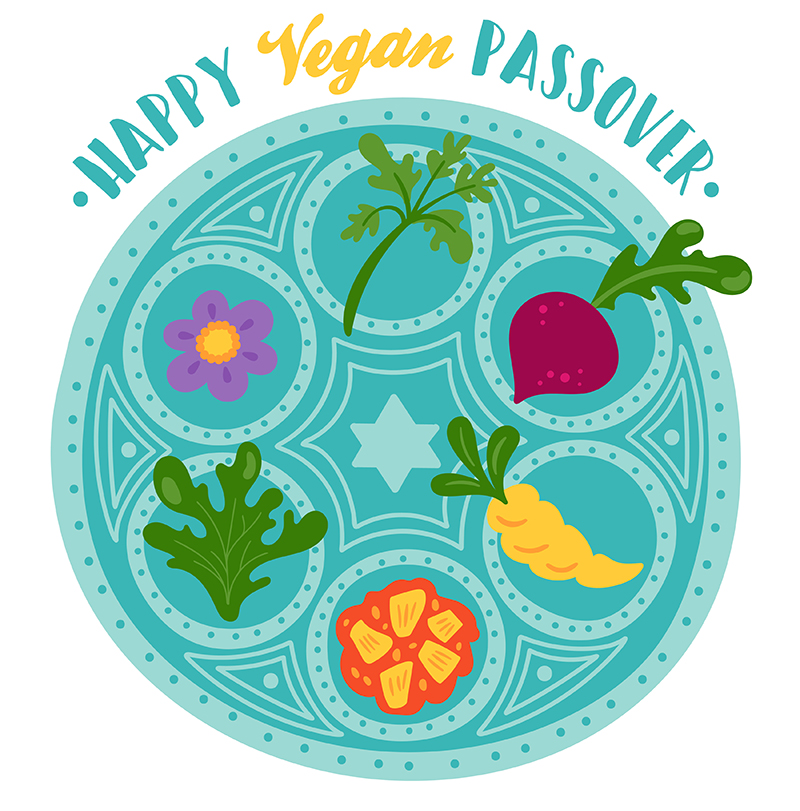
Preparing a vegan Seder plate is easier than many people expect. With just a few thoughtful substitutions, you can preserve the symbolism of the Seder. What matters most is not the exact ingredients, but the meaning behind them. The Seder plate helps bring the story of the Exodus to life, inviting everyone at the table to reflect on the meaning of slavery and freedom.
For many families today, adapting traditions thoughtfully allows them to honor the past while expressing the values that guide their lives. Interestingly, some Jewish thinkers have suggested that in the peaceful world of the Messianic era, humanity may return to a more harmonious relationship with animals and food. So your beautiful vegan Seder plate might simply mean you’re a little ahead of schedule!
If you’d like to explore the traditions further, learn more about Seder symbolism and customs. You can also browse our Passover 2026 guide. And if you’re preparing for the holiday, discover our collection of Seder plates and Passover Judaica.
Wishing you and your family a joyful and meaningful Passover. Chag Sameach!
For more information about our research process, sourcing, and editorial review, please see our editorial standards and content policy.