Jewish Art

What Hidden Stories Lie in Jewish Art?

Jewish Art Symbolism Explained: From Biblical Themes to Modern Designs

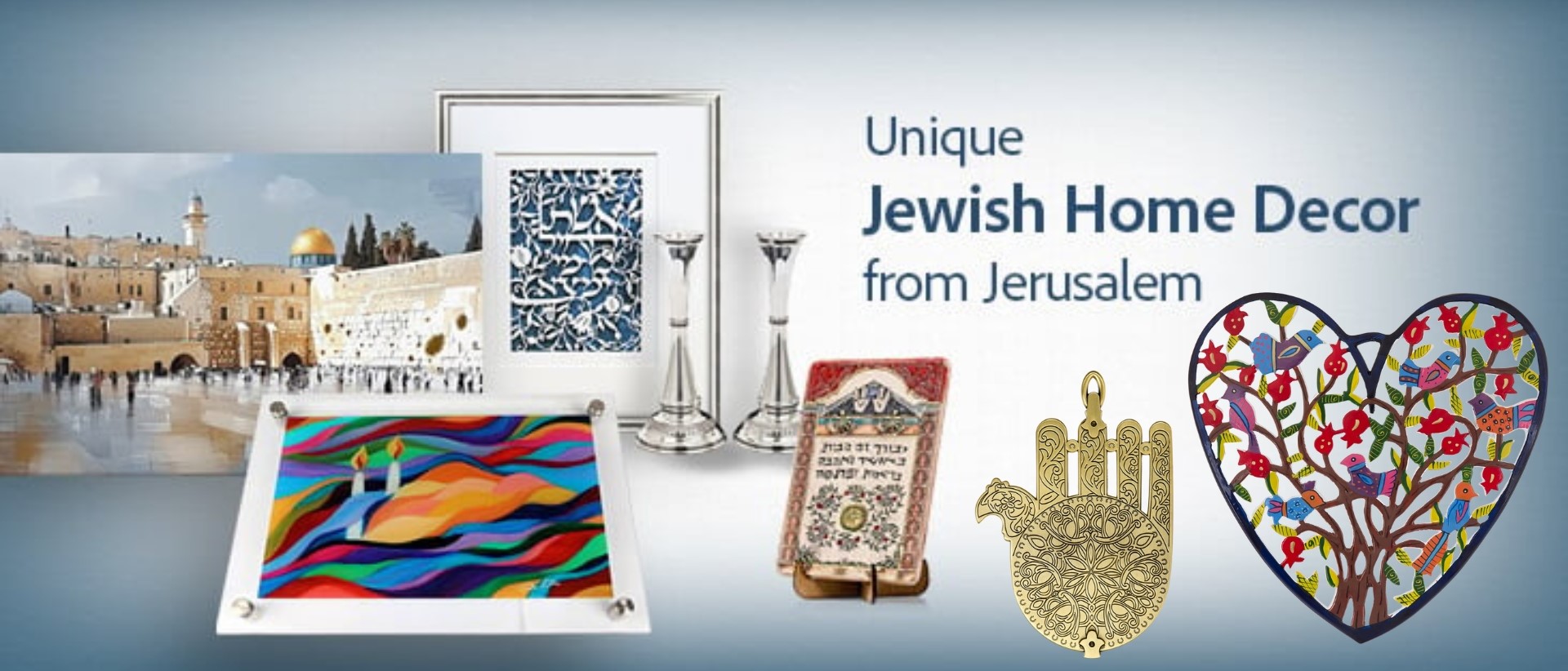
Walk through a Jewish home, Judaica shop, or Jewish art studio and you’re bound to see these images: pomegranates bursting with seeds, protective hamsa hands, golden Jerusalem skylines, seven-branched menorahs, and Stars of David. These beautiful symbols aren’t just decoration – they’re a visual language that’s been speaking for thousands of years.

But what do they really mean? Why does that pomegranate keep appearing on everything from challah covers to wall art? What’s the Jewish story behind the hamsa? Every Jewish symbol carries hidden layers of meaning, connecting us to biblical stories, ancient wisdom, and generations of tradition.

Let’s decode the secrets behind the most beloved symbols in Jewish art and discover what they’re really saying!


1. The Pomegranate: Abundance and Righteousness


Origins and Meaning

The pomegranate is one of the Seven Species that represent the abundance of the Land of Israel, mentioned throughout Jewish texts as a symbol of fertility, blessing, and beauty. According to Jewish tradition, each pomegranate contains exactly 613 seeds - the same number as the mitzvot (commandments) in the Torah. While botanists will tell you the actual count varies, the symbolic meaning is powerful: the pomegranate represents the fullness of Jewish observance and righteousness.

In Jewish Art Today

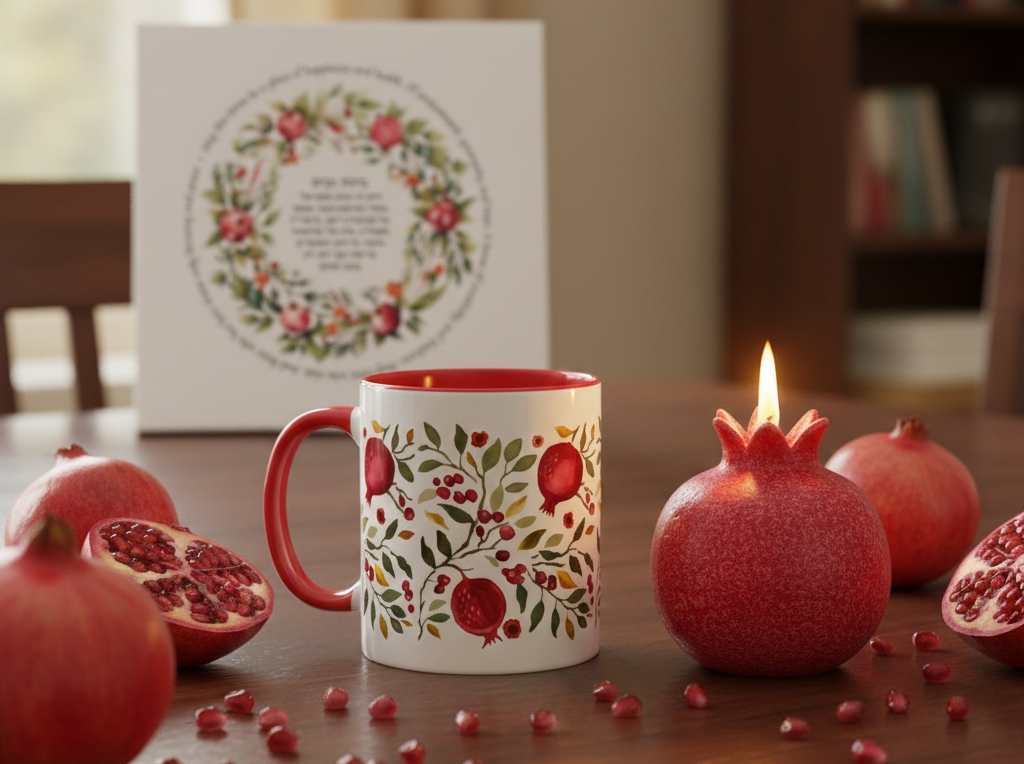
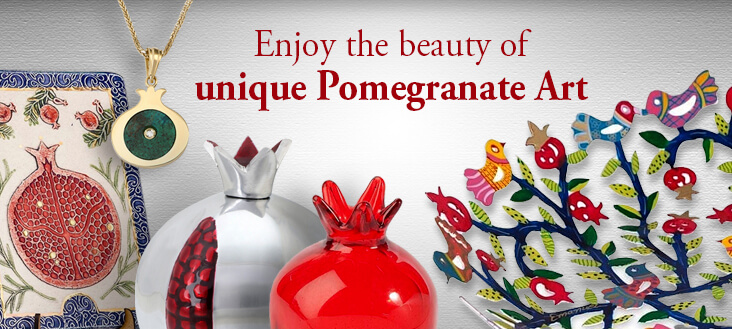
Contemporary Jewish artists embrace the pomegranate's rich symbolism and visual beauty. You'll find pomegranates featured on Rosh Hashanah art and tableware (representing wishes for a fruitful new year), mezuzah designs, challah boards and covers, Jewish wall art, fun modern items like mugs, and more.

The pomegranate is especially a favorite motif of modern Israeli artists like Yair Emanuel, given its special connection to the Land of Israel in addition to its rich color, crown-like top, and deep symbolism.

Adorn your home with stunning pomegranate art from Israel!

btn
POMEGRANATE_GIFTS_Category-MOBILE
2. The Hamsa: Protection and Blessing


Origins and Meaning

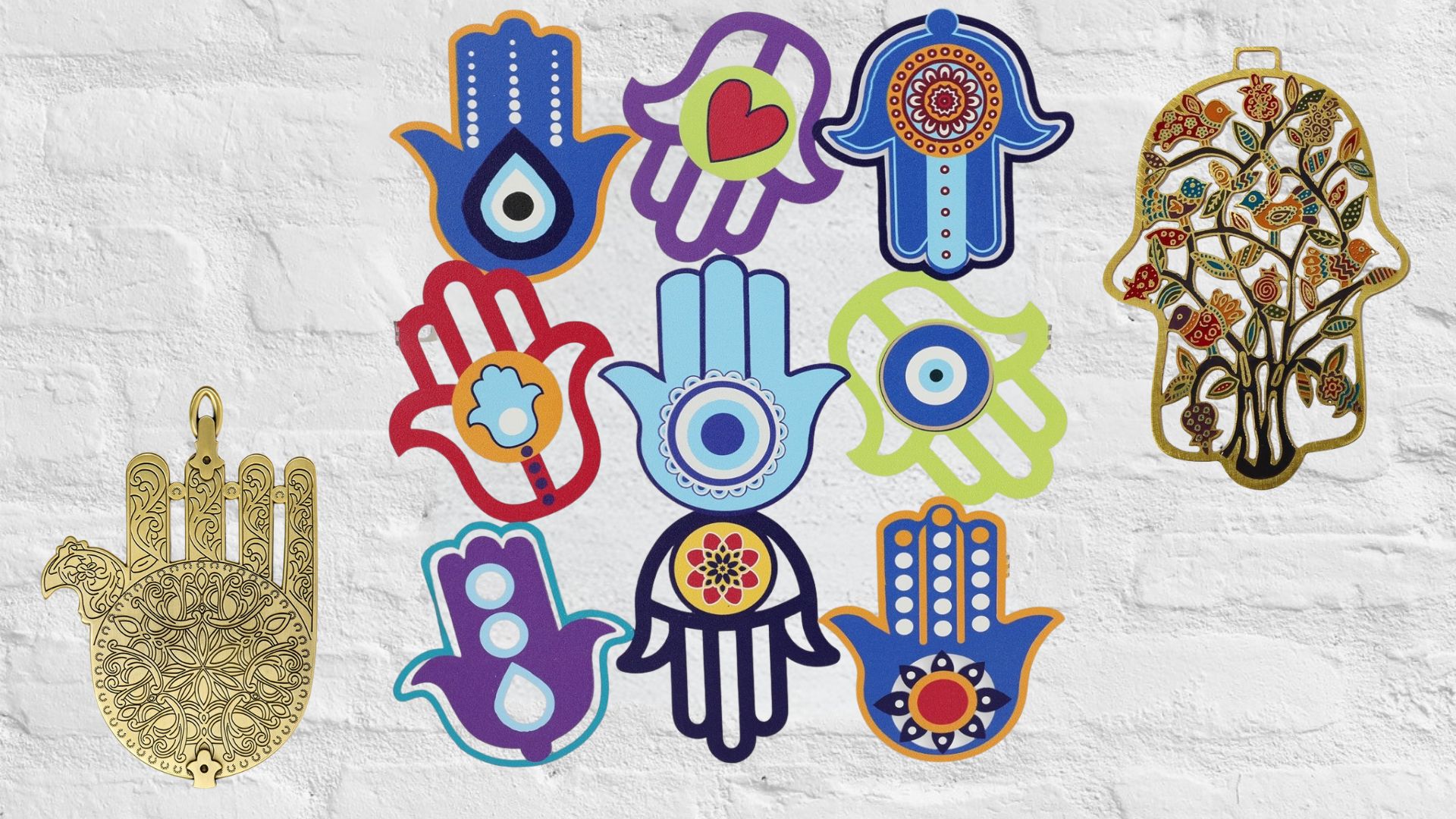
The hamsa, a distinctive hand-shaped symbol sometimes featuring an eye in the center, is one of the oldest protective symbols in Jewish tradition. Archaeological evidence shows hamsa imagery on ancient Israelite tombs dating back to the 8th century BCE.

The open hand represents divine protection and God's hand guarding His people. The eye in the center is the "watchful eye" that protects against the evil eye (ayin hara), negative energy directed through jealousy or ill will. Some Jews also interpret the five fingers of the hamsa as representing the five books of the Torah. In Jewish art, a hamsa can point up (offering protection) or down (inviting blessings), though many believe the direction doesn't affect its protective power or symbolism.

In Jewish Art Today

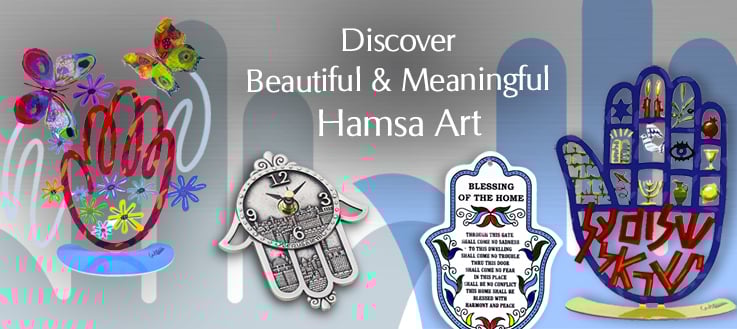
While the hamsa has been used by Middle Eastern and North African Jewish communities for centuries, it has also exploded in popularity in contemporary Jewish art across Israel and the diaspora. You'll see hamsa wall hangings and plaques in every style from traditional to ultra-modern, sometimes along with a home blessing text. Israeli artists fill hamsas with intricate patterns: flowers, pomegranates, Stars of David, Jerusalem scenes, romantic motifs, and more.

Hamsa imagery also occasionally appears on other forms of Judaica, like Shabbat candlesticks and mezuzah cases.

Bring the traditional symbol of protection into your home with Israeli hamsa art!

btn
Hamsa-Art-category-m
3. The Star of David: Identity and Pride


Origins and Meaning

The six-pointed Star of David (or in Hebrew Magen David, meaning "Shield of David") has become Judaism's most universally recognized symbol. While it wasn't always exclusively Jewish, it became associated with the Jewish community in Prague in the fourteenth century, and over time became the famous Jewish symbol we know it as today.

By the 19th century, as Jews sought a simple, striking symbol to represent Judaism, the Star of David was universally adopted. In addition, in Kabbalah the two interlocking triangles represent the relationship between God and humanity, the spiritual and physical realms, and divine blessings descending as our prayers ascend. When Israel became a state in 1948, the Star of David took its place on the national flag, and is today seen as a symbol of defiance, survival, and pride.

In Jewish Art Today

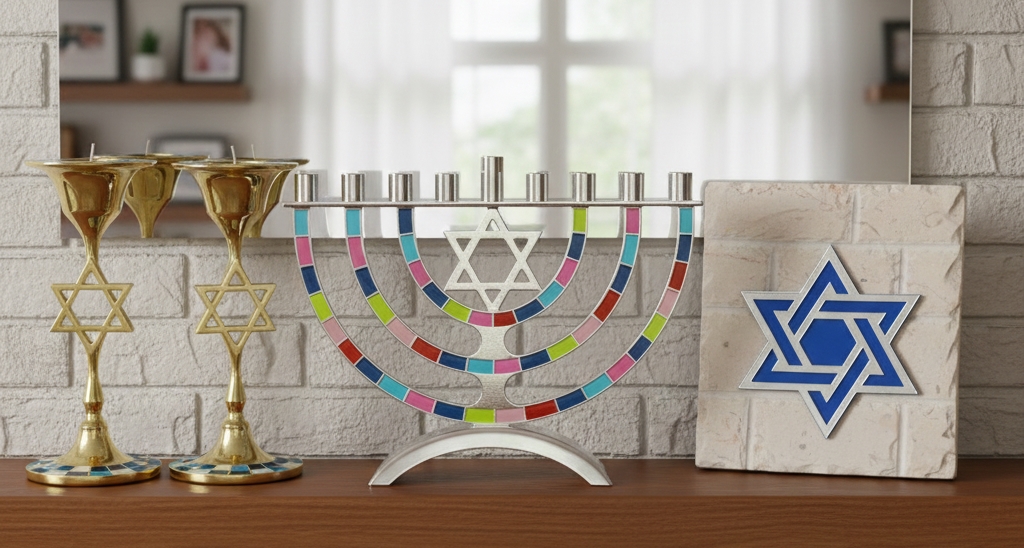
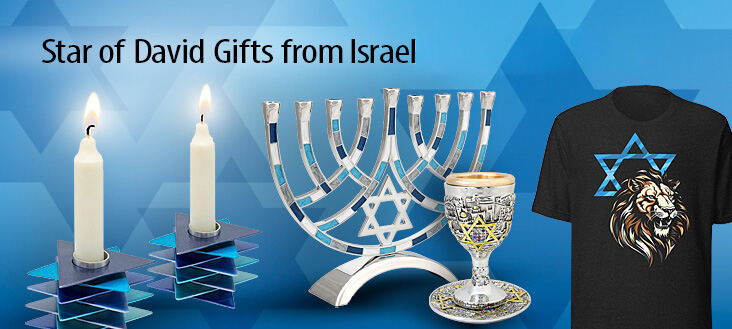
The Star of David appears throughout contemporary Jewish art in endless variations. Common forms include Star of David jewelry, Star of David home decor and Judaica, Israeli flag-inspired art pieces and other items, and Jewish apparel featuring the Star of David by itself or as part of the Israeli flag or other motifs. Israeli artists in particular like to feature the Star of David on meaningful Jewish ritual pieces such as Hanukkah menorahs, Shabbat candlesticks, kippot, and more.

The Star of David in Jewish art can represent Israel, Jewish identity, divine protection, or simply pride in being part of the Jewish people.

Shop iconic Star of David gifts by Israeli artists!

btn
Star-of-David-Gifts-CAT-M
4. Jerusalem: The Eternal City


Origins and Meaning

Jerusalem holds a unique place in Jewish consciousness: it's not just a city, but the spiritual center of the Jewish world. For thousands of years, Jews in exile have prayed facing Jerusalem, ended the Passover Seder with the words "Next year in Jerusalem," and mourned the destruction of the Temples. The Western Wall (Kotel) - the retaining wall of the otherwise destroyed Second Temple complex - is the holiest site in Judaism and the focus of Jewish prayer worldwide.

Jerusalem represents the connection between heaven and earth, the place where God's presence dwells most intensely. For Jews returning to their ancestral homeland and establishing modern Israel, Jerusalem as the capital represents the fulfillment of centuries of longing and the continuation of an unbroken bond between the Jewish people and their eternal city.

In Jewish Art Today

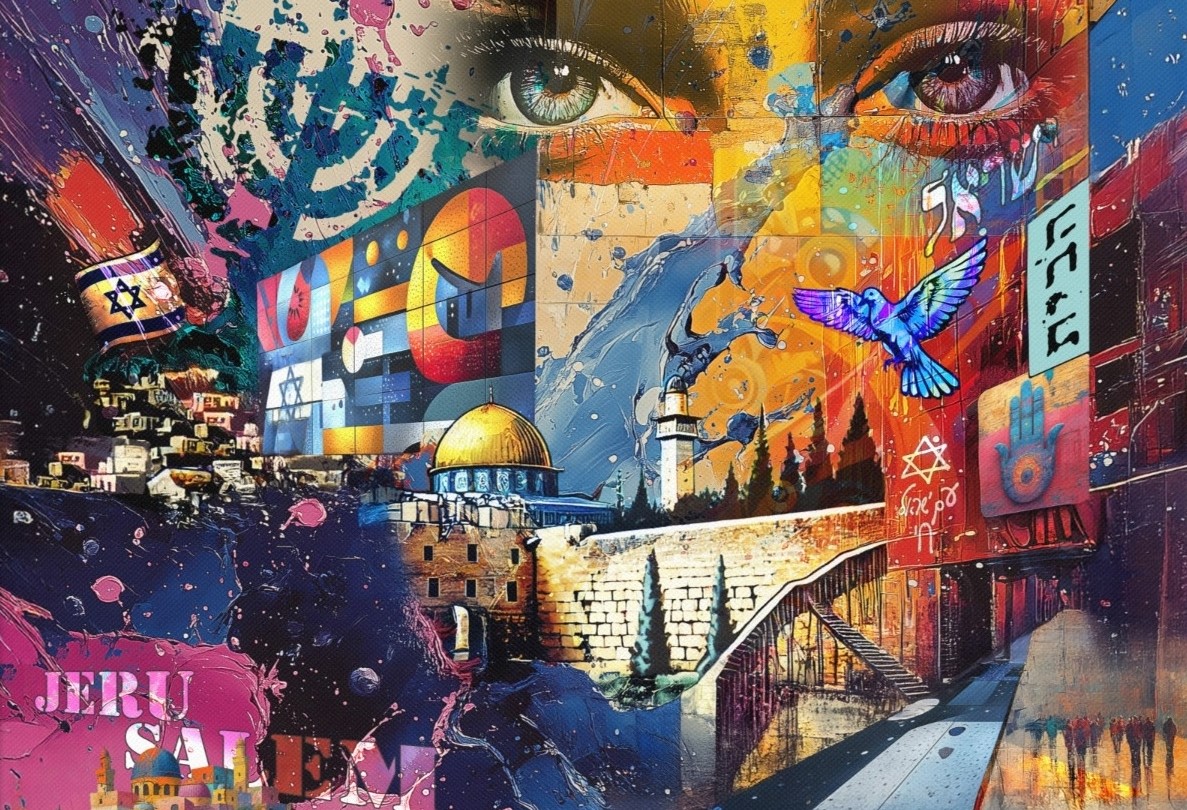
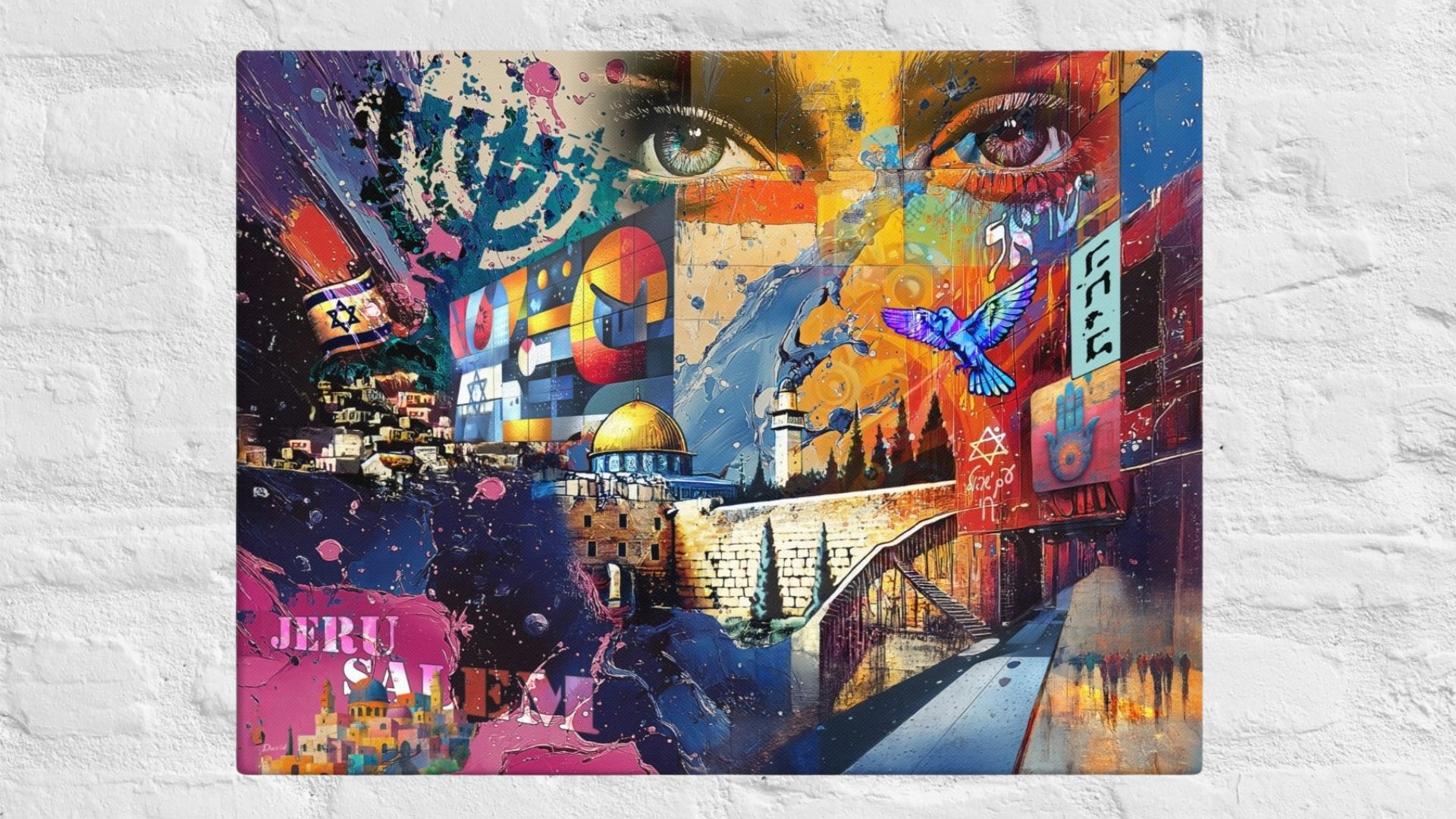
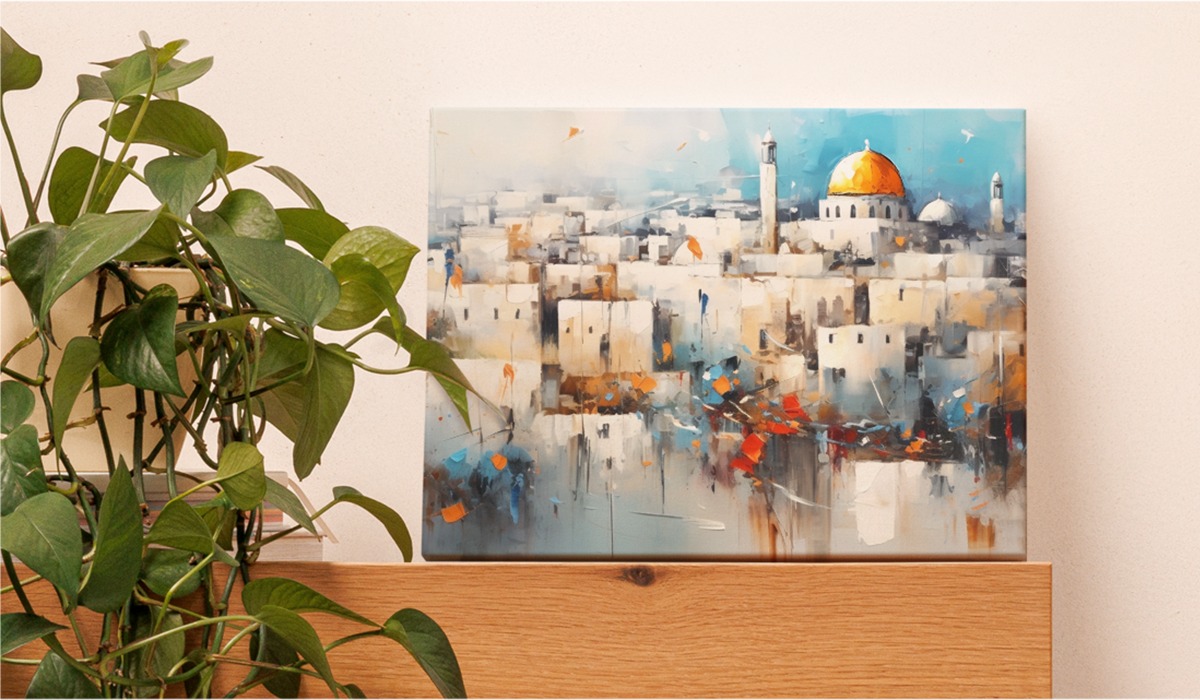
Jerusalem imagery is perhaps the most popular theme in Jewish art and home decor. You'll find paintings and prints of the Western Wall in realistic or abstract styles, panoramic views of the Old City's golden stone buildings, the Temple Mount in Jerusalem's skyline, narrow alleyways and archways of ancient neighborhoods, sunrise or sunset over Jerusalem bathed in golden light, as well as modernist designs inspired by the bricks of the Western Wall. Jerusalem art sometimes also incorporates the Hebrew phrase "Im Eshkachech Yerushalayim" ("If I forget you, Jerusalem") or other Hebrew verses or blessings related to the Holy City.

Jerusalem art connects diaspora Jews to Israel, serves as a focal point for prayer and meditation, and declares the unbreakable bond between the Jewish people and their eternal capital.

Discover Jerusalem-themed art and gifts straight from the Land of Israel!

btn
Jerusalem-gifts-CATEGORY-MOBILE
5. The Menorah: Ancient Light, Eternal Symbol


Origins and Meaning

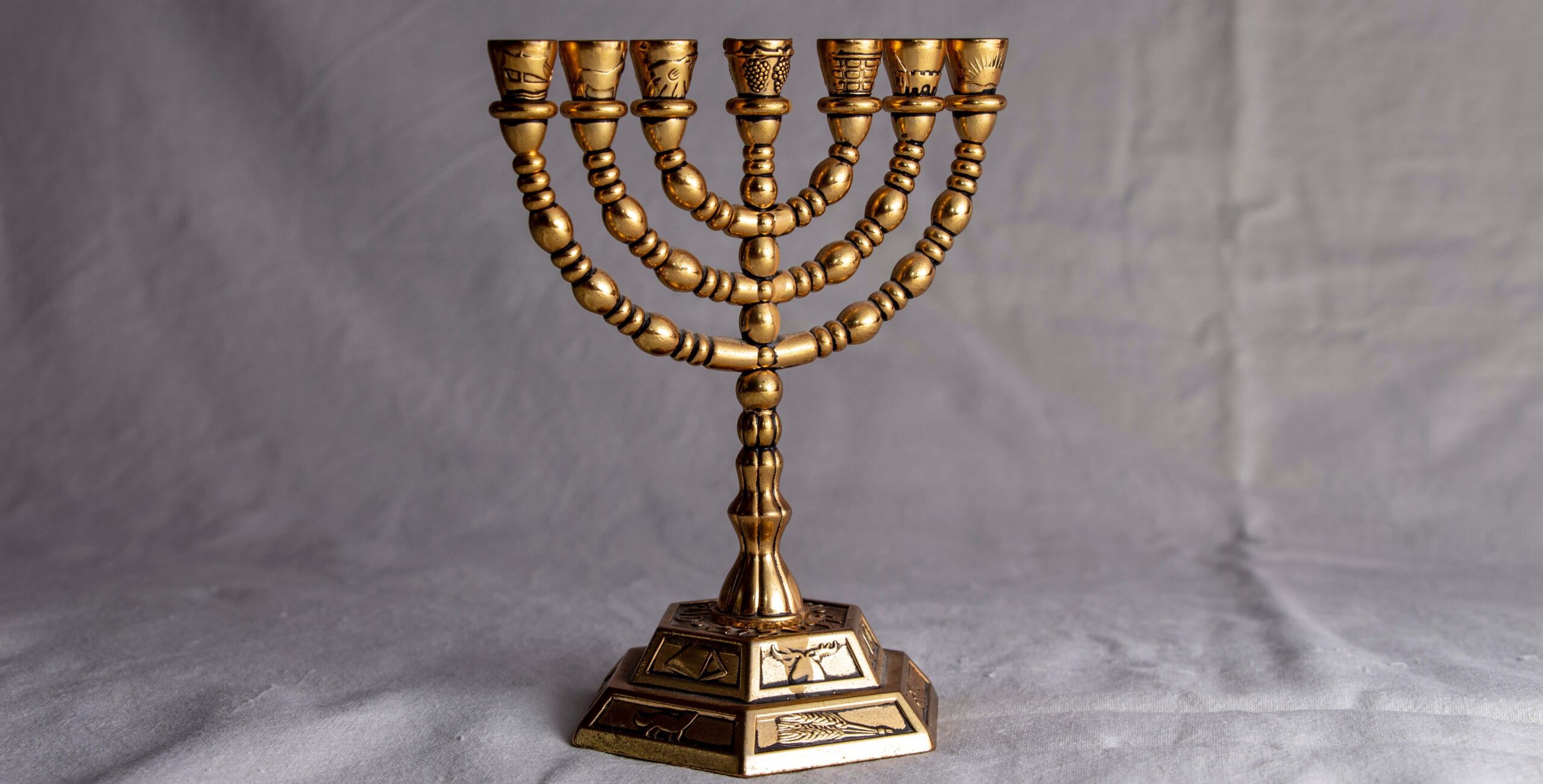
The seven-branched menorah is Judaism's most ancient symbol. Unlike the Star of David's recent history, the menorah has represented the Jewish people from biblical times to today. God gave Moses specific instructions for creating the golden menorah in the Tabernacle, with a central stem and six branches holding seven oil lamps. The menorah stood in Solomon's Temple and later in the Second Temple as one of the most sacred ritual objects.

When the Romans destroyed the Second Temple in 70 CE, they carried away the golden menorah, famously depicted on the Arch of Titus in Rome. After the Temple's destruction, the menorah became a symbol of Jewish memory, hope, and continuity. The menorah represents divine light, wisdom, God's presence, and the eternal nature of the Jewish people. Today, it's the official symbol of the State of Israel, appearing on Israel's coat of arms.

In Jewish Art Today

The menorah appears in Jewish art in various interpretations. Popular forms include replicas of the seven-branch menorah as Jewish home decor, as well as artistic depictions of the menorah in wall art and on Judaica pieces like mezuzah cases and kippot. Some depictions focus on historical accuracy, recreating the ornate details described in ancient texts, while others take creative liberties with color, form, and style.

The menorah in Jewish art represents continuity between ancient Temple worship and modern Jewish life, making it a powerful symbol for Jewish homes and spaces.

Bring Jewish tradition home with seven-branched menorah decor!

btn
7-branched-menorahs-CAT-mobile
6. More Biblical Imagery: Trees, Doves, Lions, and Abundance


Jewish art draws deeply from biblical stories and symbols, bringing ancient texts to visual life. These recurring motifs connect us to our scriptural roots and carry layers of meaning passed down through generations.

The Tree of Life

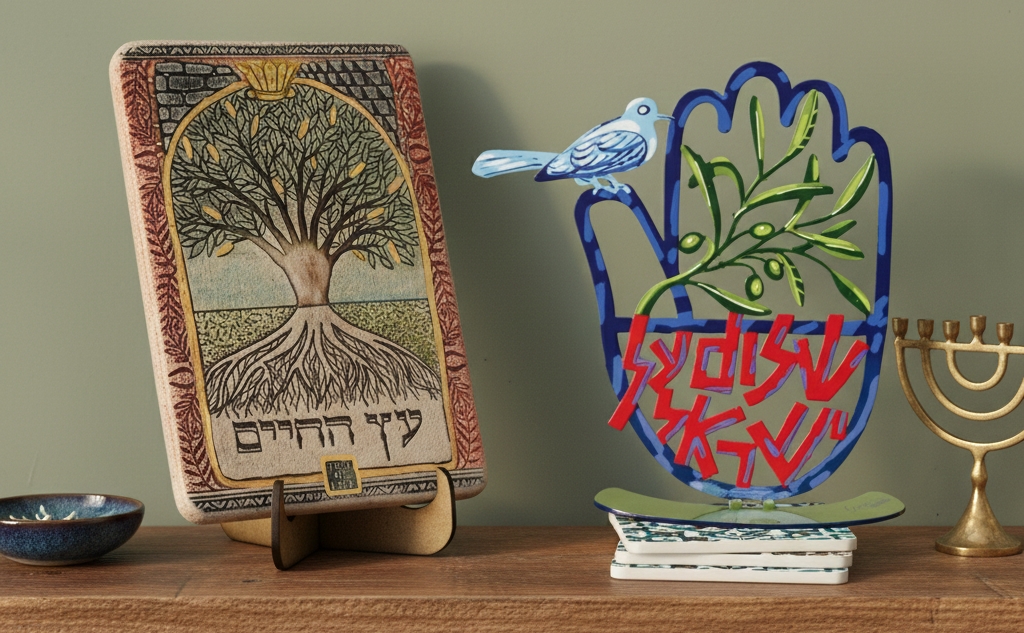
The Tree of Life (Etz Chaim) appears in Genesis as the tree in the Garden of Eden and in Proverbs as a metaphor for Torah: "It is a tree of life to those who hold fast to it." In Kabbalah, the Tree of Life represents the ten sefirot (divine emanations) through which God created the universe. Jewish artists depict Tree of Life art with spreading branches and deep roots, often incorporating other Jewish symbols, family names, or birds and pomegranates. Tree of Life art represents growth, Torah study, family connections, and the rootedness of Jewish tradition, making it popular for weddings, family trees, and home decor.


The Dove and Olive Branch

The dove carrying an olive branch originates in the Noah's ark story - when the dove returned with an olive branch, Noah knew the flood waters had receded and new life was possible. In Jewish art, doves represent peace, hope, and divine messages. The olive branch also adds meaning of reconciliation and the Land of Israel (olives being one of the Seven Species). Together, they symbolize renewal after destruction and the hope for peace - especially meaningful in art celebrating Israel or marking new beginnings.


The Lion of Judah

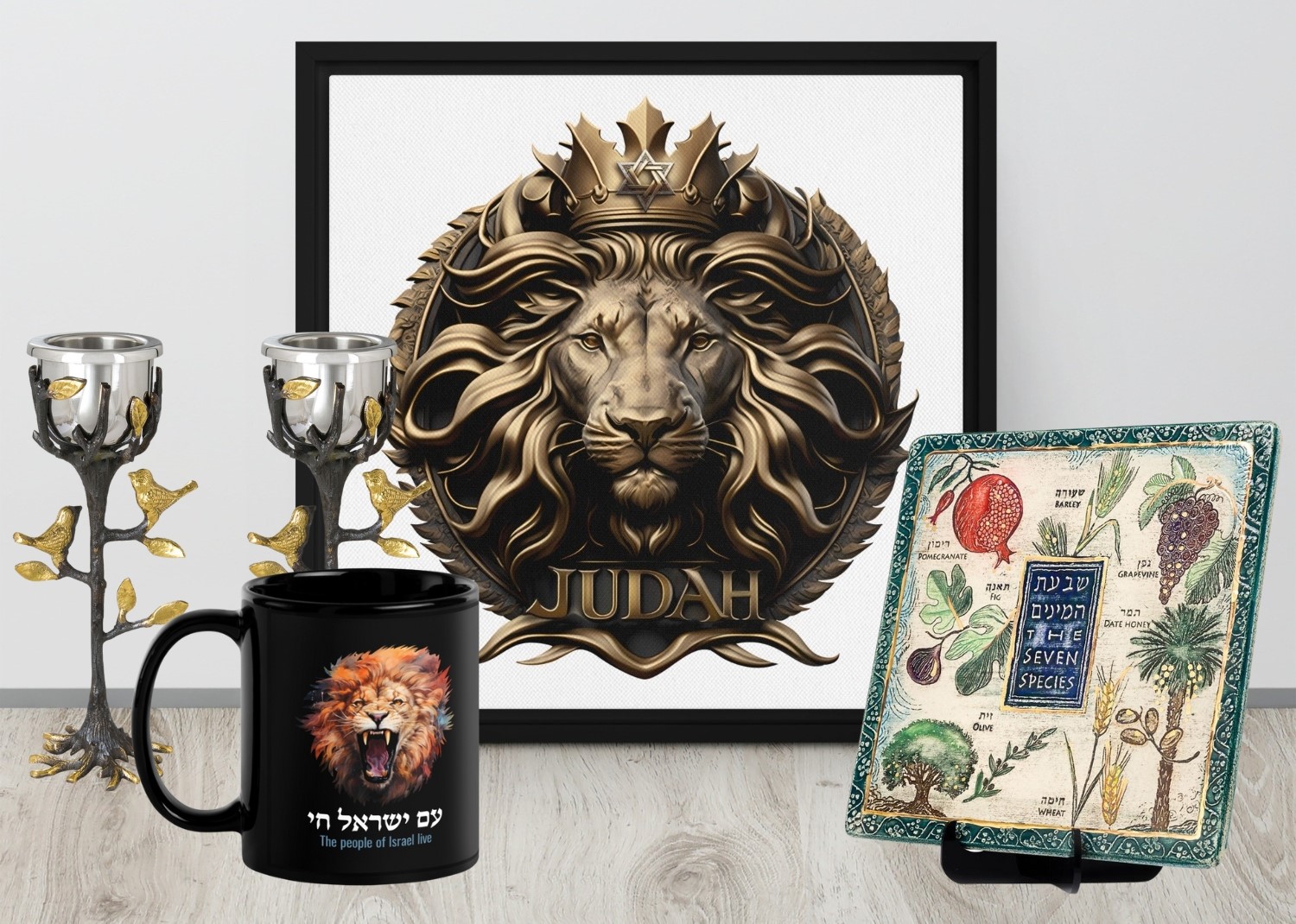
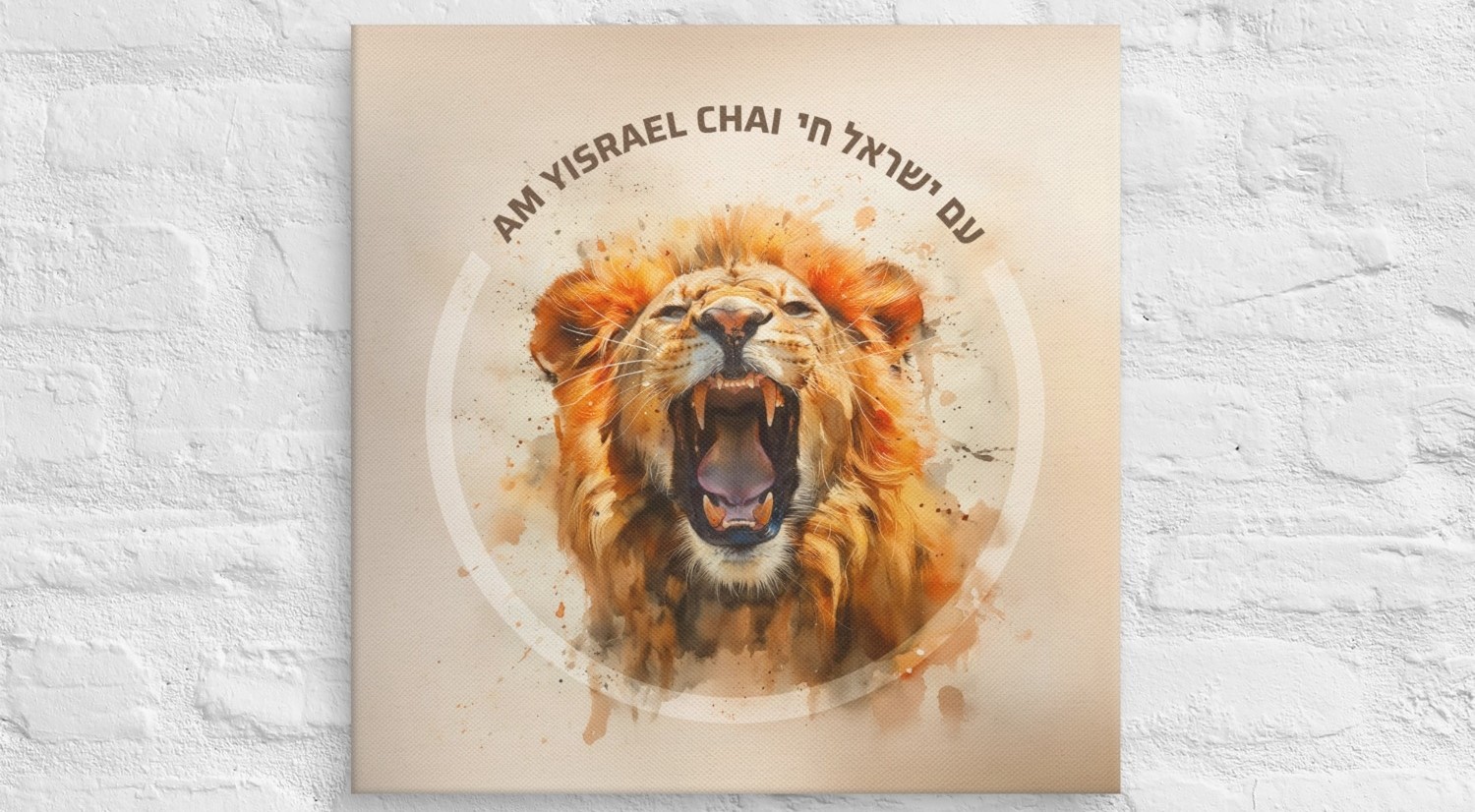
The lion has represented the tribe of Judah since Jacob's blessing in Genesis: "Judah is a lion's cub." The Lion of Judah symbolizes Jewish strength, courage, and kingship (King David came from Judah's tribe). In Jewish art, lions often appear on men's jewelry, shofars and other Judaica, Jewish pride shirts, and more. The lion represents the defender of the Jewish people and has become particularly associated with Jerusalem and the State of Israel - a symbol of Jewish power and resilience.


The Seven Species

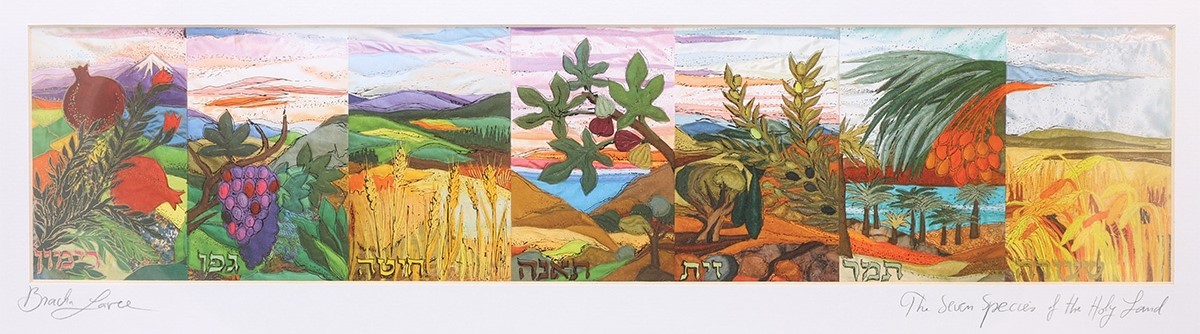
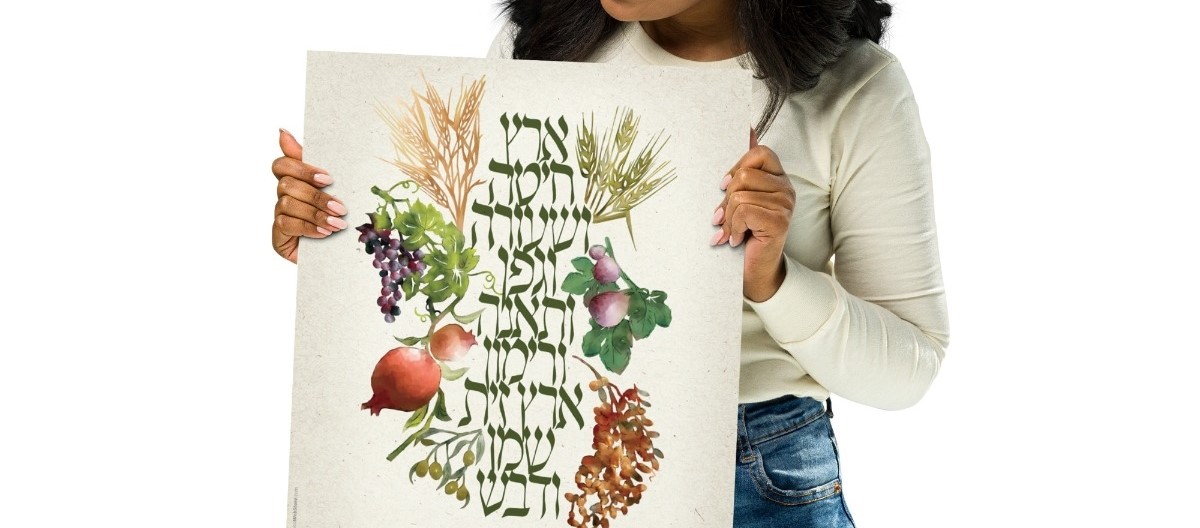
The Seven Species (Shivat HaMinim) - wheat, barley, grapes, figs, pomegranates, olives, and dates - are the agricultural products for which the Land of Israel is praised in the Book of Deuteronomy. These fruits and grains appear throughout Jewish art, especially in pieces celebrating Sukkot, Tu B'Shvat, and the connection to the Land of Israel. Jewish artists create beautiful compositions featuring all seven species together or focus on individual fruits. This imagery celebrates abundance, the land's fertility, gratitude for sustenance, and the agricultural roots of Jewish tradition.


Bringing These Symbols Into Your Home

Now that you know the hidden stories behind these beautiful symbols, you can choose Jewish art with deeper intention and meaning! Each symbol you display becomes a conversation starter, a teaching tool, and a connection to thousands of years of Jewish tradition. When you surround yourself with these meaningful symbols, you're not just decorating - you're creating a Jewish environment that teaches, inspires, and connects you to your heritage.

Ready to bring these powerful symbols into your home? Explore our collection of Jewish art and home decor featuring pomegranates, hamsas, Jerusalem imagery, menorahs, and more. Each piece tells an ancient story - and now you know what that story means!

Shop stunning Jewish art by Israeli artists!

btn
Jewish art from Jerusalem

JWS POST YOU MAY LIKE

Passover 2026 all you need to know
Passover 2026: The Complete Guide
Whether you’re planning your first Seder or refreshing your family traditions, this Passover guide walks you through every step. Explore
Israeli Air Force 2026 Adir
Inside the Israeli Air Force 2026: Innovation in the Skies
From stealth fighters and laser defense to record-breaking pilots, take a look inside the Israeli Air Force in 2026 and
Seder table
First Night of Passover 2026: All You Need to Know
When Is Passover 2026? Passover (Pesach) follows the Hebrew calendar and begins on the 15th of Nisan. This year, it
The River Nile
The Exodus from Egypt: Why It Could Only Have Happened There and Then – By Dr. Liora Ravid
The Exodus from Egypt is remembered above all for the great and amazing miracles that God performed for the Israelites
Boy eating matzah
Matzah: Everything You Need to Know About Passover's Most Important Food
It is made from just two ingredients. It takes eighteen minutes to prepare. It has no flavor that would make
Passover seder plate with vegan options
How to Make a Vegan Seder Plate with Traditional Alternatives
Creating a vegan Seder plate is easier than you might think. Four traditional Seder foods are already plant-based. Discover the