The next Jewish holiday is Tu B’Shevat – literally, the 15th of the Hebrew month of Shevat. This year, it falls on the night of January 30th, and is considered the “New Year” for trees (learn more about the four Jewish New Years here).
The date was chosen for a very beautiful reason: the middle of Shevat (end of January – mid February) is traditionally when almond trees – the first tree in Israel to cast off winter and usher in spring – blossom.
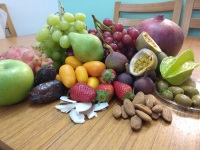
There are several different customs associated with the holiday. The most well-known is the tradition to eat 15 different types of fruit, including as many of the Seven Species as possible. Many people will have a fruit party following a dinner that includes wheat and barley products so that all seven are eaten during the night.
It’s also customary to indulge in a new fruit. In Jewish terms, this means something that just came into season, or something that you haven’t eaten in three or more months, so that you can say a special blessing recited over enjoying something new.
Massive fruit parties are popular in Israel, and at Jewish schools and communities across the world. Many schools offer a prize to the student who brings in the most original, unusual fruit.
Another popular tradition is to plant a tree. It’s a fantastic way to get your hands dirty and connect to nature, while making your home, school, or community centre garden even more beautiful! If planting isn’t your thing, consider using an organisation like the JNF to donate money towards planting trees in Israel.
Another amazing Jewish custom is using Tu B’Shevat – a day that’s all about the importance of trees – as an eco-awareness day. As well as simply enjoying fruit, it’s also a fantastic chance to teach kids and adults alike about our environment and the best way to care for it. You can read more about a Jewish eco day here.
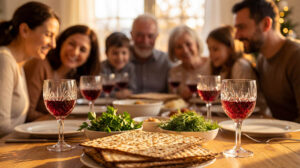
The least well-known but most exciting tradition is the Tu B’Shevat seder. Just like Pesach, it features four cups of wine – but here, the first is white to represent the barren winter, the second is white with a splash of red to mark the transition into spring, the third is half and half to symbolise the moving seasons, and the last is all red in celebration of summer’s bounty and goodness.
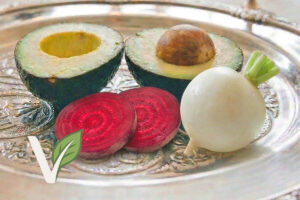
There are also a range of different fruits eaten for a variety of reasons. As mentioned above, it’s customary to indulge in the Seven Species and a new, seasonal fruit. There are also different categories: fruits like nectarines and olives with a soft inside and a hard, stony centre; those that are hard on the outside and soft within like oranges; fruits that are hard, then soft, then hard again (like avocados), and fruits which are tough all over, like nuts. These represent different types of people, and seasons, and our relationship with God. Different Tu B’Shevat seder guidelines can be found online.
If you plan on making a Tu B’Shevat seder or a fruit party to celebrate the holiday, remember that not all fruits count. Tu B’Shevat is a celebration of trees, so those that grow in the ground don’t qualify: nuts are fine, but strawberries, pineapples, bananas, and melons don’t make the cut as they grow from the ground and not on trees.
We hope you’ll have a wonderful holiday!