It All Begins With a Biblical Commandment
The story of blue in Judaism starts in the Torah itself, with a divine instruction that would echo through millennia. In the Book of Numbers, God commands the Israelites:
"Speak to the children of Israel, and tell them to make for themselves fringes on the corners of their garments, throughout their generations, and they shall put upon the fringe of each corner a thread of blue (techelet)." (Numbers 15:38)
The ancient Israelites were instructed to attach fringes (tzitzit) to the corners of their garments, and within those fringes, to include one special thread dyed with a specific blue color called techelet (תְּכֵלֶת).
But why blue? According to the Talmud, the color techelet resembles the sea, which resembles the sky, which in turn resembles God's heavenly throne. The blue thread served as a constant visual reminder to look upward, to remember the divine commandments, and to keep one's thoughts focused on holiness.

Blue: Techelet & An Ancient Dye
What made techelet so special wasn't just its spiritual significance - it was the extraordinary rarity and value of the dye itself. According to Jewish tradition, techelet came from a sea creature called the chilazon (חִלָּזוֹן), identified by many scholars as the Murex trunculus snail found in the Mediterranean. The process of extracting the dye was painstakingly difficult, labor-intensive, and expensive, which made techelet extra-special. In addition to adorning tzitzit, fabrics dyed with techelet were part of the garments of the High Priest, the coverings of the Ark of the Covenant, and the curtains of the Tabernacle and Temple - and became associated with the most special Jewish rituals.
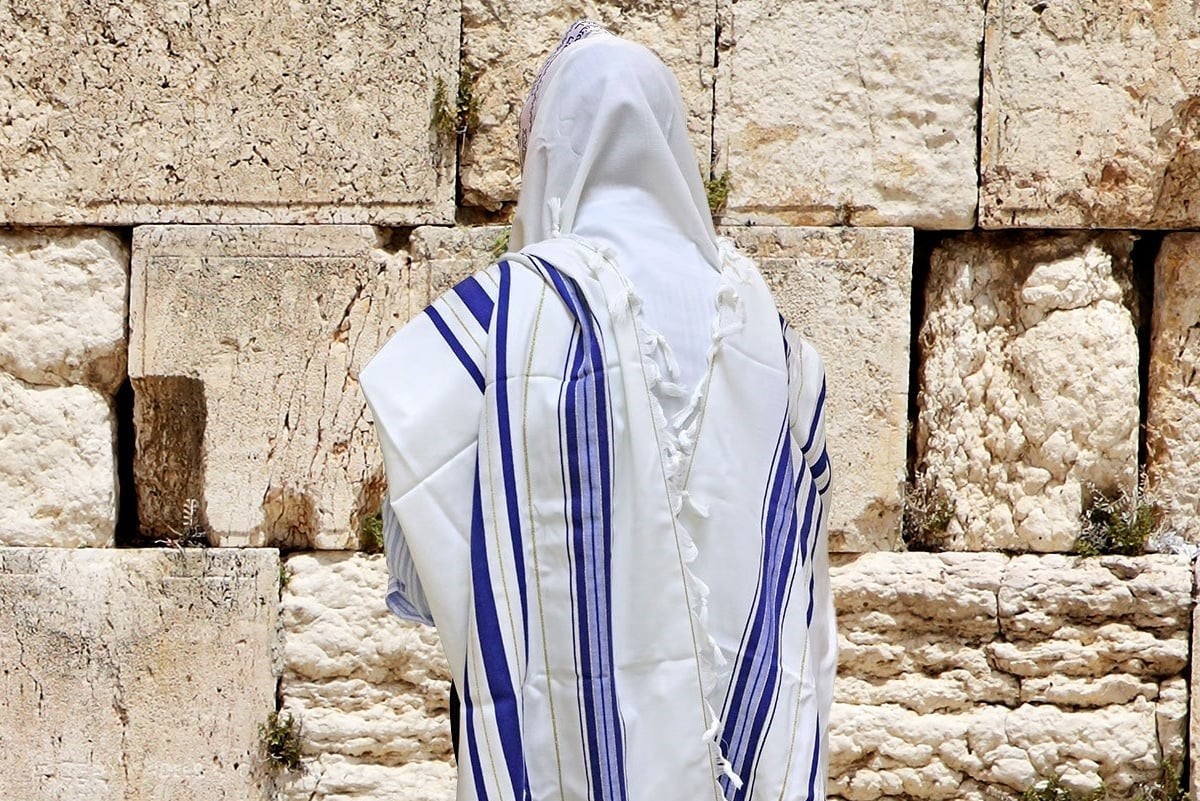
After the destruction of the Second Temple in 70 CE and the subsequent Jewish exile, the secret of techelet production was gradually lost, and the usage and wearing of techelet had virtually disappeared from Jewish practice by the 4th century CE. But the sacred blue had already seeped into Jewish consciousness, and it lived on as the blue stripes adorning tallitot and graced Jewish art and ceremonial objects. Even without the original dye, the color blue became forever associated with Jewish identity and practice.
In the 1980s, Israeli researchers rediscovered the original biblical techelet dye, and began deying techelet for tzitzit for the first time in modern history. Today, tens of thousands of Jews around the world wear tzitzit with the sacred blue thread, bringing the ancient commandment full circle. The blue that had lived on in Jewish art and tallitot stripes is now also worn in its original biblical purpose.

White: The Canvas of Purity
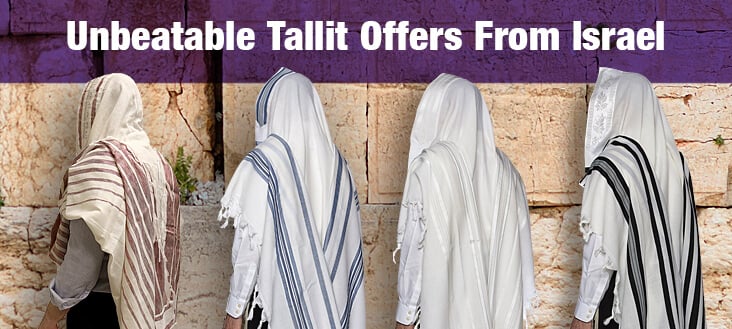
If blue represents the divine and the heavenly, then white embodies purity, holiness, and renewal. The tallit itself is traditionally white: a canvas of holiness upon which the blue stripes and fringes appear.
In Jewish tradition, white holds profound symbolic meaning. On Yom Kippur, the holiest day of the Jewish year, Jews traditionally wear white as a symbol of purity, atonement, and standing before God without pretense. White represents cleansing, forgiveness, and the possibility of spiritual renewal. It's the color of fresh beginnings and unblemished holiness.
White also represents divine mercy, balancing the blue which some Hasidic traditions associate with divine judgment or might. Together, blue and white create a perfect harmony: the heavenly and the pure, judgment and mercy, the transcendent God above and the purified soul below.
Wrap yourself in tradition with an authentic tallit from the Land of Israel!